TZ3Z Electric Dump Truck for Dam and Reservoir Construction: Spoil Haulage, Compaction Cycles, Site Logistics
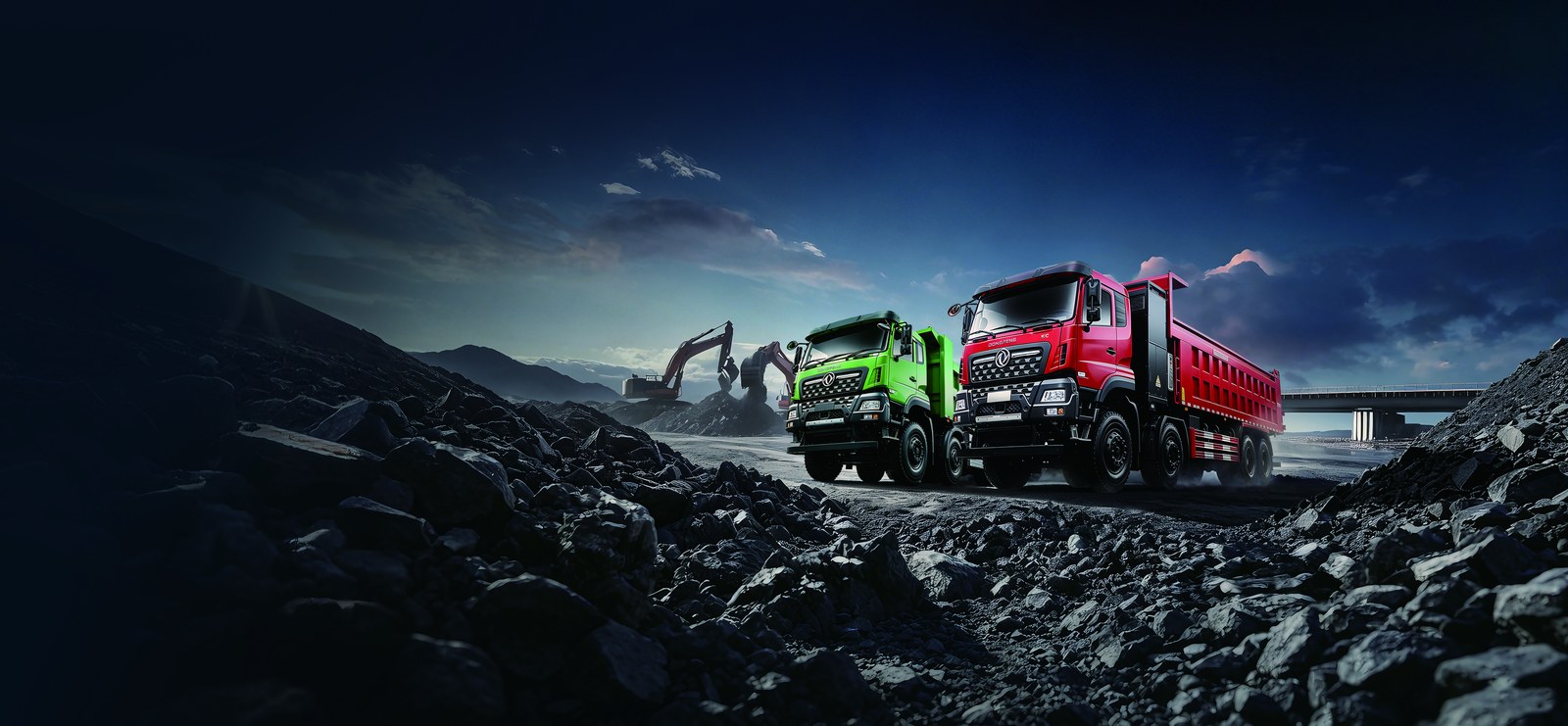
Dam, reservoir and irrigation earthworks are among the best-matched applications for an electric dump truck anywhere in construction: fixed site, predictable short cycles, continuous ramped haul roads, and a workforce and neighbouring community that both benefit from the absence of diesel exhaust. The Dongfeng TZ3Z electric dump truck — CATL 400 kWh LFP, LvKong 315 kW rated / 510 kW peak through a 4-speed AMT and HDZ300 axle — is the 6x4 tipper we most often specify for this work. This article covers haul-road design, cycle-time modelling, gradient energy, fleet sizing and the dust and water management that comes with earthworks sites.
Why Earthworks Suits an EV Truck
Four characteristics make dam and reservoir sites unusually favourable:
- Short, repetitive cycles. Typical haul distance is 1.5–6 km each way, meaning a truck completes 25–45 cycles per shift well inside a 200–250 km daily envelope.
- Loaded uphill, empty downhill. The classic earthworks profile puts the energy-heavy leg in one direction and gives back a substantial share through regenerative braking on the return — net consumption typically 10–18% lower than a flat-road equivalent.
- Fixed site with a depot. Charging infrastructure is installed once and used for the project's whole life, which spreads capex over a known volume of work.
- Community and environmental licence. Large water projects are usually subject to environmental and social commitments. Zero tailpipe emissions and materially lower noise strengthen the case to regulators and local communities, and remove diesel particulate exposure for operators working in cuttings and enclosed spillway areas.
Haul Road Design Is an Energy Decision
On an electric fleet, haul road quality converts directly into kWh. Rolling resistance dominates at earthworks speeds, and a poorly maintained road can raise consumption by 30% or more:
| Road condition | Rolling resistance coefficient | Effect on consumption vs maintained road |
|---|
| Compacted, well-graded, watered | 0.015–0.020 | Baseline |
| Moderate rutting and loose material | 0.030–0.040 | +15–25% |
| Deep ruts, soft subgrade, ungraded | 0.060–0.090 | +45–80% |
| Sustained gradient (per 1% average) | — | +3–5% uphill, partially recovered by regen downhill |
The operational implication is concrete: the cost of a grader and a water bowser on the haul road is an energy line item on an electric fleet, not just a comfort item. Pair the TZ3Z fleet with a KT3F electric sprinkler truck for dust suppression and compaction watering, and the site runs entirely without diesel.
Cycle-Time Modelling
Fleet sizing comes from the cycle, and the cycle has six elements. For a typical 3 km one-way haul:
- Load: excavator or loader fill, 3–5 minutes depending on material and bucket passes.
- Haul loaded: 3 km at 20–28 km/h on ramped road, 7–9 minutes.
- Spot and tip: positioning, body raise, discharge, body lower — 2.5–4 minutes.
- Return empty: 5–7 minutes, faster on the downhill return.
- Queue and manoeuvre: 3–6 minutes at busy periods.
- Total cycle: 21–31 minutes; roughly 17–22 productive cycles in a 10-hour shift.
At a nominal 25 tonnes per load, that is 425–550 tonnes per truck per shift. Against a 6,000 tonnes/day earthmoving target, the fleet requirement is roughly 11–14 trucks plus spares — and the energy per truck per shift lands at 160–230 kWh, comfortably inside one overnight charge on the 400 kWh pack with reserve for a second shift.
Energy Budget by Project Phase
Earthworks projects change character as they progress, and the energy plan should change with them:
- River diversion and foundation excavation: short hauls, steep ramps out of the foundation box, high energy per tonne. Budget 1.9–2.4 kWh/km loaded.
- Embankment fill placement: longer hauls from borrow area, better roads, moderate gradients. 1.5–1.9 kWh/km.
- Spillway and channel works: confined areas, frequent spotting, more idling and manoeuvring — lower km but higher hours, so HVAC and hydraulic draw become a larger share.
- Finishing and landscaping: light duty; consider rotating part of the fleet to other sites.
Charging Strategy on a Remote Site
Most dam sites are remote, which is often cited as a barrier. In practice it is a design problem with known answers:
- Depot charging at the site camp is standard: 8–10 hour overnight window, distributed AC sockets or 120–180 kW DC units with staggered starts.
- Opportunity charging at the shift change keeps two-shift operations running with a smaller fleet.
- Battery swap at 5–6 minutes suits continuous 24-hour placement campaigns where charger waiting would otherwise cost tonnes — see swap station deployment.
- Solar-hybrid or generator-backed charging covers sites ahead of grid connection; our solar-hybrid charging guide covers sizing.
Start electrical design early. On remote projects the grid connection lead time, not the truck lead time, is what sets the commissioning date.
Dust, Water and Body Specification
Earthworks dust affects health, visibility, equipment life and community relations. Two measures matter:
- Water the haul road on a schedule, not reactively. The KT3F and KT7A electric washing truck cover road watering and hard-surface washing respectively; body and tank specification is covered in our water tank body engineering guide.
- Specify the tipper body for the material. Rock from spillway excavation needs a wear-resistant, floor-heated body; cohesive fill needs a steep tipping angle and tailgate design that prevents carry-back. Our tipper body specification guide sets out the options.
East African Water and Hydropower Projects
Ethiopia and the wider East African corridor are running dam, irrigation and hydropower programmes where the electrification case is strengthened by low-cost grid power and explicit environmental conditions from lenders. Our Ethiopia market page covers import, deployment and support for these projects, and the regional logistics picture is in our East Africa market analysis. For larger off-highway mining-class work on the same projects, the TZ3V 600 kWh electric dump truck covers the higher-payload end.
Specification Checklist for an Earthworks Order
- Haul distance one way, and the loaded-versus-empty gradient split.
- Material type and density, and nominal payload per load.
- Road surface and rolling-resistance estimate.
- Shift pattern: hours per day, days per week, number of shifts.
- Site power availability and grid connection lead time.
- Ambient temperature range and altitude (both affect thermal and derating behaviour).
With those six inputs we can size the fleet, the pack option and the charger bank. TZ3Z FOB pricing typically falls in the USD 95,000–130,000 band depending on body and configuration, with the CATL pack warranted 8 years / 4,500 cycles to 80% state of health.
Seasonal and Weather Constraints on Earthworks
Dam and reservoir projects are governed by the hydrological calendar, and the haulage plan has to fit inside it. Three constraints shape the fleet requirement:
- The working season. Most earthworks are concentrated in the dry months, which compresses an enormous volume of material movement into a limited window. Fleet size is set by peak-season tonnage, not annual average.
- Rain and road condition. Wet haul roads raise rolling resistance sharply and can halt operations entirely. Budget for road maintenance capacity as seriously as for trucks, because a soft road stops an electric fleet as effectively as a diesel one.
- River diversion deadlines. Foundation excavation must typically complete before the next flood season — a hard date that makes fleet availability more valuable than fleet cost.
An electric fleet serves this pattern well: peak-season intensity means long daily operating hours, which is exactly where fuel and maintenance savings accumulate fastest, and where the absence of engine-related downtime protects a critical-path date. Where the working window extends into night shifts for schedule recovery, the noise advantage also removes a constraint that would apply to diesel plant near any settlement. See corrosion protection for wet climates and fleet sizing against a production train.
Ready to electrify your fleet? Contact Shaanxi Fenghan Trading — authorized Dongfeng EV truck exporter. WhatsApp: +86 153 1943 1311 | Email: sales@fenghan-trade.com | dongfengevtrucks.com
🌐 Our Network: Fenghan Trade (SAGMOTO/SHACMAN Truck Export) · heavy duty mining dump truck 6x4 8x4
← Back to Blog | Home