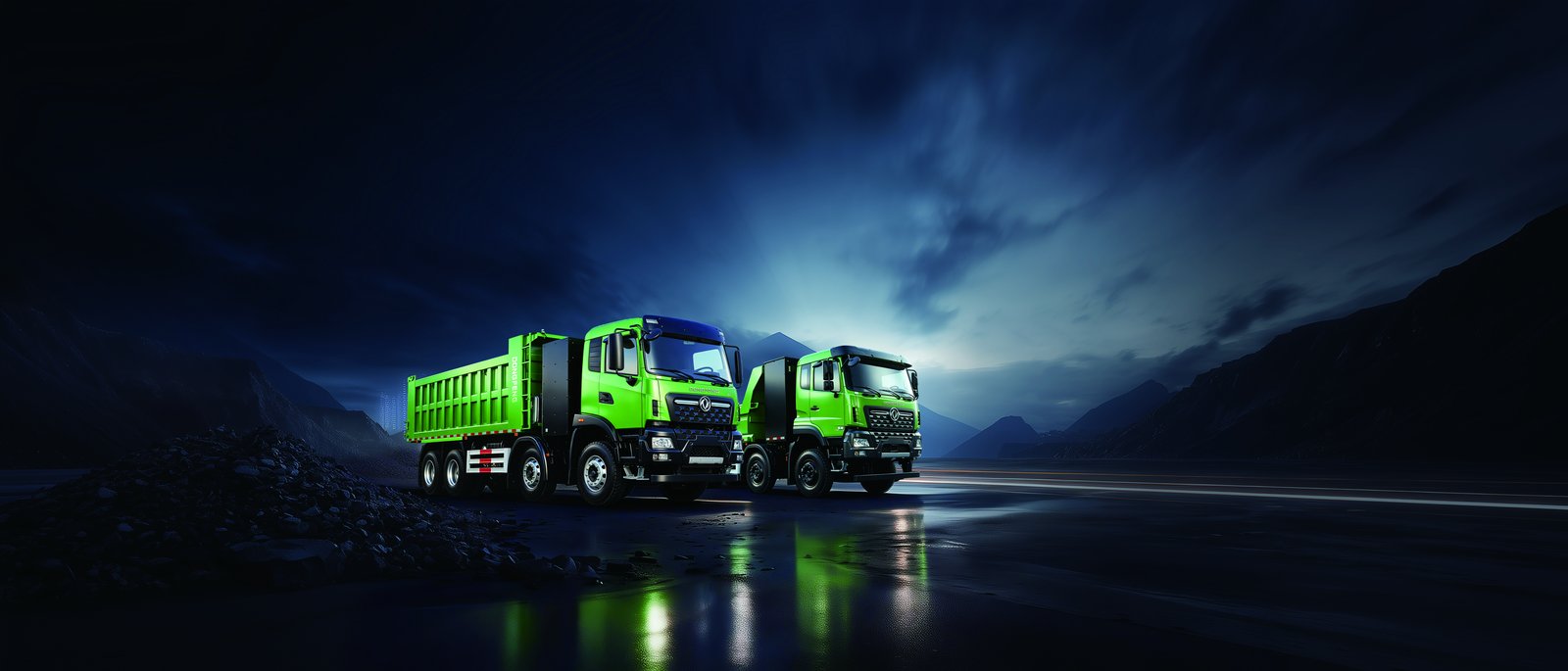
On a diesel tipper, the body is a steel box bolted to a frame — specified by volume, steel grade and habit. On an electric tipper, the body specification becomes an energy and payload decision, because every kilogram of body steel is a kilogram not carried as payload, and every hoist cycle is a draw on the same battery that moves the truck. Getting the body right on an electric dump truck like the KTA1 or the 8x4 TZ3Z is where the electric advantage is either compounded or quietly squandered. This guide covers the five decisions in a tipper body specification — material, volume, hoist system, weight engineering and duty matching — with the electric-chassis physics that changes each one. For the market context, see our Nigeria electric truck market guide, where aggregate duty defines the tipper business.
The core electric-chassis arithmetic: the battery already spends 1.5–2.5 t of the payload budget that a diesel truck's fuel system never approached. The body must claw that weight back:
| Option | Weight, 16 m³ class | Where it wins |
|---|---|---|
| Mild steel (St52 class) | ~4.2–4.6 t | Light-duty, fine materials, lowest first cost |
| Hardox 450 floor + St52 walls | ~3.8–4.1 t | The balanced spec: abrasion where it matters, weight saved overall |
| Hardox 450 floor + Hardox 450 walls | ~3.5–3.9 t | Quarry and demolition duty; higher initial cost, longer life |
| High-strength lightweight (Hardox HiAce-class thin plate) | ~3.0–3.4 t | Weight-critical electric conversions; lighter materials duty |
The rule we apply: on an electric tipper, a 500 kg lighter body is 500 kg of payload, every single load, every day — and at typical aggregate freight rates that weight saving pays for the premium steel inside the first operating year. Specify the abrasion grade by material, but specify the weight class by the payload budget.
Body volume and payload must be matched to the material density and the axle-law reality:
On electric duty the volume decision carries an extra rider: aerodynamic and cross-wind effects of tall bodies measurably affect consumption at highway speeds on corridor hauls — keep the body inside the legal envelope, not merely the physical one.
On a diesel tipper, the hoist runs off the engine PTO at idle rpm — slow, noisy and fuel-punishing. On the TZ3Z electric platform, the e-PTO drives the hydraulic pump from the traction battery at controlled speed, which changes the specification targets:
The body is only as good as its marriage to the frame:
| Duty | Body spec | Electric platform |
|---|---|---|
| Urban construction, roadfill, night haulage | 12–14 m³, Hardox floor + St52 walls, cover, LED | TZ3Z 8x4, 400 kWh |
| Quarry and aggregates loop | 10–12 m³, full Hardox 450, fast hoist spec | KTA1 compact or TZ3Z by payload law |
| Demolition and recycling | 10–12 m³, full Hardox, reinforced tailgate | KTA1, swap-capable pack for shift continuity |
| Mine service and heavy construction | 14–16 m³ HD, full Hardox, site-spec wear kit | TZ5Y-class 6x4 by payload requirement |
What we ask buyers to nail down before a tipper order — and what our factory configurations deliver as standard on Dongfeng electric chassis: body volume and material by duty; steel grades by abrasion; hoist raise time and power-lowering; body weight within the payload budget; sub-frame to factory drawing; wear-parts kit; LED lighting and cover; and the e-PTO energy budget folded into the route model. Where a local fabricator builds the body on our chassis, we supply the mounting dimensions, weight limits and integration drawing — the one document whose absence causes every integration horror story we have been asked to repair.
The body is where an electric tipper's economics are finalised: a well-specified body makes the electric payload penalty disappear and adds a fast, smooth, silent hoist; a badly specified one gives back both advantages in steel and kWh. Specify it with the same rigour as the battery — your fleet's P&L cannot tell the difference between a kilogram of battery and a kilogram of over-thick floor plate, and neither should your tender document.
When a buyer sits down with us to specify an electric tipper, the productive conversation is a checklist of the five decisions in this guide, taken in order and written into the order file. What material moves, in what density, at what legal payload — that fixes volume and steel. What the duty does to the body — quarry abrasion, sticky clays, night city work — that fixes the Hardox grade and the tail geometry. What the route's energy model says the hoist will cost — that fixes the e-PTO specification and folds into the range calculation the battery is sized against. What the axle-load sheet says — that fixes the sub-frame and overhang limits within which any fabricator must work. And what the wear-kit and integration drawing say — that decides whether year five of the fleet is routine maintenance or an escalating negotiation. Five decisions, one page each, and the body that arrives is an asset rather than a compromise.
Steel and kWh are both bought by the kilogram. The fleet that buys both well simply carries more of what pays.
Ready to electrify your fleet? Contact Shaanxi Fenghan Trading — authorized Dongfeng EV truck exporter. WhatsApp: +86 153 1943 1311 | Email: sales@fenghan-trade.com | dongfengevtrucks.com
🌐 Our Network: Fenghan Trade (SAGMOTO/SHACMAN Truck Export) · heavy duty mining dump truck 6x4 8x4