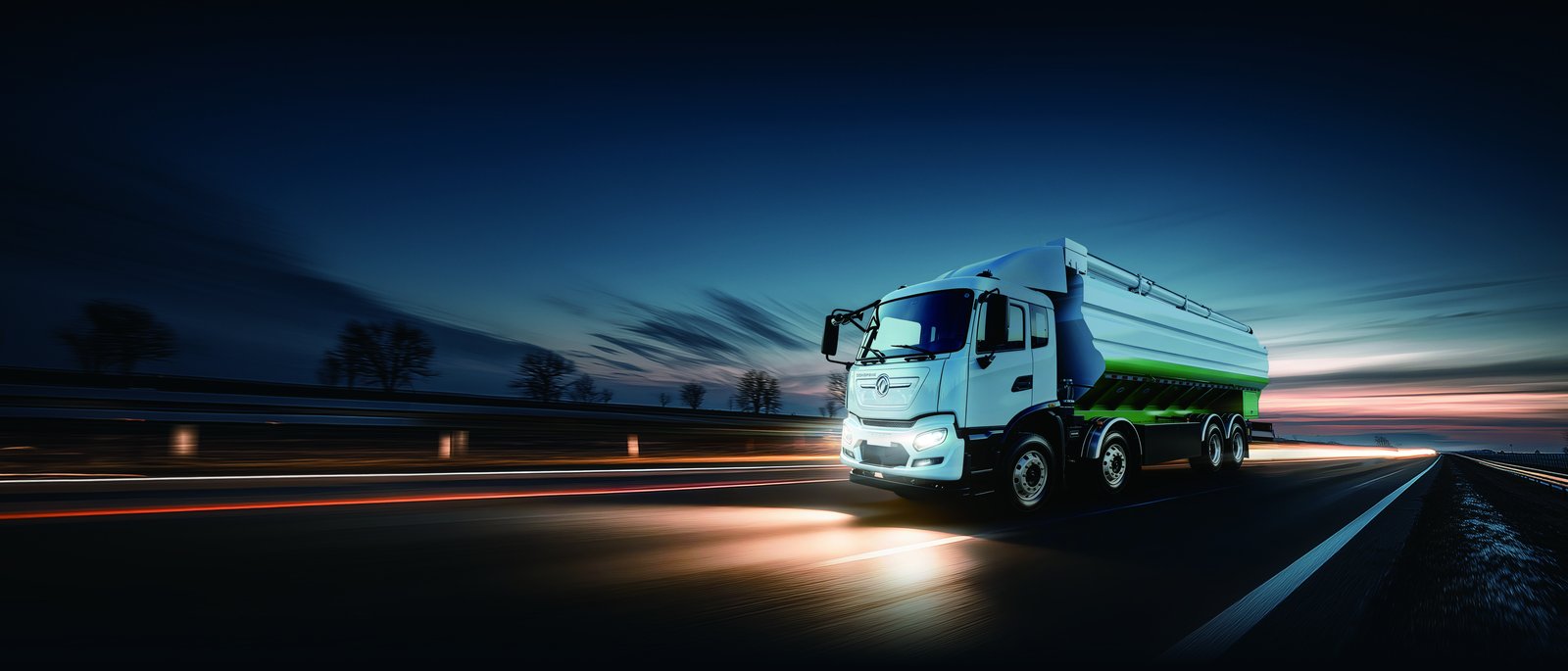
A cement works is a closed, continuous, high-tonnage material system, and it is one of the most compelling environments for electric dump trucks anywhere in industry. The hauls are short, the routes are fixed, the site already has heavy electrical infrastructure, and the material is abrasive enough that diesel fleets spend heavily on maintenance. The Dongfeng KTA1 electric dump truck — CATL 352 kWh LFP, LvKong 270 kW rated / 450 kW peak with a 4-speed AMT — is the mid-class tipper we most often deploy into cement and aggregates operations, and this article works through the three distinct haulage circuits inside a plant and how each one is specified.
| Circuit | Distance | Material | Character | Fit for KTA1 |
|---|---|---|---|---|
| Quarry → primary crusher | 1.5–6 km | Limestone, marble, chalk | Loaded downhill or mixed, ramped, dusty | Excellent — regen on return is strong |
| Crusher → stockpile / pre-blend | 0.8–3 km | Crushed limestone, additives | Short shuttle, continuous | Excellent — highest cycle count |
| Clinker / gypsum transfer | 0.5–4 km | Hot clinker, gypsum, pozzolan | Heat, fine dust, high density | Good with thermal and sealing packages |
| Bypass dust and by-product | 1–5 km | Cement kiln dust, fine powder | Sealing critical, low density | Good — volume-limited, not weight-limited |
This is the tonnage-defining haul. Characteristics that matter for an electric truck:
Pair the fleet with a KT3F electric sprinkler truck for haul road watering; our analysis of stockyard dust control applies directly to cement plants too.
Short, continuous, high-cycle work is where the electric drivetrain is most clearly superior to diesel:
Clinker transfer is the hardest circuit and the one requiring explicit specification:
Body options are set out in our electric tipper body specification guide.
Cement plants buy on cost per tonne. A worked comparison for a 3 km quarry-to-crusher circuit, 10-hour shift, 24 loads at 28 t:
| Cost line | Diesel 6x4 tipper | KTA1 electric tipper |
|---|---|---|
| Tonnes per shift | 672 t | 672 t |
| Energy per shift | 85 L diesel | 210 kWh |
| Energy cost | USD 89 (at USD 1.05/L) | USD 23 (at USD 0.11/kWh) |
| Maintenance per shift (allocated) | USD 42 | USD 16 |
| Cost per tonne | USD 0.195 | USD 0.058 |
| Annual saving (300 shifts, 8 trucks) | — | ≈ USD 263,000 |
The maintenance delta is conservative. In abrasive, dusty environments the difference is usually wider, because air intake, filtration and brake wear are the dominant diesel maintenance drivers and none of them apply at the same rate to an electric drivetrain.
Cement plants are unusually easy to electrify from an infrastructure standpoint:
Pakistan's cement sector is large, export-oriented and concentrated in defined corridors, which makes fleet electrification straightforward to pilot and quick to scale. Our Pakistan market page covers import, deployment and service support for Pakistani cement producers, including grid tariff considerations. Wider regional analysis is in our Pakistan electric truck market analysis, and quarry-focused duty in KTA1 battery swap at quarry sites.
KTA1 FOB pricing typically falls in the USD 90,000–125,000 band depending on body and specification, with the CATL 352 kWh pack warranted 8 years / 4,500 cycles to 80% state of health.
Cement production is a chemistry process, and the haulage fleet is part of the quality chain rather than just a materials mover. Three interfaces matter:
An electric fleet supports all three: predictable cycle times make blend scheduling more reliable, and telematics-linked load records give the quality team an auditable chain. Our payload telematics guide covers the measurement, and aggregates and recycling duty covers the related case where material streams must be kept separate.
Ready to electrify your fleet? Contact Shaanxi Fenghan Trading — authorized Dongfeng EV truck exporter. WhatsApp: +86 153 1943 1311 | Email: sales@fenghan-trade.com | dongfengevtrucks.com
🌐 Our Network: Fenghan Trade (SAGMOTO/SHACMAN Truck Export) · heavy duty mining dump truck 6x4 8x4