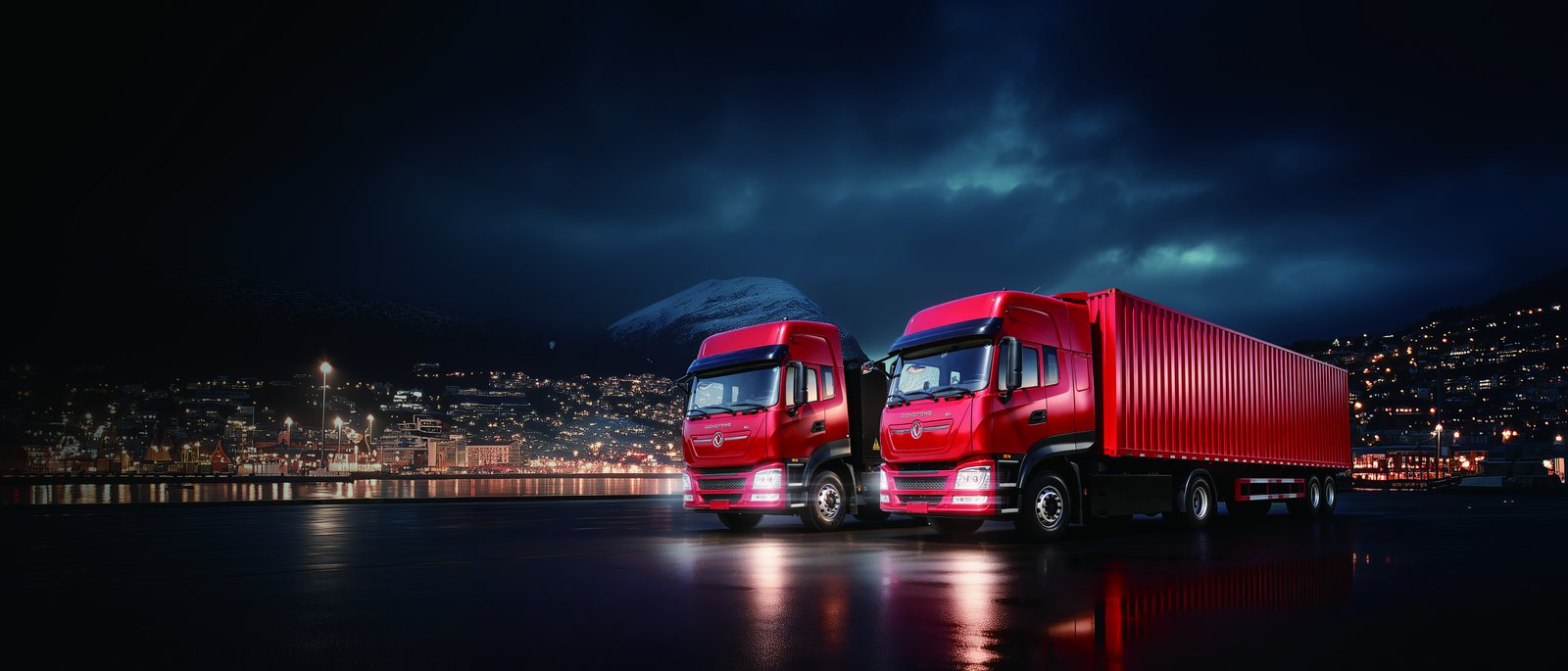
Kenya’s Affordable Housing Programme is one of Africa’s largest state-backed construction pipelines — hundreds of thousands of units under contract across Nairobi and the secondary towns, with site after site pouring concrete six days a week. Every one of those sites is served by batching plants running mixer fleets on short urban cycles, and every one of those mixers burns diesel in Nairobi traffic at US$1.40-1.55 per litre. This article examines the Dongfeng TZ8J electric mixer truck for Kenya’s housing programme: why the project’s specific logistics fit electrification precisely, how the charging works at Kenyan batching plants, and what the TCO looks like against the diesel fleet.
Affordable-housing concrete logistics in Nairobi have a distinctive shape. The batching plants cluster along the industrial corridors — Mombasa Road, Thika Road, Athi River, Ruiru — and the housing sites sit 15-45 km away across the metro. A mixer’s day is 6-10 cycles of 30-90 km round trip, totalling 200-350 km at the upper end, with 40-60% of engine hours spent in traffic queues and on-site standby. The TZ8J’s 350 kWh CATL LFP pack covers 220-280 km of loaded mixer duty — a full day for most plants, with a midday top-up absorbing peak programmes. Critically, the duty is depot-based: every truck returns to the batching plant nightly, so the entire fleet charges at infrastructure the operator already controls.
Nairobi’s congestion, usually a curse, improves the electric case. A diesel mixer in two-hour traffic burns 3-4 litres hourly to turn the drum and idle; the TZ8J’s independent electric drum drive turns at constant speed drawing 3-5 kW, and the traction system consumes nothing at standstill. In severe traffic, the electric mixer’s relative advantage grows — and Nairobi traffic is severe.
| Parameter | TZ8J 8x4 Electric Mixer |
|---|---|
| Drum capacity | 8-10 m³ rated mixing volume |
| Battery | 350 kWh CATL LFP, liquid-cooled |
| Traction motor | LvKong 360 kW peak / 2,400 Nm |
| Drum drive | independent electric, constant-speed control |
| Range (loaded, urban cycles) | 220-280 km |
| DC charge 20-80% | ~50 min at 240 kW |
| Gradeability | ≥30% — site access ramps loaded |
| FOB price band | US$108,000-128,000 |
Site access deserves a note because affordable-housing sites are not gentle: temporary ramps, unmade ground, and tight pours in occupied neighbourhoods. The TZ8J’s electric drivetrain delivers full torque from standstill on loose ramps — no clutch slip, no wheelspin drama — and the near-silent operation changes the site’s relationship with its neighbours. Housing projects sit inside communities, and the mixer that arrives without a diesel roar at 6 am is the one the ward administrator hears fewer complaints about. Several Nairobi plants already market quieter logistics as part of their tender story; electrification makes it structural.
A diesel 8x4 mixer on Nairobi housing duty burns 0.75-0.90 L/km equivalent including drum and queue load; at US$1.45/L, US$1.10-1.30 per kilometre. The TZ8J consumes 1.7-2.0 kWh/km all-in; at KPLC industrial tariffs around US$0.14-0.16/kWh — or the off-peak rate near US$0.10 — US$0.20-0.30 per kilometre. On 250 km daily, 290 operating days, the annual energy saving per truck runs US$65,000-72,000 at grid tariffs. Read that again: Kenyan diesel prices make mixer electrification one of the strongest TCO cases in our entire portfolio. Maintenance adds US$7,000-10,000 annually. Payback against the purchase premium: 14-20 months. The 8-year battery warranty outlasts the payback by a factor of five.
Kenyan batching plants are well-positioned for fleet charging: they are industrial power customers already, typically on 415 V three-phase with medium-voltage service available. A 12-15 truck TZ8J fleet needs two 240 kW DC chargers plus managed overnight AC — an 800 kVA-1 MVA service upgrade that KPLC processes routinely for industrial customers. The pour calendar sets the charge schedule: full charges overnight at off-peak rates, rotation charging during the midday batching trough, and the load-management controller holding site demand under contract. Kenya’s grid is 85%+ renewable (geothermal, hydro, wind), which means the concrete’s embodied emissions drop materially — a metric the programme’s international financiers increasingly ask about, and a tender differentiator for the plants that can document it.
Trucks enter through Mombasa with 30-36 day sailings from China; we deliver with English documentation, UN R100 certification and the fleet parts package, and Kenya’s duty treatment of electric vehicles — materially advantaged under the current finance framework — keeps landed cost sharp. Nairobi-based support includes commissioning through the first pour season, an extended parts kit, CATL module stock at 10-14 days, and telemetry monitoring of every truck. Buyers can find the full market context on our Kenya market page, and regional operators will recognise the same platform’s East African commercial-concrete deployments from Kampala to Dar es Salaam.
The Affordable Housing Programme’s batching contractors compete on delivered cost per cubic metre, and the mixer fleet is the largest variable in that cost after cement itself. A plant running electric mixers at a 75-80% energy saving per kilometre holds a structural cost advantage on every pour — plus the documented-emissions story the programme’s financiers want, and the community-relations benefit of quiet trucks. Kenya’s diesel price is not coming down and its grid is not getting dirtier. The plants that electrify their Nairobi fleets first will set the cost benchmark for the programme’s next decade of contracts.
Kenyan batching companies operate in one of Africa’s most sophisticated financial markets, and the financing options for mixer electrification reflect it. Asset-finance arms of the major banks now write electric-vehicle paper — the category has moved from exotic to standard as battery warranties standardised — and the structure that fits mixer economics is a four-to-six-year facility where the fuel saving services the premium portion: at Kenyan diesel prices, the monthly energy saving on a two-shift TZ8J exceeds the incremental financing cost from the first month, making the fleet cash-flow positive almost immediately. Development-finance facilities active in Nairobi — green credit lines through local banks, and the climate-finance programmes funding the country’s e-mobility push — add concessional layers for fleets that document displacement, which the telemetry does automatically.
The pay-as-you-go and leasing innovations that Kenya pioneered in solar and two-wheelers are arriving in commercial vehicles, and batching companies should watch the emerging lease-to-own structures for exactly the barrier they remove: the upfront premium. A leased electric mixer whose lease payment sits below the diesel truck’s fuel-plus-lease cost needs no business case beyond a monthly statement. For the programme’s smaller batching contractors — the regional plants serving secondary-town housing sites — these structures will be the entry point, and the plants that engage early will shape the terms. Kenya’s financial sector built its reputation financing transitions others considered too novel; the electric mixer at Kenyan diesel prices is, by that history, not a novel risk at all — it is the kind of arithmetic the market’s asset financiers were built to fund.
Ready to electrify your fleet? Contact Shaanxi Fenghan Trading — authorized Dongfeng EV truck exporter. WhatsApp: +86 153 1943 1311 | Email: sales@fenghan-trade.com | dongfengevtrucks.com
🌐 Our Network: Fenghan Trade (SAGMOTO/SHACMAN Truck Export) · heavy duty mining dump truck 6x4 8x4