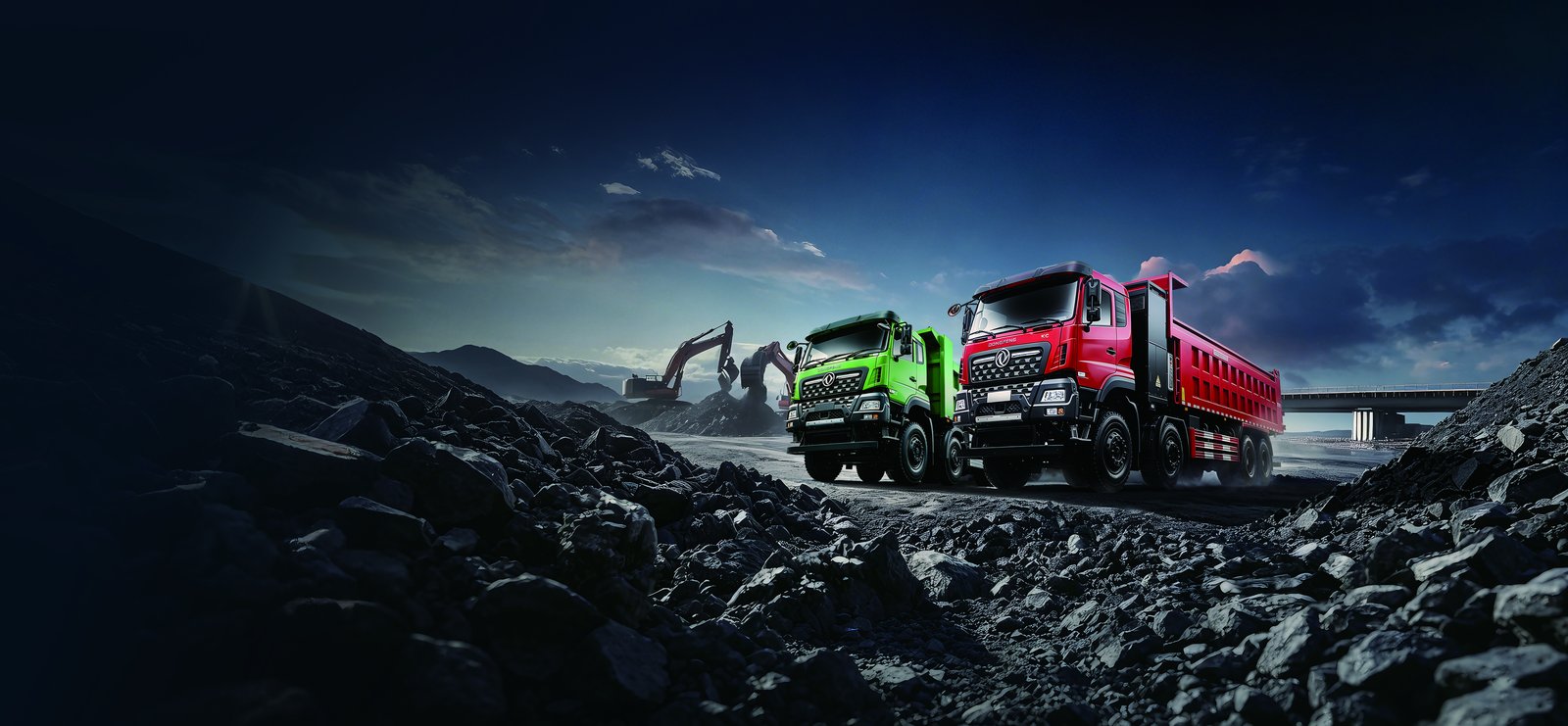
Mexico City's concrete business runs on tight delivery windows and tightening emissions rules, which makes the mixer truck a surprising front line for electrification. The EV truck version of the mixer — the Dongfeng TZ8J with its 8 m3 drum — promises lower operating cost and unrestricted access under programs like Hoy No Circula, but a mixer buyer signs a five-year contract, not a one-year trial. This article builds a 5-year total cost of ownership (TCO) model comparing the TZ8J electric mixer against an equivalent diesel mixer using Mexico City batching-plant data.
A concrete mixer is almost perfectly shaped for battery power. It runs fixed local loops from the batching plant to the pour site and back, rarely exceeding 200-260 km per shift, which sits inside the TZ8J's 350 kWh CATL LFP pack range with margin. The drum drive, traditionally a separate diesel engine or a PTO off the chassis, becomes an electric aux load the main pack can serve. And because the truck returns to the same plant nightly, depot charging is trivial — no public network required.
The TZ8J carries a 350 kWh liquid-cooled CATL LFP pack and a 360 kW motor, with an 8 m3 drum rated for the same payload as a diesel 8 m3 unit. At a typical Mexico City duty cycle of 120-150 km per day across multiple short hauls, the pack needs only a single overnight charge. The diesel comparator is a standard 8 m3 mixer with a ~300 hp chassis engine plus a drum engine, burning roughly 0.35-0.45 L per kilometer including drum idle.
| Parameter | Diesel 8 m3 mixer | TZ8J electric mixer |
|---|---|---|
| Energy source | Diesel + drum engine | 350 kWh LFP pack |
| Motor / engine | ~300 hp | 360 kW |
| Daily distance | 120-150 km | 120-150 km |
| Fuel / energy per km | 0.35-0.45 L | 1.5-2.0 kWh |
| Range per fill / charge | ~600 km | 200-260 km |
| FOB price | USD 95,000-120,000 | USD 115,000-145,000 |
Mexico's diesel price sits near USD 1.00-1.10 per liter, putting the diesel mixer's fuel cost at roughly USD 0.35-0.50 per kilometer. The TZ8J draws about 1.5-2.0 kWh per kilometer; at a commercial electricity rate of USD 0.10-0.15 per kWh that is USD 0.15-0.30 per kilometer — often half the diesel figure, and immune to diesel price swings. Over five years at 45,000 km per year (225,000 km total), the energy gap alone is tens of thousands of dollars per truck.
The electric mixer drops engine oil, filters, turbo, and exhaust service entirely; the diesel keeps all of it plus a second engine for the drum. Annual maintenance for the TZ8J lands near USD 1,800-2,500 versus USD 5,000-7,000 for the diesel pair. Add the access value: Mexico City's Hoy No Circula and low-emission zones increasingly restrict diesel mixers on bad-air days, while zero-emission trucks keep working — a revenue protection the TCO model should credit as avoided downtime.
| 5-year cost (per truck) | Diesel mixer | TZ8J EV mixer |
|---|---|---|
| Landed purchase (est.) | USD 120,000-155,000 | USD 145,000-185,000 |
| Energy / fuel (225,000 km) | USD 78,000-112,000 | USD 34,000-68,000 |
| Maintenance | USD 25,000-35,000 | USD 9,000-13,000 |
| Emission-restriction downtime | USD 5,000-15,000 | USD 0 |
| Residual (credit) | -USD 35,000-50,000 | -USD 40,000-60,000 |
| Net 5-year cost | USD 193,000-267,000 | USD 148,000-206,000 |
The TZ8J starts roughly USD 25,000-40,000 higher on landed cost, but the energy, maintenance, and access savings recover that inside roughly two to three years on a Mexico City duty cycle. After payback, every remaining year is pure margin advantage. The math sharpens further where the plant already has three-phase supply and can charge on off-peak tariffs, and where local incentives or toll relief apply to certified electric commercial vehicles.
The 350 kWh LFP pack carries the standard 8-year / 4,500-cycle warranty and holds ~80 percent SOH at the cycle floor, which supports a respectable five-year residual even in a young electric market. The diesel mixer's residual is well understood but erodes faster as emission zones expand, a risk the TCO model already credits as downtime. For a fleet planning a fleet renewal, the electric mixer's warranty-backed battery is the more defensible asset.
The cleanest electric-mixer deployment puts the charger at the batching plant, because that is where the truck already returns between pours. A 240 kW DC unit on the plant's three-phase supply fills the TZ8J's 350 kWh pack overnight with margin to spare for a 120-150 km day, and the plant can blend solar or off-peak grid power to minimize cost. Because the mixer never leaves its local loop, no public charging network is required, which removes the single biggest perceived risk of electric trucks for concrete operators. Plants that already run compressors and mixers on three-phase supply typically have the headroom; the charger is a modest additional load planned into the site upgrade rather than a new utility connection.
The TZ8J TCO is robust but not immune to assumptions. The model weakens if diesel prices fall sharply, if electricity tariffs rise without off-peak relief, or if a fleet runs occasional long rural hauls beyond the 200-260 km band without depot charging. It strengthens with local zero-emission incentives, with plant-side solar, and as more Mexican states restrict diesel access on bad-air days. A prudent buyer should run the five-year model at both a favorable and a conservative case; even the conservative case keeps the electric mixer competitive, and the favorable case widens a lead that already exists on the typical Mexico City duty cycle. The risk is not the truck, it is failing to plan the charging and the routes around its real range envelope.
Because the TZ8J costs more upfront, many Mexican operators use green-equipment leasing that fronts the premium and is repaid from the monthly energy and maintenance savings, leaving cash flow neutral or positive from month one. Vendors and development banks increasingly offer such terms for certified electric commercial vehicles, and the predictable five-year saving makes the repayment math easy to underwrite. Pairing that financing with the plant-side charger turns the mixer upgrade from a capital hurdle into an operating decision, which is exactly how a risk-averse concrete business should approach electrification without betting the balance sheet on a single model year.
Beyond fuel and maintenance, the TZ8J changes the batching-plant yard. Its quiet operation lets dispatchers coordinate pours without shouting over engine noise, and the absence of diesel exhaust improves air quality for ground crew, a factor Mexican regulators and corporate clients increasingly weigh in plant audits. Drivers appreciate the smooth, single-pedal operation through congested delivery zones, which trims fatigue on multi-drop days. None of this shows up in a per-km line item, but plant managers report that a calmer, cleaner yard runs on schedule more often, and schedule adherence is the metric that protects concrete quality and client renewals. The electric mixer is therefore as much a productivity tool as a cost-saving one.
For Mexico City and other dense Mexican metro markets with batching plants and fixed delivery radii, the TZ8J electric mixer truck beats the diesel on five-year TCO while keeping the truck on the road on restricted-air days. The only fleets that should pause are those running long rural hauls beyond the 200-260 km band without depot charging. Importers should monitor the Mexico electric truck market as state-level incentives and charging at batching plants expand, because each new support layer widens the electric mixer's already solid cost lead.
Ready to electrify your fleet? Contact Shaanxi Fenghan Trading — authorized Dongfeng EV truck exporter. WhatsApp: +86 153 1943 1311 | Email: sales@fenghan-trade.com | dongfengevtrucks.com
🌐 Our Network: Fenghan Trade (SAGMOTO/SHACMAN Truck Export) · heavy duty trucks export China