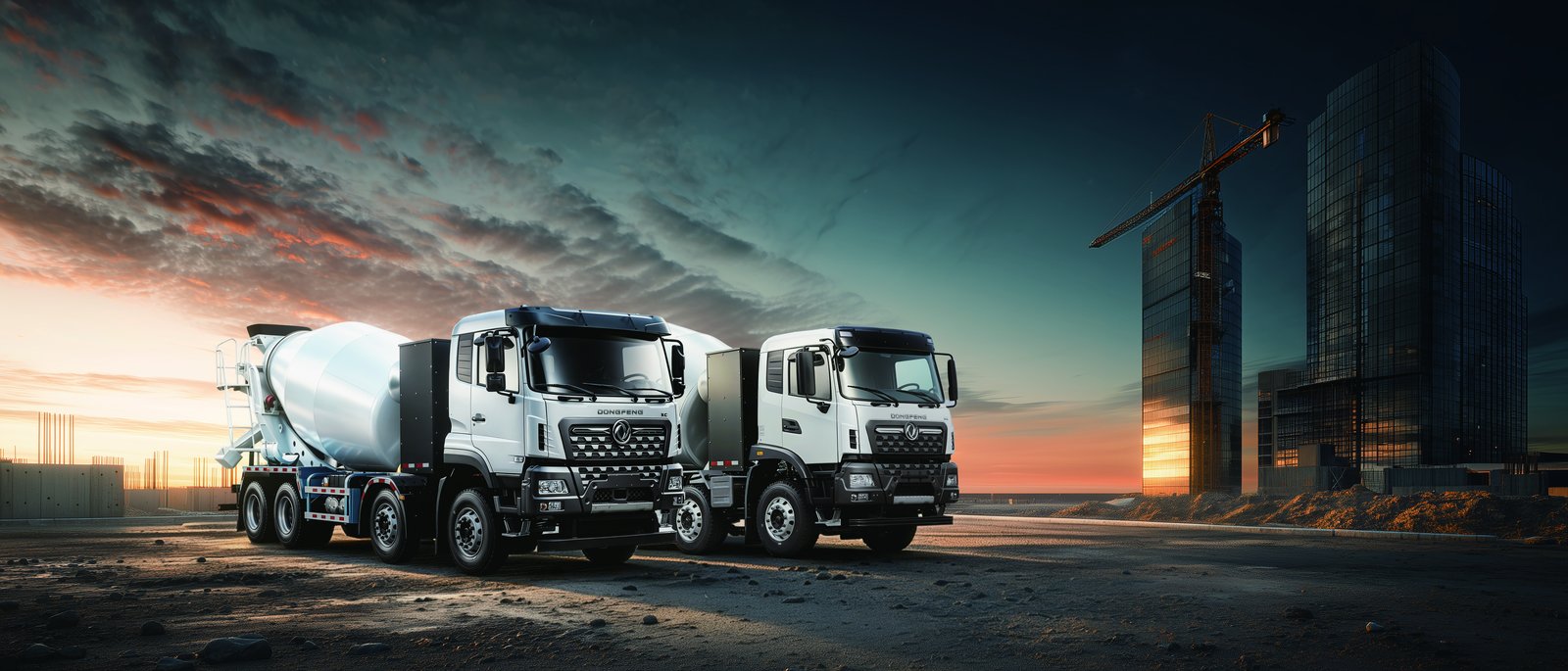
Not all concrete is urban. A large share of the world's pours happens on projects where no city batching plant will ever exist — the highway extension, the dam and hydropower works, the mining infrastructure, the remote industrial estate — and the supply model there is the relocatable batching plant: a portable mixing installation that is erected at the project, runs for its duration, and is dismantled and moved to the next one. The trucks that orbit that plant are a different fleet from city ready-mix: they follow the project, they live on site or nearby, and their economics are the project's economics. That peripatetic model has always been awkward for electric vehicles — until the plant itself became the answer. A batching plant is an industrial electrical installation: it arrives with a power connection (grid or generation), and the trucks that feed it can charge from the same source. This article covers the logistics of a relocatable electric concrete operation built around the Dongfeng TZ8J electric mixer: the fleet structure, the power architecture, the project economics and the move discipline. For the market context, see our Ethiopia electric truck market guide, where remote infrastructure projects define the trucking market.
Why projects batch on site rather than buy city concrete:
The plants are genuinely relocatable: modular cement silos, aggregate bins and mixer units that dismantle onto flatbeds and re-erect in 2–4 weeks at the next site. The fleet that serves them — mixers, water trucks, aggregate tippers — has always followed. What changes with electric is that the power source travels with the operation.
| Option | How it works | Best for |
|---|---|---|
| Grid-tied plant | Project brings a 500 kVA–2 MVA connection to run the plant; two to four 120–180 kW chargers ride the same feed | Sites near rural grid spurs — highways, industrial estates |
| Generation-backed | The plant's own genset (many sites already run one) charges trucks in off-peak plant hours | Remote sites; savings shrink but idle-elimination and maintenance savings persist |
| Solar-buffer hybrid | Containerised 200–500 kWp array plus 1–2 MWh LFP buffer, grid or genset topped | Long-duration remote projects — the array amortises across the project life and moves with the fleet |
The containerised hybrid deserves emphasis: solar-plus-storage in containers relocates on the same flatbeds as the plant, and at remote-site diesel-generation prices (USD 0.25–0.40/kWh) it usually undercuts the generator while decarbonising the pour for the ESG sections of the project's financing file.
One project, one power connection, one electrified fleet — the concrete operation becomes a self-contained electric logistics system that relocates as a unit.
A worked model for a highway project running an 8-mixer electric fleet (TZ8J class) on 18 km plant-to-pour loops, 10 hours a day, 300 project days, with grid power at USD 0.10/kWh at the plant and diesel at USD 1.20/L at the nearest town (plus the haulage to bring it in):
| Annual item (8 mixers) | Diesel mixer fleet | TZ8J electric fleet |
|---|---|---|
| Fuel / energy (incl. drum duty) | USD 305,000–370,000 | USD 52,000–64,000 |
| Maintenance | USD 95,000 | USD 36,000 |
| Fuel logistics (haulage to site) | USD 18,000–28,000 | — |
| Charging infrastructure (annualised) | — | USD 28,000 |
| Total annual operating | USD 440,000 | USD 122,000 |
A USD 318,000 annual advantage on 8 trucks against an incremental capital cost of USD 330,000–400,000 — the fleet pays for itself within a single 18–24 month project phase, and the second and third projects run on pure savings. At the per-m³ level covered in our TCO-per-cubic-metre analysis, remote-project concrete is the highest-margin electric mixer duty in the portfolio, precisely because the diesel alternative carries fuel-haulage costs city fleets never see.
Relocatability is where electric fleet management differs most from city operations — the move is a planned logistics exercise:
Where the model still fights: very short projects (a 6-month site struggles to amortise even containerised charging — pair it with the next project's timeline); sites with neither grid nor generation headroom (the solar-buffer answers most but not all of these); and jurisdictions whose axle and registration rules complicate relocating registered trucks between regions. The fleet operators thriving on this model run multi-project backlogs — the plant always has a next destination, and the fleet's asset life spans four or five of them.
The relocatable batching plant solved remote concrete generations ago. Electric mixers and containerised power now solve what the plant never could — the fuel that had to be trucked to nowhere, at the worst prices, to burn in trucks idling at the pour. The project that electrifies its concrete cycle pockets the difference on every cubic metre it casts.
The relocatable electric concrete operation changes what a concrete company can bid for. A firm that once had to decline remote projects — the fuel logistics killed the margin — can now price work three hundred kilometres from the city, because its power comes with the plant and its trucks drink from the same source. The competitive universe expands from "projects near our plants" to "projects anywhere the aggregates are", and in infrastructure-heavy regions that universe is most of the national construction programme. Our customers running this model describe the same discovery: the tender map widens, the win rate on remote projects rises because the competition is thinner there, and the fleet's project-to-project mobility itself becomes the capability that prequalifies them for the biggest works.
Concrete has always been a logistics business pretending to be a manufacturing one. The electric relocatable fleet is simply the logistics finally being acknowledged — and it arrives at the job site ready to outbid every diesel quote in the district.
Ready to electrify your fleet? Contact Shaanxi Fenghan Trading — authorized Dongfeng EV truck exporter. WhatsApp: +86 153 1943 1311 | Email: sales@fenghan-trade.com | dongfengevtrucks.com
🌐 Our Network: Fenghan Trade (SAGMOTO/SHACMAN Truck Export) · SAGMOTO heavy duty diesel trucks