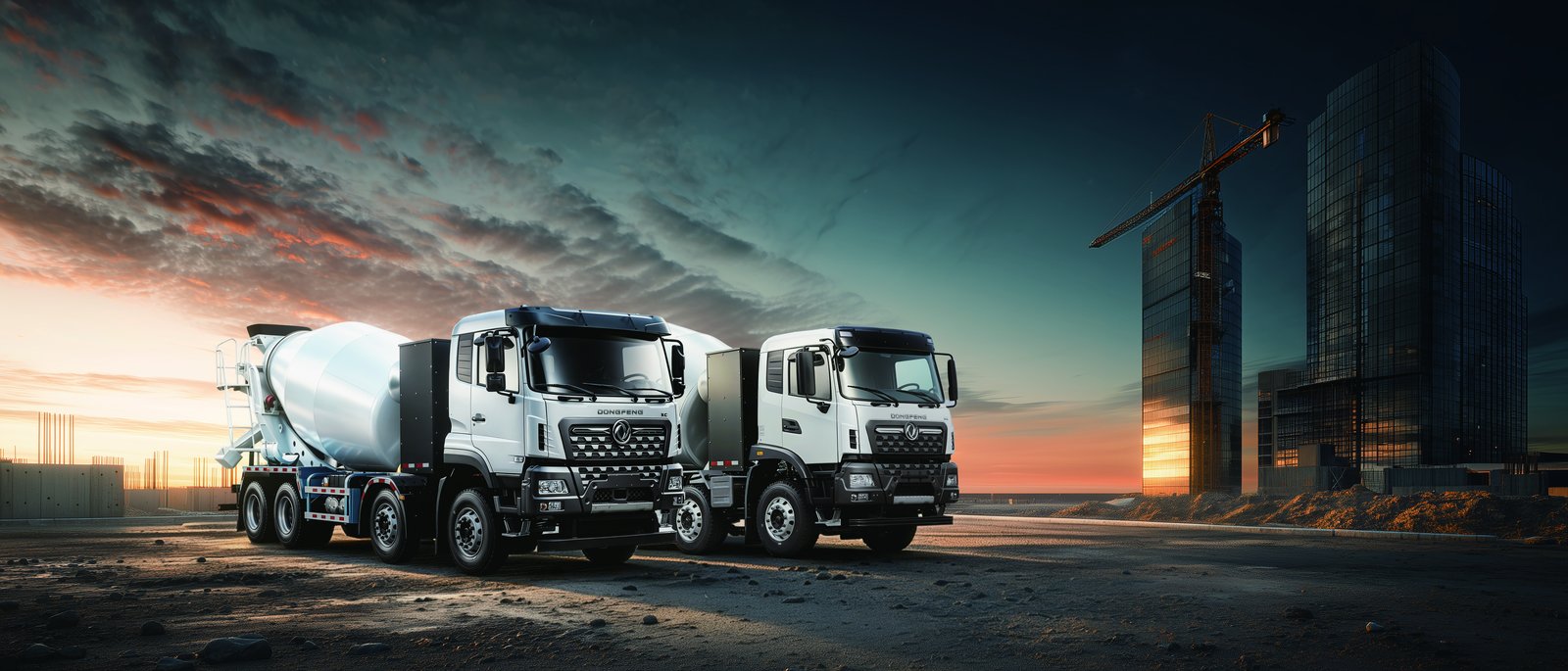
Riyadh is the fastest-changing freight market in the Middle East. The Saudi capital's construction programme — the New Murabba district and its Mukaab, Diriyah Gate, Qiddiya, Sports Boulevard and the continuing expansion of King Khalid International Airport — generates a decade-long demand for concrete, aggregates and materials logistics at a scale with few historical parallels. Around it sits a distribution economy serving seven million people, supplied through the Riyadh dry port and the King Abdullah Financial District logistics belt. Two Saudi-specific factors make the electric truck case unusually strong: first, Saudi Arabia has among the cheapest electricity in the world — industrial tariffs around USD 0.05–0.09/kWh backed by a national grid rapidly adding solar at record-low generation costs — while diesel runs USD 0.60–0.95/L; second, the Public Investment Fund's EV ecosystem strategy and Vision 2030's sustainability commitments have made electrification a tender-level scoring item in giga-project procurement. This article covers the TE9L long-range electric tractor for Riyadh's regional haulage and the KT9X electric mixer for its construction cycle, the 50 °C engineering file, and a worked fleet model. For the full national picture including Jeddah and the GCC, see our Saudi Arabia electric truck market guide.
Riyadh fleet electrification resolves into three duty bands:
The first question every Saudi fleet manager asks about an electric truck is heat, so it deserves a direct answer. The CATL LFP packs on our export units are liquid-cooled through a dedicated thermal management circuit that holds cell temperatures in the 25–35 °C window even at 45–50 °C ambient — the same architecture CATL deploys in Middle East bus and truck fleets. Three specific design points matter:
| Heat topic | Diesel truck behaviour | Dongfeng EV truck behaviour |
|---|---|---|
| Peak ambient (June–Aug) | Cooling derate, A/C load saps power | Pack cooling loop holds cells ≤35 °C; drive derate threshold rarely reached |
| Idle at site gates | Engine idling for A/C, 4–6 L/h | A/C on HV battery, ~2–3 kWh/h — a rounding error |
| Battery cycle life in heat | n/a | 8-year / 4,500-cycle warranty frame includes Gulf duty thermal profile |
| Cabin cooling energy | Engine-driven, high fuel penalty | Electric heat-pump A/C, 3–6 kWh/h, preconditionable while charging |
The honest caveat: heat does cost range. Expect 8–12% higher consumption in July–August than in January because cooling loads and air density both work against the truck. The right way to buy in Riyadh is to specify the battery for the summer duty cycle — which is exactly what our Saudi configuration files do, sizing the pack so the worst month still clears the route with margin.
Saudi Arabia applies a 5% GCC common external duty on trucks plus 15% VAT. Freight from China runs 18–28 days to Jeddah or Dammam. Three Saudi-specific files matter:
Concrete is the single largest materials flow in Riyadh's construction decade, and the KT9X — an 8x4 electric mixer on a ~410 kWh CATL LFP pack with electric drum drive — is engineered for it. The electric drum motor is a decisive Gulf advantage: it runs at variable speed independent of the diesel engine's rpm, which means better mix quality control, less energy waste while queued at the pump, and the ability to hold the drum in slow agitation for hours during pour delays without burning fuel. On a Riyadh batching-to-pour cycle of 60–120 km, the KT9X covers a full two-pour day on one charge, with a lunch-break 120 kW boost adding a third run. Against a diesel mixer burning 45–60 L/day on the same cycle at Saudi prices, the KT9X saves USD 9,000–13,000 per truck-year in fuel alone. Our earlier KT9X Saudi giga-project analysis covers the pour-level economics in depth; the Riyadh-specific point is tender access: giga-project procurement now carries explicit sustainability scoring, and a contractor fleet that arrives electric has a defensible ESG line item competitors must spend heavily to match.
Assumptions: 6 TE9L tractors on Riyadh–Al Kharj–Sudair regional duty (220 km/day at 42 t GCW) and 6 KT9X mixers on the batching cycle (110 km/day), 330 operating days, diesel at USD 0.75/L, industrial electricity at USD 0.07/kWh:
| Annual item (12 trucks) | Diesel fleet | Electric fleet |
|---|---|---|
| Fuel / energy | USD 350,000–410,000 | USD 82,000 |
| Maintenance | USD 96,000 | USD 36,000 |
| Charging infrastructure (annualised) | — | USD 34,000 |
| Total annual operating | USD 476,000 | USD 152,000 |
Roughly USD 324,000 of annual savings against an incremental capital cost of USD 480,000–580,000 — a 18–22 month payback, the fastest in the Gulf, because Saudi electricity is nearly free relative to any diesel market we serve. The TE9L's FOB runs USD 118,000–145,000 and the KT9X USD 105,000–128,000 depending on configuration; both land at roughly 1.2× after GCC duty, VAT and freight.
The Riyadh depot case is the easiest in our portfolio: cheap grid power, flat sites, new construction. A 12-truck mixed fleet needs one dedicated 1 MVA feeder, four 120 kW dual-gun chargers and one 240 kW fast unit — USD 250,000–330,000 of infrastructure for a depot that will scale to 20+ trucks. Rooftop solar is worth adding wherever warehouse roofs permit: Riyadh's 5.8–6.2 kWh/m²/day irradiation lets a 400 kWp array displace 20–30% of charging energy at costs below the already-low tariff, and Saudi banks increasingly recognise the asset class in green financing lines.
For most Riyadh operators the first order is 3–5 KT9X mixers (payback is fastest and the tender optics are immediate) or a pair of TE9L tractors on a fixed Al Kharj corridor. Fenghan's Gulf package includes the SABER file, summer-rated thermal configuration, driver and technician training, and a first-year spares consignment. The Kingdom has decided its freight future is electric — the question for Riyadh fleets is only whether they arrive at that future ahead of their competitors or behind them.
Ready to electrify your fleet? Contact Shaanxi Fenghan Trading — authorized Dongfeng EV truck exporter. WhatsApp: +86 153 1943 1311 | Email: sales@fenghan-trade.com | dongfengevtrucks.com
🌐 Our Network: Fenghan Trade (SAGMOTO/SHACMAN Truck Export) · 4x2 6x4 tractor truck prime mover