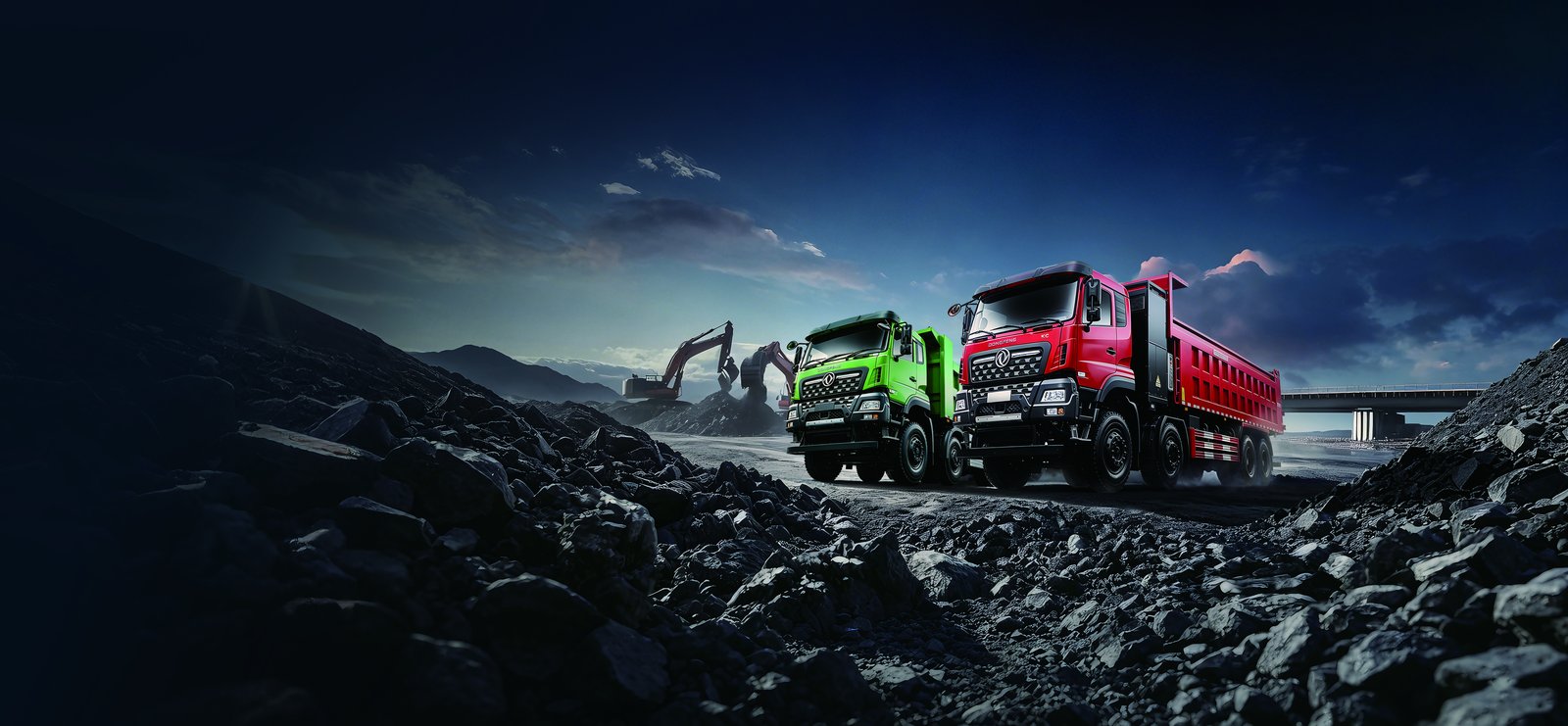
Saudi Arabia is running the largest construction programme on Earth. Neom, Qiddiya, the Red Sea destinations, Diriyah and the infrastructure layers beneath them pour concrete at a scale that consumes mixer fleets by the hundred — and every one of those projects carries something no previous construction mega-programme had: a written decarbonisation commitment with international visibility. The Line's zero-emission ambitions, giga-project sustainability charters and Vision 2030's green transition framing have changed the tender documents: contractors and their concrete suppliers are now scored on emissions, and the fleet that shows up with diesel mixers answers that question badly. This article analyses the Dongfeng KT9X — the WVTA-grade electric mixer with CATL 410 kWh LFP and electric drum drive — as the concrete-fleet play for Saudi giga-projects: the machine, the 50 °C engineering reality, the tender mathematics and the TCO.
| Parameter | KT9X Specification |
|---|---|
| Configuration | 8x4 electric mixer truck |
| Drum | 8 m³, electric drum drive |
| Battery | CATL LFP 410 kWh, liquid-cooled |
| Drive | LvKong electric axle, 240–300 kW class |
| Charging | Dual-gun DC 240 kW (CCS2); 40–70 min to full |
| Safety systems | EBS, AEBS, ESC — WVTA-grade architecture |
| Pack warranty | 8 years / 4,500 cycles |
| Indicative FOB | USD 115,000–145,000 |
Two specification choices carry the Saudi application. First, the 410 kWh pack sizes the truck for the full giga-project day: at Saudi duty (laden shuttle plus continuous drum rotation plus aggressive air conditioning), consumption runs 1.3–1.6 kWh/km plus 4–6 kWh per drum-hour; 12 cycles of 90 km lands around 350–400 kWh — one full charge plus a queue top-up carries the day, and the batch plant is where both happen. Second, the electric drum drive eliminates the hydraulic PTO circuit — historically the most heat-stressed and failure-prone system on Gulf mixer fleets — and keeps the drum turning through portal and pump-queue waits on a trickle of battery rather than an idling engine.
We have published the LFP thermal-management physics in depth; the Saudi-specific operating summary:
The decisive Saudi feature is that the KT9X's value splits into two columns. Column one is conventional TCO:
| Annual cost per truck (60,000 km + 3,000 drum-hours) | Diesel 8x4 mixer | KT9X |
|---|---|---|
| Fuel / energy (Gulf diesel USD 0.55–0.70/L; power USD 0.04–0.08/kWh) | USD 21,000–27,000 | USD 6,500–10,500 |
| Maintenance (engine, PTO, hydraulics, DPF) | USD 7,500–9,500 | USD 2,200–3,000 |
| Brakes | USD 1,400 | USD 550 |
| Annual saving per truck | — | USD 14,000–20,000 |
| 15-truck fleet annual saving | — | USD 210,000–300,000 |
Column two is the tender premium: giga-project sustainability scoring, contractor Scope 3 reporting, and the reputational arithmetic of a programme whose international audience reads every emissions number. Column two has no diesel offset — it is a pure differentiator. In competitive Saudi concrete bids, we have seen column two decide awards between otherwise comparable suppliers; a fleet that can document zero-tailpipe concrete delivery, with telemetry-verified kWh and CO₂ avoidance per m³, is answering a question the client is already asking.
The Saudi import path: SASO conformity and the SABER platform certification (we prepare the technical file including UN 38.3 battery summaries, MSDS and type documentation); commercial vehicle registration under Saudi rules; RORO shipment to Jeddah Islamic Port or Dammam, typically 20–30 days from China. Landed cost runs roughly 15–25% above FOB. Deployment notes specific to the application: coordinate charger installation with the batch-plant operator early (the plant's grid connection is the project's electrical anchor — industrial power at Saudi tariffs is among the cheapest truck-charging energy in the world); plan the first summer as an instrumented season, with SoH telemetry reviewed monthly; and align driver training with the heat-discipline module from our Gulf operating protocols.
The giga-projects will be pouring concrete for a decade. The question for every concrete supplier in the Kingdom is not whether zero-emission fleets enter the scoring — they already have — but whether your fleet is on the right side of that line when the next tender opens. The KT9X is the machine that puts it there.
The KT9X purchase is rarely a mixer decision alone. Giga-project concrete fleets are systems — tippers feeding the plant, mixers serving the pours, water trucks managing dust and curing, tractor units moving cement in bulk — and the Dongfeng EV platform's breadth converts one supplier relationship into an electrified ecosystem sharing chargers, spares, training and telemetry. The same dual-gun 240 kW cabinets that feed the KT9X fleet at the batch plant charge the TZ-series electric tippers running aggregate in and the KT7A water trucks running dust control on the haul roads. The same HV-qualified technicians, certified on one platform, service all of it. The same charge-management and tariff engineering amortises across every unit that plugs in. And the same telemetry platform reports one integrated CO₂-per-tonne-of-concrete figure — the number that sustainability departments increasingly want, and that no diesel fleet can produce at any price.
This cross-fleet logic changes the procurement arithmetic in the supplier's favour as the programme grows: the second and third vehicle types electrify cheaper than the first, because the infrastructure, competence and management systems already exist. It also changes the sequencing advice we give Saudi operators: start with the vehicle type whose duty cycle and savings are strongest — very often the mixers, for the reasons in the TCO table above — and let the infrastructure you build for them pull the rest of the fleet electric over the following seasons. The alternative path, electrifying one vehicle type per vendor in disconnected pilots, multiplies the overhead and dilutes the data; the platform path compounds both.
There is a financing dimension too. Saudi banks and the giga-projects' own procurement finance structures respond well to fleet programmes that arrive with integrated infrastructure plans and unified telemetry — the underwriting question "what exactly are we financing?" has a clean answer when the answer is a system rather than a collection of trucks from three vendors with three charging standards. We structure multi-vehicle-type programmes precisely so that the financing conversation, the tender submission and the operating reality are the same document — the quiet discipline that separates programmes that scale from programmes that stall at pilot size.
Ready to electrify your fleet? Contact Shaanxi Fenghan Trading — authorized Dongfeng EV truck exporter. WhatsApp: +86 153 1943 1311 | Email: sales@fenghan-trade.com | dongfengevtrucks.com
🌐 Our Network: Fenghan Trade (SAGMOTO/SHACMAN Truck Export) · SAGMOTO heavy duty diesel trucks