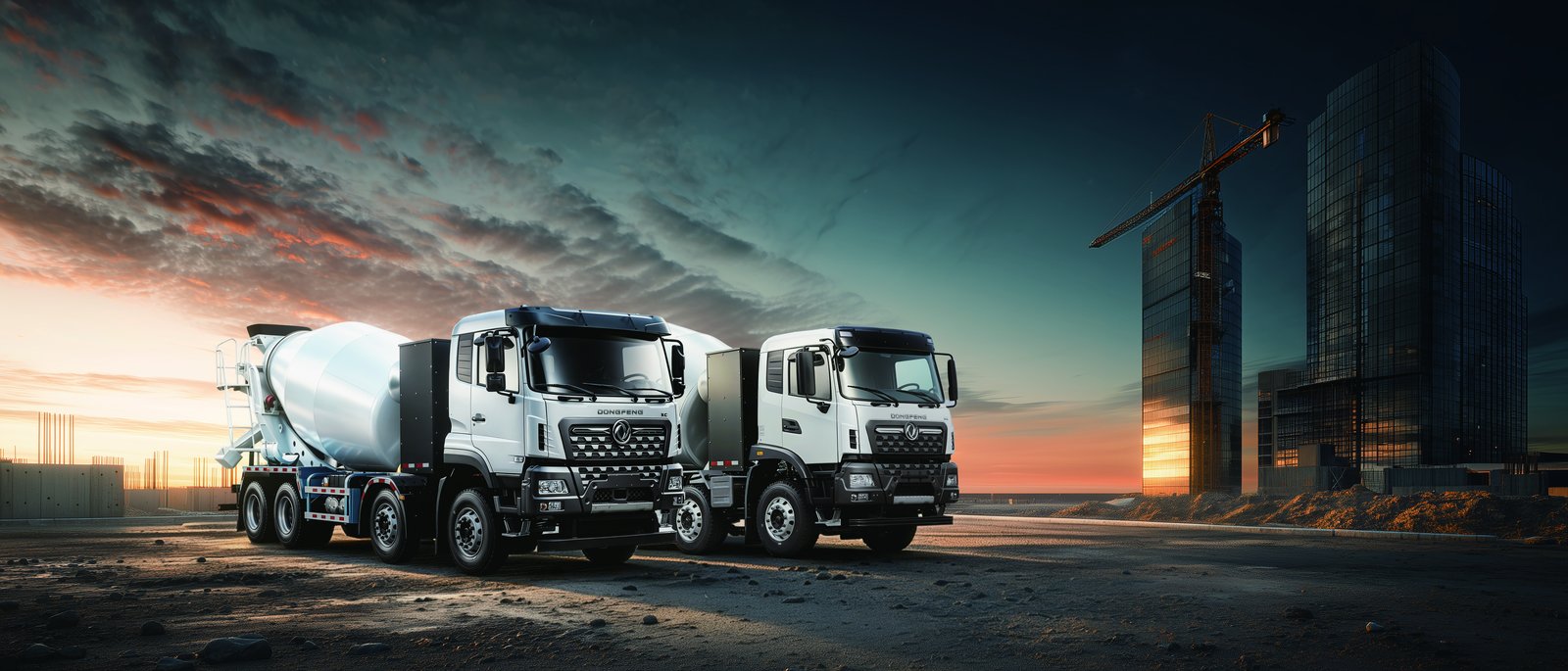
A high-rise pour is an industrial event conducted in a residential street. The tower crane needs continuous concrete for the core slip or the slab cast; the pump needs a mixer discharging every 6–10 minutes for hours; the street below has neighbours, noise rules, daytime truck bans and a city that never entirely stops resenting the construction. The fleet that feeds that pump — a dozen mixers cycling between the batching plant and the tower's compact site — is doing the most demanding urban truck work there is: precise timing, heavy loads, stop-start congestion, and a chemistry clock (90 minutes batching-to-pour) that punishes every traffic delay. The KT9X electric mixer, with its ~410 kWh CATL LFP pack and electric drum drive, was engineered for exactly this event — this article covers the high-rise case: the pour-day logistics, the night-pour advantage, the city access rules, and the project economics. For the market context, see our Qatar electric truck market guide — Doha's high-rise programme is one of the purest tower-construction markets in our portfolio.
A tower pump feeding a slab cast consumes concrete at a rate the mixer fleet must match exactly:
| Parameter | Typical value | What it demands of the fleet |
|---|---|---|
| Pump throughput | 50–90 m³/h | A mixer discharging every 6–10 minutes, non-stop for the pour window |
| Pour volume, a major slab | 800–3,000 m³ | 10–14 mixers in continuous rotation for 10–30 hours |
| Cycle time, plant-to-pump | 45–90 minutes in dense city duty | Fleet size = cycle time ÷ discharge interval, plus contingency |
| Chemistry window | 90 min batching-to-pour (shorter in heat) | Queueing at the pump is the failure mode — timing discipline is everything |
Two KT9X advantages live inside that table. First, the electric drum's programmable agitation means the mix arrives consistently workable on every cycle — the plant's retarder package works with a predictable drum-speed profile instead of a driver's throttle habits. Second, the queue at the pump — the moment mixers sit waiting, drum turning, in the worst air of the whole construction — costs a diesel mixer 5–8 L/h and an electric one 3–5 kWh: the biggest pour-day cost difference, at the moment it matters most.
The high-rise fleet lives inside the permission structure of the city it builds in: daytime access windows, emissions-based restrictions and low-emission zones that are tightening across every dense market we serve. A mixer fleet that is electric walks through the whole structure — night access, LEZ entry, noise complaints, even the neighbours' opinion of the site — while a diesel fleet negotiates each gate. In tender terms for the main contractor, the electric concrete supplier's fleet plan de-risks the programme's logistics consent; that de-risking is priced, increasingly, in the supply quotes.
The pour pattern drives the charging plan: 10–14 trucks rotating on 45–90 minute cycles around a batching plant that holds three-phase industrial power:
A worked model for a high-rise fleet: 10 KT9X mixers on 60 km cycles, 2.5 cycles/day average, 280 days/year, urban night-heavy duty, electricity at USD 0.11/kWh, diesel at USD 1.20/L:
| Annual item (10 trucks) | Diesel mixer fleet | KT9X electric fleet |
|---|---|---|
| Fuel / energy (incl. drum & queue duty) | USD 290,000–350,000 | USD 48,000–58,000 |
| Maintenance | USD 88,000 | USD 33,000 |
| Night-pour compliance costs | USD 12,000–25,000 | near zero |
| Charging infrastructure (annualised) | — | USD 25,000 |
| Total annual operating | USD 410,000 | USD 110,000 |
USD 300,000 of annual savings against an incremental capital cost of USD 320,000–400,000 — payback inside 16 months on tower duty, before counting the tender-scoring value with main contractors whose clients (the developers, and behind them the financiers with green-building frameworks) increasingly ask what the concrete supply chain emits. Our TCO-per-cubic-metre analysis carries the pour-level math in more detail.
High-rise construction is the most visible freight a city contains — the neighbours hear it, the councillors get asked about it, and the developer's brand rides on it. An electric mixer fleet turns that visibility from a liability into a story, while cutting the pour's cost per cubic metre beneath every diesel quote in the district. The towers going up now are the ones being built quietly. For the sibling model in the mixer family, see also the TZ8J electric mixer truck, which covers the metro-tunnel and underground pours the KT9X's high-rise fleet feeds from the same batching plant.
One more perspective completes the picture: the developer's. The company financing the tower increasingly lives inside a green-building framework — EDGE certification, a bank with construction-lending sustainability criteria, an anchor tenant whose lease carries emissions clauses. The developer's procurement team asks the concrete supplier two questions: what does your fleet emit, and can you prove it. The diesel supplier answers with offsets and intentions; the electric supplier answers with kWh logs, grid factors and a pour-night noise file, and the developer's own marketing team writes the answer into the sales brochure. In the high-rise markets where this pattern is most advanced, concrete supply has quietly become a scoring line in the tender — and the scoring does not read "committed to sustainability"; it reads tonnes of CO2, measured.
Concrete is the second-most-consumed substance on Earth after water, and towers are its showcase. What pours quietly at midnight now also sells quietly at the penthouse level.
Ready to electrify your fleet? Contact Shaanxi Fenghan Trading — authorized Dongfeng EV truck exporter. WhatsApp: +86 153 1943 1311 | Email: sales@fenghan-trade.com | dongfengevtrucks.com
🌐 Our Network: Fenghan Trade (SAGMOTO/SHACMAN Truck Export) · SAGMOTO heavy duty diesel trucks