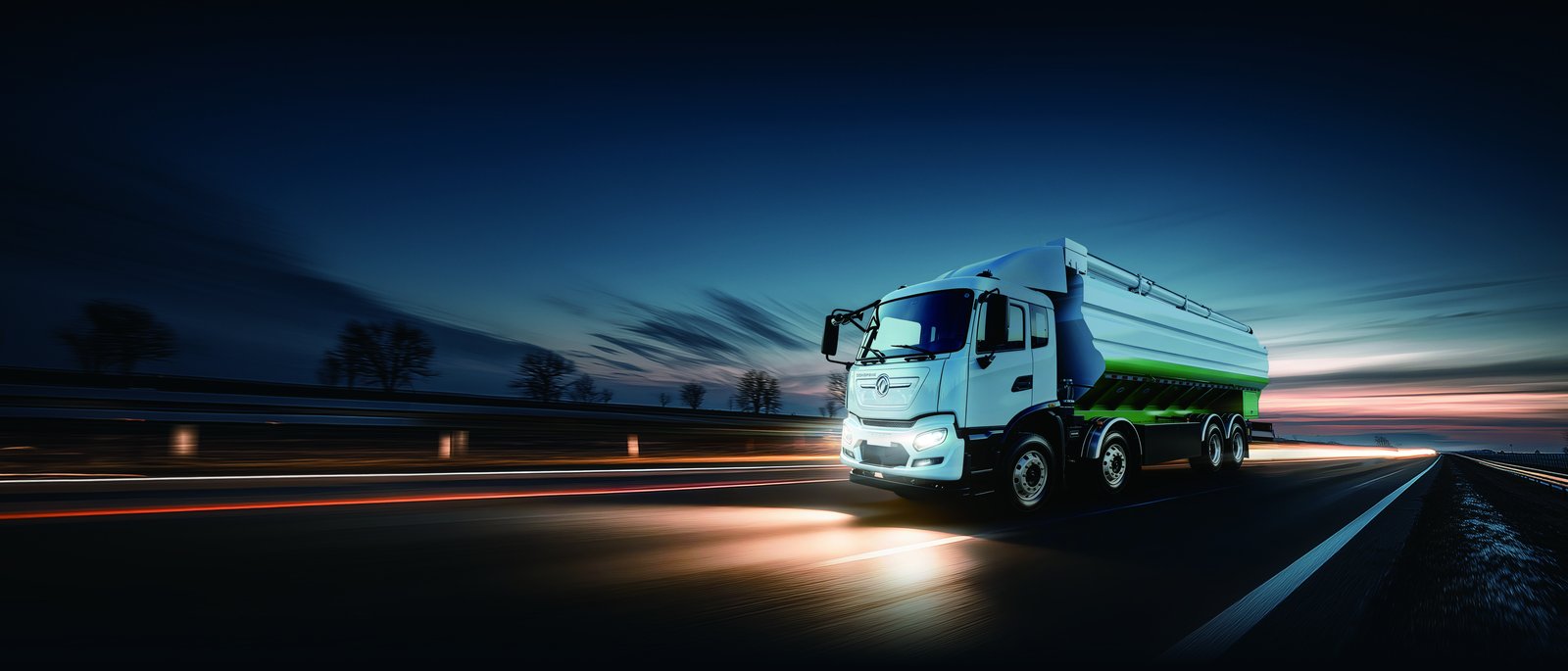
For Chilean logistics operators evaluating the KT5J electric cargo truck, the warranty package is often the deciding factor between committing to a first EV truck and staying on diesel. This guide translates the standard Dongfeng EV warranty into the language a Santiago fleet manager actually uses: uptime, battery degradation, dust, altitude, and how fast a claim gets paid.
The KT5J is delivered with a comprehensive factory warranty built around the two components that matter most to a B2B buyer: the CATL LFP battery pack and the LvKong drive motor. The battery carries an 8-year or 4,500-cycle warranty, whichever comes first, while the motor and high-voltage controller are covered for 5 years or 250,000 km. The chassis, cab, and standard 12V electrical systems follow a 3-year or 150,000 km structural warranty. This layered structure means the most expensive part of the vehicle, the battery, is also the most protected, which is the opposite of the risk profile on a diesel powertrain.
Coverage includes the battery management system, the on-board charger, the DC fast-charge inlet, and the thermal management loop. Seals, wipers, brake pads, and tires are consumables and fall outside the base warranty, as is standard across the Chilean commercial vehicle market. Remote diagnostics software updates are provided for the full battery warranty period at no charge, so the truck keeps improving its energy management without a dealer visit. The HV harness, connectors, and charge port are covered against manufacturing defect, and the anti-corrosion clause protects the frame in coastal and mining regions.
Chilean fleets do not operate in a benign climate. The Atacama corridor and the routes climbing toward the Andes expose the KT5J to two stressors that European warranties rarely address: fine abrasive dust and sustained altitude above 3,000 meters. The IP67-sealed battery enclosure and the closed-loop cabin air filter are covered against dust ingress under normal operation. Operators running the truck above 4,000 m should note that motor output is derated for cooling margin, a calibration choice that keeps the warranty valid rather than voiding it. In practice this means a mine-supply run to altitude simply carries a small, predictable power margin, not a denied claim.
The most important number for a fleet buyer is the capacity floor. Dongfeng guarantees the KT5J battery will retain at least 80 percent of its original usable capacity within the 8-year or 4,500-cycle window. Below that threshold, the pack is repaired or replaced at no cost. This protects the daily range of roughly 240 km that a Santiago to Rancagua shuttle depends on, and it removes the single largest fear buyers cite about switching to an electric truck. Because the CATL LFP chemistry is inherently stable, most packs reach year eight still above the floor, but the guarantee converts that expectation into a contractual commitment a CFO can underwrite.
| Spec | KT5J Value |
|---|---|
| Battery capacity | 262 kWh CATL LFP |
| Motor power | 240 kW LvKong |
| Range | 240 km |
| GVW | 16 t |
| Battery warranty | 8 years / 4,500 cycles |
| Capacity floor | 80 percent retained |
| DC fast charge | 20-80 percent in 45-75 min |
| Battery swap | 5-6 minutes |
| FOB price band | 46,000-60,000 USD |
A battery swap at a depot takes 5-6 minutes, which means a degraded pack can be exchanged during a shift without losing a full day, and the warranty covers the swap labor when the capacity floor is breached. For a fleet running multiple shifts, this swap capability is what turns a capacity claim from a downtime event into a routine maintenance slot.
Warranty is only as good as the local support behind it. The KT5J is backed by a Santiago-based service hub with trained high-voltage technicians, a stocked parts buffer, and a mobile response unit for roadside high-voltage isolation. The standard claim workflow is deliberately short:
For fleets running night shifts, the service window includes Saturday coverage so a failed truck does not lose a full week of deliveries. Most electrical warranty repairs are finished inside 48 hours because there are fewer wear parts than a diesel equivalent, and the absence of oil, fuel, and exhaust systems removes the most common sources of unscheduled shop time. The Santiago hub also runs operator refresher sessions so drivers report faults early, when they are cheap to fix.
Beyond the warranty itself, the Chile program includes a parts-availability commitment. High-frequency items such as contactors, fuses, cabin filters, and suspension bushings are held locally, while low-frequency HV modules are air-freighted on a 48-hour target. Fleets can also buy a low-cost extended service plan that caps labor rates and guarantees a loaner vehicle class for any repair exceeding three working days. For a distributor moving time-critical goods, that loaner clause is often worth more than the parts coverage, because it converts an unknown outage into a managed, forecastable disruption that the customer never sees.
The warranty shapes the whole TCO picture. The table below compares a KT5J against a comparable diesel cargo truck over an 8-year, 480,000 km life in Chilean urban freight.
| Cost element | Diesel (USD) | KT5J EV (USD) |
|---|---|---|
| Purchase (FOB equivalent) | 42,000 | 53,000 |
| Fuel or electricity | 115,000 | 38,000 |
| Maintenance and repairs | 34,000 | 19,000 |
| Battery (warranty covers to year 8) | 0 | 0 |
| 8-year total | 191,000 | 110,000 |
Even with a higher sticker, the KT5J lands roughly 80,000 USD ahead over eight years, and the warranty is what lets the buyer assume zero battery cost across that span. Chilean operators using the Santiago zero-emission access rules also avoid downtown restriction penalties that a diesel would incur, which adds a compliance saving on top of the energy and maintenance math.
A warranty is a two-way contract. To keep the KT5J coverage active, operators must follow the prescribed maintenance cadence, use approved charging equipment, and retain service records. Skipping the scheduled high-voltage inspection or using an uncertified DC charger that damages the BMS can void the battery portion of the warranty. The good news is that the scheduled checks are light: there is no oil to change, no diesel filter, and no exhaust aftertreatment to service. Chilean buyers should also register the vehicle with the national importer within 60 days of arrival so the warranty clock and the local service record align, and they should keep every charging session on certified equipment so the BMS log stays clean.
With those steps complete, the KT5J gives a Santiago fleet a predictable, documentable cost structure for the full 8-year battery life, and operators can budget depreciation and energy costs years ahead instead of gambling on a diesel powertrain that gets more expensive to maintain with every kilometer.
Ready to electrify your fleet? Contact Shaanxi Fenghan Trading — authorized Dongfeng EV truck exporter. WhatsApp: +86 153 1943 1311 | Email: sales@fenghan-trade.com | dongfengevtrucks.com
🌐 Our Network: Fenghan Trade (SAGMOTO/SHACMAN Truck Export) · SAGMOTO cargo truck flatbed box stake