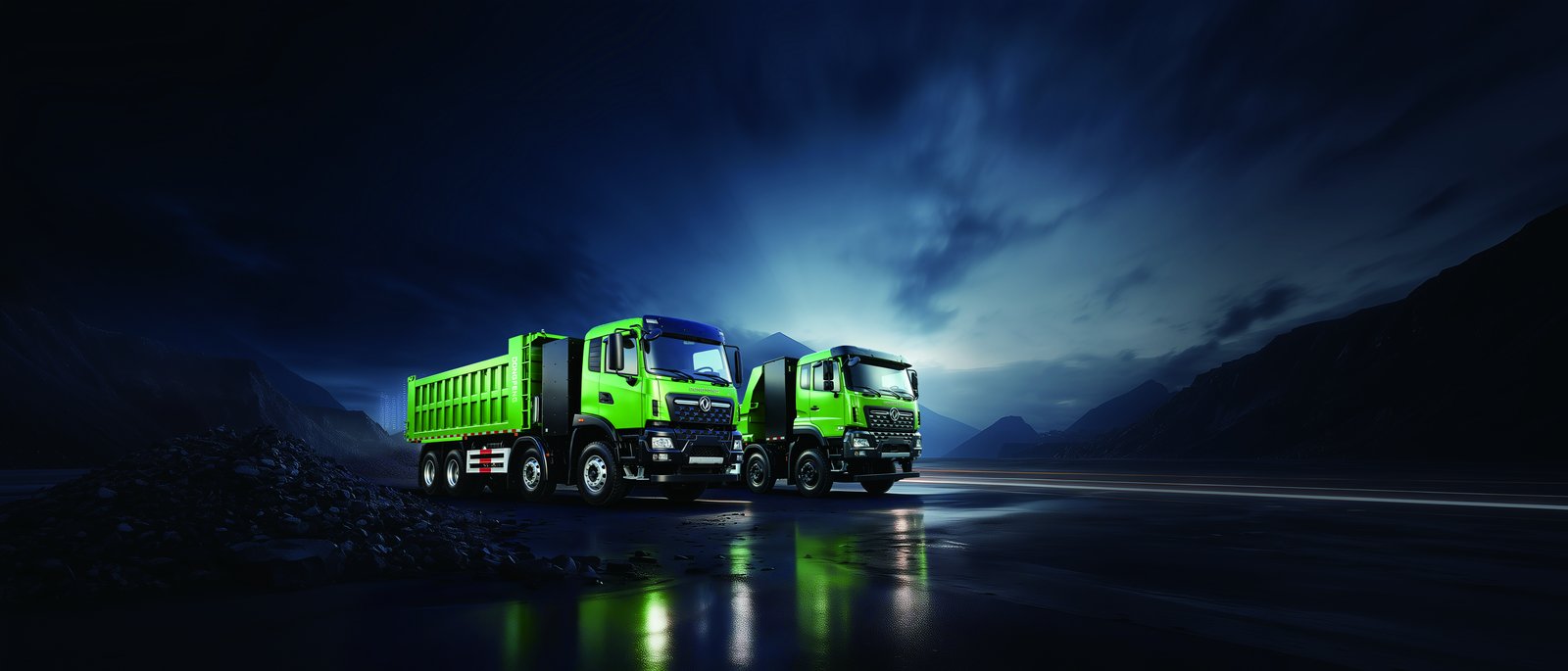
A CATL LFP battery pack is the component that decides whether an electric truck earns its keep or becomes a stranded asset, and the data behind fast charging and cycle life is where fleets should spend their due diligence. The 600 kWh pack in the TZ3V 600 kWh electric dump truck is built around lithium iron phosphate chemistry chosen for thermal stability and a long, predictable service life, which matters for operators in the Chile electric truck market running high-cycle mining and port duty.
Lithium iron phosphate, or LFP, trades some energy density for a chemistry that is tolerant of abuse. It resists thermal runaway, accepts fast charging without the same degradation penalty as nickel-rich cells, and holds its capacity across a wide temperature band. For a heavy EV truck that sees deep daily discharges and frequent DC fast charging, those traits are worth more than a few extra watt-hours per kilogram. The CATL LFP cells used across the Dongfeng EV range are rated for the kind of duty that would prematurely age a passenger-car pack.
The headline warranty is 8 years or 4,500 cycles, whichever comes first. That is not a marketing number you should discount; it is the basis on which a fleet can model battery replacement as a known cost rather than a gamble. A cycle is one full equivalent discharge and recharge. A truck that runs one deep cycle per shift, six days a week, accumulates roughly 1,560 cycles per year. At 4,500 cycles, that is close to three years of hard use, after which the pack is warranted to retain a usable state of health. In practice, LFP packs often keep 80 percent capacity well beyond the warranty floor, extending economic life further.
| Parameter | Specified value | Fleet implication |
|---|---|---|
| Chemistry | CATL LFP | Stable, fast-charge tolerant |
| Pack size (TZ3V) | 600 kWh | Full-shift mining duty |
| Warranty | 8 years / 4,500 cycles | Bounded replacement cost |
| Charge rate | 1C to 2C | 30 to 60 min to 80 percent |
| Cycle life to 80 percent SOH | 4,500+ cycles | Multi-year economic life |
Charge rate is expressed in C, where 1C fills the pack in one hour. A 600 kWh pack at 1C accepts 600 kW of power; at 2C it accepts 1,200 kW. The real-world curve is not linear. Cells accept the highest power in the mid-state-of-charge band and taper near the top to protect life. A practical depot strategy charges to 80 or 90 percent at high power, then finishes slowly or simply sends the truck out, because the last 10 percent costs the most time for the least range. Fleets that design around 80 percent fast charges, topped opportunistically, get the best throughput per charger.
Repeated 2C charging is safe on CATL LFP within the specified window, but mixing in slower overnight charges reduces heat accumulation and extends pack life. The TZ3V's thermal management keeps cell temperature in the safe band even in hot climates, which is why the platform suits the Chile electric truck market with its Atacama heat and altitude.
Degradation is best understood as capacity loss per 1,000 equivalent cycles. Well-managed LFP in heavy-truck duty typically loses 1 to 3 percent per 1,000 cycles in the first three years, then flattens. The biggest accelerants are sustained high state-of-charge storage, frequent top-to-bottom deep discharges in heat, and charging at maximum power when cells are already hot. Avoiding those three habits is free and extends pack life materially.
The TZ3V 600 kWh electric dump truck runs liquid thermal management on the pack, circulating coolant to hold cells in their comfort zone during both fast charge and heavy discharge. In a copper or lithium mine where ambient can exceed 40°C, that loop is the difference between a pack that ages gracefully and one that does not. The same system supports cold-region operation with heating, though that is covered in the winter-operations guide.
Because the pack is a standardized 600 kWh unit, battery swap is an option that decouples charging from the truck. Swapping in a fresh pack in five to six minutes lets a single truck run multiple shifts on one chassis while packs charge at a controlled, life-friendly rate off the vehicle. This protects cycle life because charging happens in a managed environment rather than squeezed between dispatches.
For fleet buyers, the takeaway is that the battery risk on a Dongfeng EV is bounded and measurable. The 4,500-cycle warranty, the fast-charge tolerance of CATL LFP, and the thermal management together mean the pack should outlast the financing period for most duty cycles. When you compare total cost of ownership, treat the battery as a known, amortized line item rather than a hidden liability.
The TZ3V's pack uses a cell-to-pack layout that removes intermediate module hardware, improving volumetric efficiency and reducing mass. For a mining truck where every kilogram of dead weight is payload lost, that matters. More importantly for fleet finance, the structural integration means the pack is protected from vibration and impact that would shorten a loosely mounted battery. LFP's stable chemistry plus physical protection gives operators confidence to run the truck in dusty, shock-loaded environments that would worry a lesser pack.
To use the 1C to 2C capability, the depot must deliver the power. A 600 kWh pack at 1C needs roughly 600 kW of charger; at 2C, about 1,200 kW. Most fleets do not need 2C on every truck every shift, so a blended approach, a few high-power stalls plus several overnight units, covers the duty at lower capital. Sizing to the daily energy total divided by the available charge window is the reliable method, and it keeps demand charges in check as covered in the fleet demand-charge guide.
A warranty is only as good as the process to use it. Fleets should record per-truck cycle counts and state-of-health through telematics so a claim is a data export, not a dispute. The 4,500-cycle or 8-year threshold is unambiguous, and clean records mean a degraded pack is replaced on schedule. A pack that leaves warranty at 80 percent state of health is not scrap; it is a candidate for stationary storage at a mine or depot, offsetting replacement cost and aligning with the circular approach many mining clients now require.
In the Chile electric truck market, where mining and export logistics run long shifts, the TZ3V's combination of a 600 kWh CATL LFP pack and an 8-year warranty has made electric haulage a bankable line in the fleet plan rather than an experiment. The data supports the move, provided operators respect the simple charging discipline above.
Ready to electrify your fleet? Contact Shaanxi Fenghan Trading — authorized Dongfeng EV truck exporter. WhatsApp: +86 153 1943 1311 | Email: sales@fenghan-trade.com | dongfengevtrucks.com
🌐 Our Network: Fenghan Trade (SAGMOTO/SHACMAN Truck Export) · SAGMOTO heavy duty diesel trucks