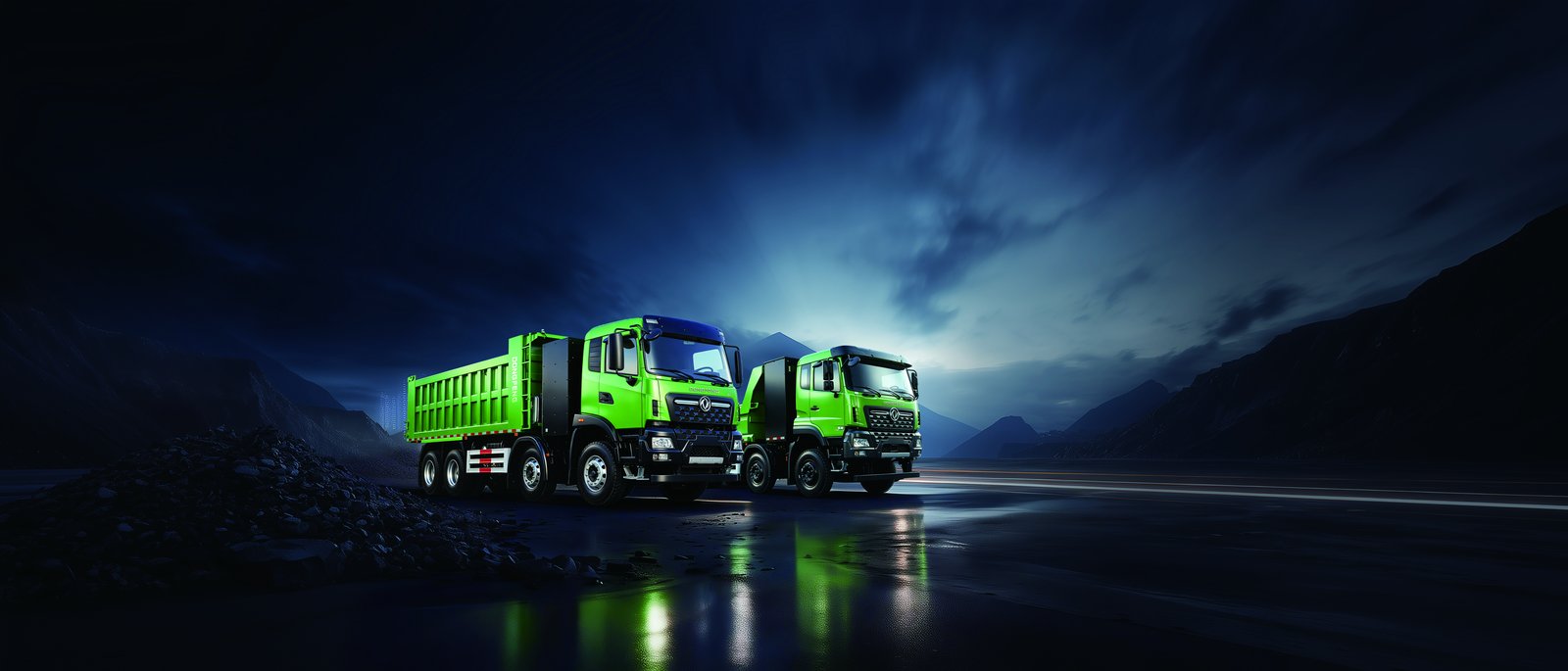
Antofagasta exists because of the mines behind it. The city of 400,000 is the service port for Escondida, Zaldívar, Centinela, Radomiro Tomic and the rest of the northern copper belt, and its industrial geography is built around three flows: concentrate and cathode moving down from the altiplano to the port of Coloso and the Mejillones terminal, desalinated water pumping from coastal plants up to mine operations, and the endless construction and maintenance that keeps a mining region alive. We have written about Chile's Santiago corridors and the Atacama mining fleets; this is the port-city piece — how an Antofagasta-based operator electrifies with the TZ3V 8x4 electric dump truck and the KTA1 8x4 electric dump truck. Country context is in the Chile market guide.
Contract fleets around Antofagasta run a distinctive mix of duty cycles, most of them electric-ready today:
The La Negra industrial corridor deserves particular attention: it stretches south of the city as a ribbon of mineral-processing plants, acid terminals and logistics yards — flat, linear, and 35 km end to end. It is effectively a private freight corridor on which an electric fleet with two charging points runs at minimum energy cost.
| Mission | Vehicle | Why it fits |
|---|---|---|
| Port–mine supply, 90–150 km legs | TZ3V (CATL 600 kWh) | 600 kWh covers the full climb-and-return cycle; 550 kW peak power holds speed on gradients |
| Concentrate and materials shuttles | KTA1 (CATL 352 kWh) | Short heavy loops; quad-axle payload spread at 31 t GVW |
| Desal plant O&M | KTA1 flatbed/water spec | Fixed linear corridor duty, charging at plant substations |
| La Negra corridor haulage | Either, by payload | Flat 35 km ribbon — the cheapest electric kilometres in Chile |
The altitude question comes up with every Chilean client. The TZ3V's electric drivetrain does not derate meaningfully in thin air the way a turbo-diesel does — electric motors lose nothing to altitude, while diesel units lose several percent of rated power by 2,500 m. On the Antofagasta–Baquedano climb, the electric truck arrives with the same power it left with, and descends with a battery 8–12% fuller than it started the descent.
Antofagasta region hosts some of the best solar irradiance on Earth, and the grid that serves it is increasingly solar-fed. For a fleet operator this creates a three-layer energy strategy:
The blended energy cost for a fleet using all three layers lands near USD 0.05–0.08/kWh — against diesel at Chilean pump prices, the cost per kilometre gap on heavy duty is the widest of any market we serve: roughly USD 0.40–0.50/km for an equivalent diesel tipper versus USD 0.09–0.12/km electric on the same route.
Consider a TZ3V running port-to-Baquedano supply, 280 km/day round trip, 300 days per year, 84,000 km/year — an extreme but realistic northern duty:
At that duty level the TZ3V's CAPEX premium repays in well under two years. Even on the gentler KTA1 concentrate shuttle duty — 45,000 km/year — the payback stays inside three.
Chile's mining majors publish decarbonisation targets with Scope 3 contractor requirements attached, and their procurement teams increasingly ask haulage contractors for fleet emissions data. An Antofagasta contractor running electric trucks on a solar-fed depot can answer that question with a number close to zero — a genuine tender differentiator in the current contract cycle. Several of our Chilean conversations in 2026 started not with fuel prices but with a mining company's supplier questionnaire.
Chile's EV import regime is among the friendliest in Latin America — zero-duty treatment for electric vehicles, straightforward SEREMI/Servicio de Evaluación registration, LHD configuration as standard, and Chilean banks familiar with financing electric commercial vehicles. Vehicles ship RoRo or flat-rack to Iquique, Antofagasta or San Antonio in 35–40 days from China; Iquique's free-zone regime can also serve operators planning multi-market northern deployment. Our standard package includes Spanish-language documentation, driver training curricula and a pre-positioned spares kit matched to fleet size.
Antofagasta's economy already runs on copper and sunlight. Putting the trucks that serve it on the same electrons is less a technology leap than an overdue alignment. The operators who convert their port-to-mine and La Negra fleets in this contract cycle will hold a cost and tender position their competitors will need years to match.
Ready to electrify your fleet? Contact Shaanxi Fenghan Trading — authorized Dongfeng EV truck exporter. WhatsApp: +86 153 1943 1311 | Email: sales@fenghan-trade.com | dongfengevtrucks.com
🌐 Our Network: Fenghan Trade (SAGMOTO/SHACMAN Truck Export) · heavy duty mining dump truck 6x4 8x4