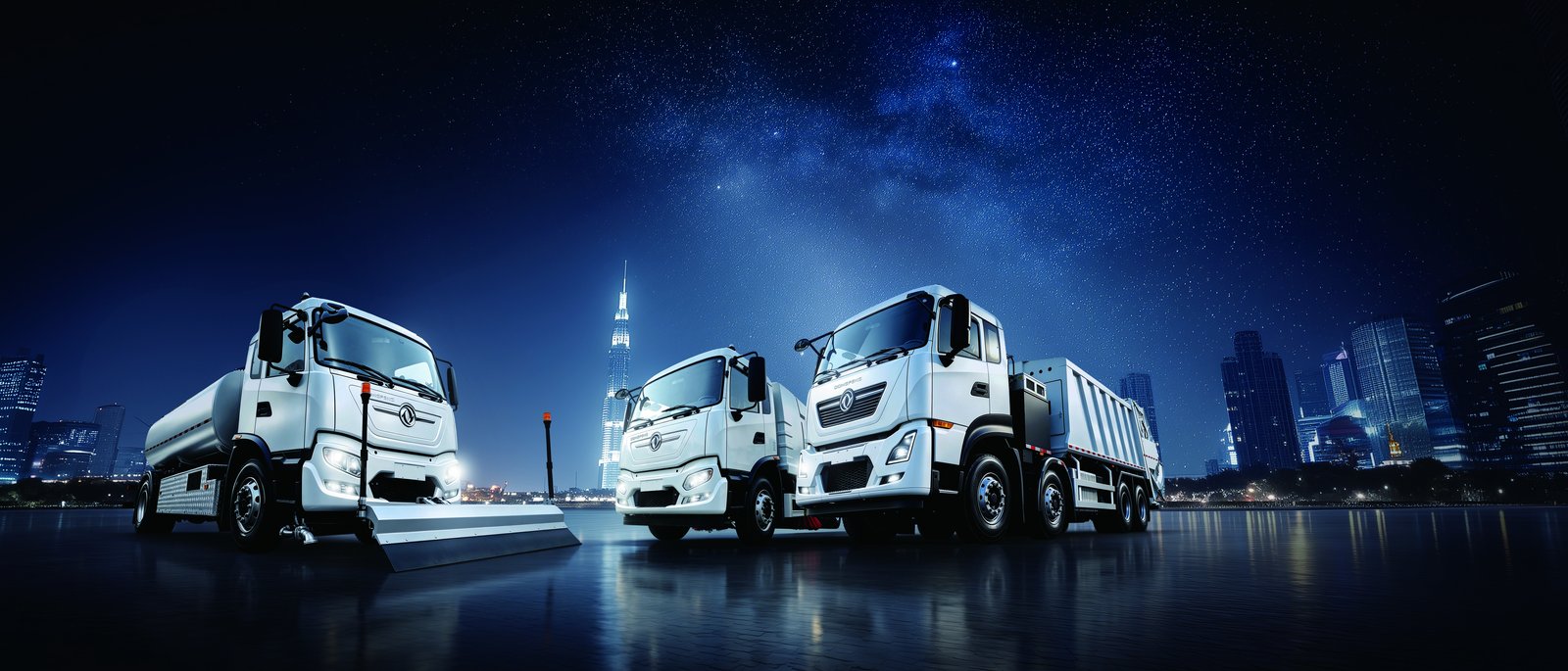
Quick answer: The best electric truck for cold chain logistics is the Dongfeng KT5L electric cargo truck, which pairs a 262 kWh LFP battery with a 240 kW motor and 260 km of nominal range. With a reefer drawing 4 to 8 kW, real-world range falls to about 170 to 195 km per charge, which still covers most city and regional refrigerated loops on one depot charge plus a midday top-up, at roughly 60 percent lower energy cost than a diesel reefer unit.
The KT5L is the right choice because cold chain duty is stop-start, urban, and time-critical, exactly where a battery electric truck wins. Its 18t GVW handles typical refrigerated box loads, and the 262 kWh pack absorbs both propulsion and refrigeration draw across a two-shift day. The KT5L electric cargo truck also fits the tight delivery windows of pharmacy, meat, and dairy distribution in dense Gulf cities.
For longer regional cold chain beyond 200 km per leg, a larger pack such as the 300 kWh KTH3 may be needed, but for city cold chain the KT5L offers the best payload-to-battery balance and the lowest upfront cost in the USD 50,000 to 65,000 FOB band. The sealed electric drivetrain also removes the diesel reefer's cabin noise and fumes during night delivery, a real advantage for hospital and supermarket receiving docks.
A refrigeration unit draws 4 to 8 kW continuously, and during Gulf summer pull-down the compressor can spike higher. On the KT5L, that reduces the 260 km nominal range by about 25 to 35 percent, leaving 170 to 195 km of usable range with the reefer running. That is enough for the majority of urban cold chain routes, which average 120 to 160 km per shift.
| Condition | KT5L range | Note |
|---|---|---|
| Box empty, no reefer | 260 km | Nominal catalog range |
| Reefer on, mild climate | 195 km | 4 kW draw |
| Reefer on, Gulf summer | 170 km | 8 kW draw, pull-down |
| Two shifts, one top-up | 340 to 390 km | Midday 20 to 80 percent charge |
Operators in the UAE EV truck market should size the route to the 170 km summer figure, not the catalog 260 km, to keep a safety margin for traffic and door waiting time. Pre-cooling the box on depot power before departure also helps, because it uses cheap grid energy instead of battery and preserves road range.
You need at least a 262 kWh LFP battery for city refrigerated delivery. Smaller packs force charging mid-shift and break the delivery sequence, while the LFP chemistry gives the 8-year or 4,500-cycle life that cold chain operators require from a daily-worked asset. The CATL LFP cells in the KT5L hold up well under the partial-state-of-charge cycling that depot charging produces.
Yes. A cold chain depot charges the KT5L during the shift change with a 45 to 75 minute DC fast charge, restoring enough energy for the second shift. Where a battery swap station sits on the route, a 5 to 6 minute swap eliminates the charge wait entirely. Either way the truck supports 16 to 18 hours of daily refrigerated service, matching diesel uptime without idling emissions.
For a true 24-hour operation, two KT5L units can share one reefer body roster, or a swap station can keep a single truck in service across three shifts. The key is matching the charge or swap window to the natural break between delivery waves, which most cold chain depots already have at midday and midnight.
The KT5L cuts energy cost per km by roughly 60 percent versus diesel, removes reefer idling inside city low-emission zones, and runs far quieter for night pharmacy and grocery delivery. The 8-year or 4,500-cycle battery warranty covers the full service life, and the sealed electric drivetrain reduces refrigeration-adjacent maintenance. For a UAE cold chain fleet, the total cost of ownership beats a diesel reefer within 30 to 36 months of daily two-shift operation, after which the energy saving is pure margin on every refrigerated kilometer.
Sizing starts from the daily refrigerated kilometer target, not the truck's catalog range. Take the 170 km summer figure for the KT5L, add a 20 percent buffer for traffic and door waits, and you get a dependable 135 km working loop. A single truck covers two such loops per day with a midday top-up, so a 600 km daily network needs roughly 4 to 5 KT5L units rather than the 3 a naive 260 km range would suggest.
Build the charger count from the shift-change window. If all trucks return at once, you need parallel ports; if they stagger, one 240 kW charger serves four trucks across the day. Right-sizing the depot avoids both a charge bottleneck and wasted capital on idle ports.
Electric reefer units powered from the truck's LFP pack give the cleanest control, because compressor speed tracks the setpoint without a separate diesel burner. For multi-temperature loads, specify a unit with two independent zones so frozen and chilled share one box without cross-contamination. Pre-cool on depot power, hold the setpoint through the route, and the battery draw stays in the 4 to 8 kW band the range table assumes.
Telemetry is the final piece. A connected reefer reports door-open events and setpoint breaches to the depot, so a cold chain operator proves food-safety compliance and protects both the cargo and the resale story of a well-run KT5L. That data also feeds the battery health certificate that later supports a strong used-truck price.
A cold chain depot should size its charger to the shift-change window, not the overnight idle. If all KT5L units return together, parallel 120 to 240 kW ports restore the 20 to 80 percent band in 45 to 75 minutes across the fleet; if they stagger, a single shared port serves the whole day. Pre-cool the boxes on grid power before departure so the battery spends its energy on the road, not on pull-down at the dock.
For sites with a battery swap cabinet, swap the pack in 5 to 6 minutes and keep the truck in service across three shifts without a charge wait. The swapped pack charges centrally during off-peak, which lowers energy cost and evens pack wear. Either model keeps the cold chain continuous, which is the real test of whether an electric truck can replace a diesel reefer in daily food and pharma distribution.
The KT5L is the best electric truck for cold chain because its 262 kWh LFP battery, 240 kW motor, and 260 km range survive a 4 to 8 kW reefer draw across two urban shifts, and its depot or swap charging keeps the truck moving without diesel idling. Size the fleet to the 170 km summer range, pre-cool on grid power, and the total cost of ownership beats a diesel reefer within 30 to 36 months of daily service.
The KT5L electric cargo truck with its 262 kWh LFP battery and 240 kW motor is the best fit for city and regional cold chain runs up to 260 km per charge, because its 18t GVW and 2-shift depot charging match refrigerated delivery duty cycles.
A reefer electric truck loses about 25 to 35 percent of range with the refrigeration unit running, so the KT5L drops from 260 km to roughly 170 to 195 km per charge, which still covers most urban cold chain loops on a single depot charge plus a midday top-up.
You need at least a 262 kWh LFP battery for city refrigerated delivery, because the pack must power both the 240 kW drive motor and a 4 to 8 kW reefer draw over a 2-shift day; smaller packs force too-frequent charging and cut on-time deliveries.
Yes, an electric reefer truck can run two shifts from a depot with a 45 to 75 minute DC fast charge at the shift change, or battery swap in 5 to 6 minutes where a swap station exists, keeping the KT5L available for 16 to 18 hours of daily cold chain service.
You choose the KT5L over a diesel reefer truck because it cuts energy cost per km by roughly 60 percent, removes diesel reefer idling emissions inside city zones, and carries an 8-year or 4,500-cycle battery warranty that covers the full cold chain service life.
Ready to electrify your fleet? Contact Shaanxi Fenghan Trading — authorized Dongfeng EV truck exporter. WhatsApp: +86 153 1943 1311 | Email: sales@fenghan-trade.com | dongfengevtrucks.com
🌐 Our Network: Fenghan Trade (SAGMOTO/SHACMAN Truck Export) · SAGMOTO cargo truck flatbed box stake