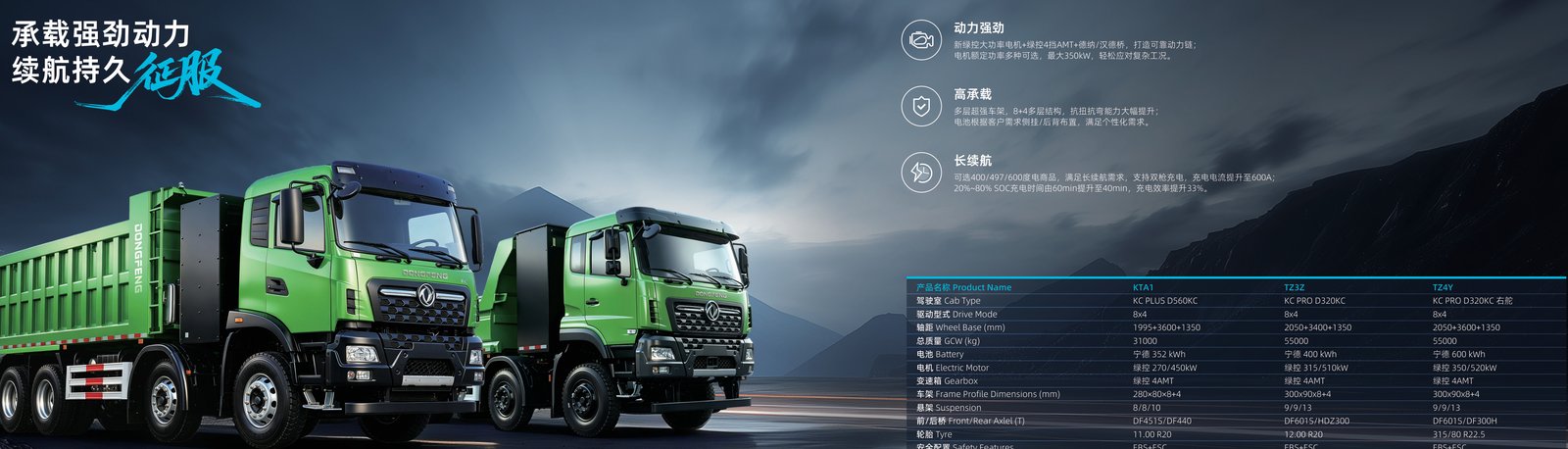
A diesel truck earns money exactly one way: by hauling freight. An electric truck can earn two ways — hauling freight and selling energy back to the grid. This is vehicle-to-grid, V2G: bidirectional charging that lets a parked EV truck with a 262–600 kWh CATL pack act as a grid-connected battery, absorbing cheap power overnight and discharging it during expensive peak hours, or standing ready as reserve capacity the grid pays to have available. A single TE8M with a 600 kWh pack holds more energy than a dozen household batteries; a depot of fifteen of them is a 9 MWh power station that happens to haul containers by day. This article explains the technology, the revenue streams, the battery-wear question every fleet manager asks first, and — honestly — which duty cycles and markets make V2G real money and which make it a slide in a conference deck.
| Stream | Mechanism | Realism today |
|---|---|---|
| Energy arbitrage | Charge in cheap off-peak hours, discharge into peak pricing | Real in high-spread markets (day-ahead spreads of USD 0.08–0.25+/kWh); requires bidirectional hardware |
| Capacity / reserve payments | Paid to be available to discharge during grid stress | Real where capacity markets exist (parts of Europe, North America, Australia); availability payments accrue even if never dispatched |
| Peak shaving (behind the meter) | Discharge to avoid the depot's own demand charges | The most broadly applicable — works anywhere demand charges exist, no market enrolment needed |
| Backup power | Trucks power the depot or site through outages | Operational value rather than revenue; often decisive in unreliable-grid markets |
Peak shaving deserves emphasis because it is the entry point almost every fleet should take first: in markets where commercial bills carry demand charges (billing by peak kilowatt draw), discharging trucks during the depot's own peak windows flattens the site's measured demand — savings that require no aggregator, no market enrolment, and no contract lawyer, just bidirectional chargers and scheduling software.
Modelling a 15-truck depot (mixed TE tractors and TZ tippers, average 400 kWh per pack) in a market with USD 0.10 off-peak / USD 0.28 peak spread, participating in arbitrage on weekdays at 50% depth of the available energy:
Set against the bidirectional charger premium (roughly 30–60% over one-way DC units of the same class), the business case closes inside the pack's warranty window in the right market — and never closes in a flat-tariff one. Which is the entire strategic point: V2G is a market-structure play, not a universal feature.
Every fleet manager asks the same first question: doesn't cycling the pack for the grid eat the warranty I'm counting on? The honest engineering answer:
Geography decides the business case more than hardware does. Europe leads: capacity markets, aggressive evening peak pricing driven by solar-duck curves, and regulatory frameworks that increasingly treat depot fleets as grid resources. Australia and parts of North America follow with high tariff spreads. Emerging markets are more interesting than they look: unreliable grids invert the value proposition — a truck fleet that can power its own depot through outages (or sell backup power to an adjacent factory) captures value that no tariff structure measures but every operator understands. In those markets the "revenue" line is actually avoided downtime, which needs no aggregator to bank.
A composite drawn from programme designs we have modelled for buyers: a 20-truck city distribution depot in a market with a wide evening peak spread enrolls through an aggregator. Trucks return at 18:00 averaging 45% SoC — energy tonight's routes don't need and tomorrow's routes can replace with cheap overnight charging. The scheduling brain promises 6 MWh of discharge into the 18:00–21:00 peak, holds a 25% floor for the early routes, and refills from 23:00 off-peak. The depot adds bidirectional hardware across its six charge points at a 40% premium over one-way units. The account at year-end: arbitrage plus availability revenue in the mid-five figures per year for the depot, demand-charge savings on top, and pack health telemetry showing wear indistinguishable from the non-V2G sister fleet. The fleet manager's summary: the trucks now have a second shift nobody drives.
Before any aggregator signature, put five items in writing on both sides: the availability windows you are promising (and the penalty structure when a truck's route overruns — the classic failure mode is a grid commitment colliding with a freight surge); the depth-of-discharge floor protecting your morning dispatch energy; how grid-discharge cycles are counted against the battery warranty; the revenue split and settlement frequency; and the exit terms, because fleet operations change and a V2G contract that cannot flex with them is a liability. Fleets that negotiate these five points up front treat V2G as what it should be — a low-effort second revenue stream on assets that already earn. Fleets that skip the negotiation discover what an availability penalty feels like the week their biggest customer doubles its order.
Shaanxi Fenghan Trading is an authorised Dongfeng EV truck exporter. We specify fleets with V2G-relevant duty in mind — bidirectional-ready charging architecture, ISO 15118 communication capability, and pack warranty terms reviewed against grid-participation plans — and we model the depot energy account against your actual route and tariff data before you commit hardware.
Ready to electrify your fleet? Contact Shaanxi Fenghan Trading — authorized Dongfeng EV truck exporter. WhatsApp: +86 153 1943 1311 | Email: sales@fenghan-trade.com | dongfengevtrucks.com
🌐 Our Network: Fenghan Trade (SAGMOTO/SHACMAN Truck Export) · heavy duty trucks export China