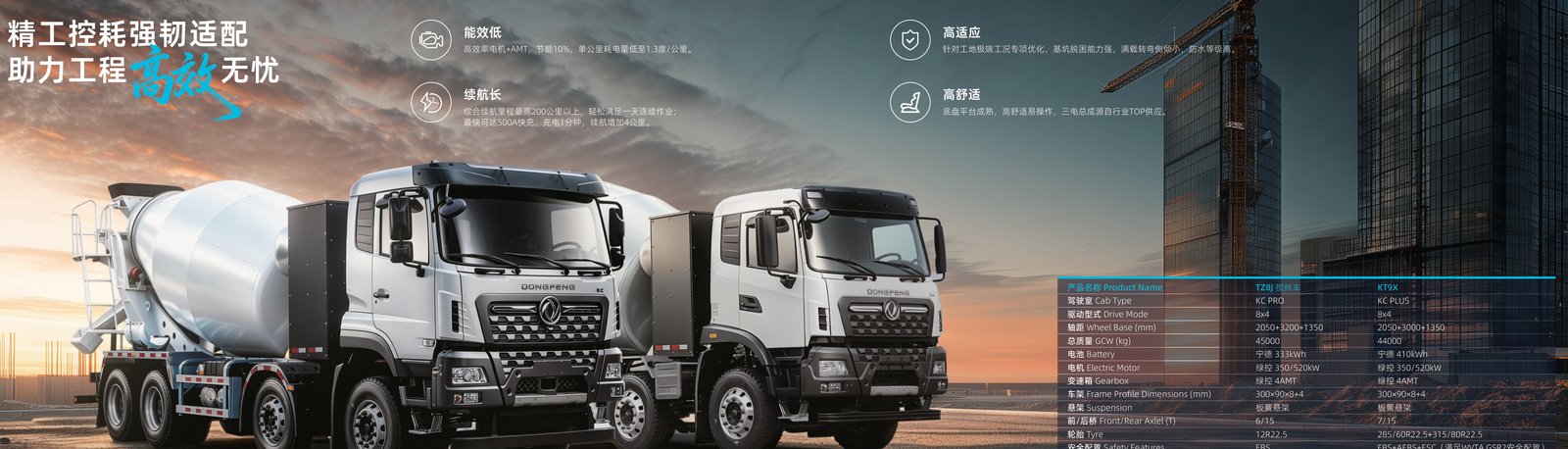
Every technology transition eventually produces a second-hand market, and electric trucking has now been at commercial scale long enough to produce its first cohorts of retired, redeployed and remarketed vehicles. For buyers in emerging markets — where capital is scarce, duties bite hard on new imports, and duty cycles are gentler than the first owner's — a certified used EV truck can be the difference between electrifying this decade and waiting another one. For first owners, the same market determines the residual values that make fleet financing work. Both sides of that trade need the same knowledge: how used-EV-truck value is actually determined, what battery health certification means, what the honest risks are, and how the import paperwork differs from a new-truck shipment. This is that guide.
A diesel truck's value fades with kilometres and rust. An electric truck's value bifurcates: the chassis ages like any truck (slowly), while the battery ages as its own asset with its own curve. The used price is therefore mostly a chassis price plus a battery-health price:
| Value component | Driver | Effect on price |
|---|---|---|
| Chassis, cab, body | Kilometres, accident history, corrosion, body condition | Depreciates like a comparable diesel truck — moderately |
| Drivetrain (motor, inverter, axle) | Hours, thermal history | Depreciates slowly — far fewer wear items than diesel |
| Battery pack | State of Health (SoH): remaining capacity vs new; cycle count; warranty status | The dominant variable — a pack at 90% SoH and one at 75% SoH are different assets |
| Charger & telemetry compatibility | Communication standards, software support | Increasingly priced: OCPP-standard, well-supported platforms hold value |
The practical rule of thumb developing across the market: a well-documented three-to-five-year-old electric truck with 85–92% SoH trades at 55–70% of its new price — a stronger retention than equivalent diesel, because the drivetrain's slow aging offsets the battery's faster one. The documentation is doing real work in that number: an identical truck with no SoH history trades at a heavy discount, because the buyer is pricing uncertainty.
SoH certification is the used-EV-truck market's central instrument. What a credible one contains:
For cross-border trades, the certification matters twice: once at pricing, and again at financing — banks lend against certified SoH, not against a seller's adjective. Any used electric truck presented without measurable SoH data should be priced as if its battery needs replacing, because that is the risk being transferred.
The used market's natural buyers sit in exactly the markets where new-import capital costs bite hardest:
The economics, worked: a used electric delivery truck at USD 45,000–55,000 (versus USD 72,000–92,000 new, same model) saving USD 6,500–9,500 a year in fuel and maintenance against a diesel equivalent pays back its premium in roughly two to three years — even before accounting for the residual it will still hold, because an 80%-SoH pack retains stationary-storage value at end of truck life.
The battery documentation requirements are identical to new — UN 38.3 test summaries (traceable to the pack's original certification), MSDS, IMDG-compliant declarations — but used shipments add valuation scrutiny: customs authorities examine the declared value of used vehicles closely, and the SoH certificate is precisely the document that supports it. A file that pairs the commercial invoice with an independent SoH certification closes the valuation question before it opens. Destination-market rules vary on used-vehicle imports (age limits, pre-shipment inspection regimes, and in some markets restrictions on used commercial imports altogether) — verify the destination rule before contracting the units, not while they sit at the port.
The same market that supplies emerging-market buyers is what makes new-truck financing workable for first owners. Three practical implications for anyone buying new today:
A composite drawn from trades we support: a West African FMCG distributor wanted to test electric distribution but couldn't justify new-truck capital against its board's three-year payback bar. The entry was four certified used KT5J-class delivery trucks — 90/88/87/85% SoH, documented BMS histories, warranty terms transferred in writing — landed at 58% of new cost all-in. The pilot ran eighteen months on 120 km city loops with 40-minute midday top-ups; the fuel-and-maintenance data it produced then financed a twelve-unit order for new trucks, with the pilot units retained as the second shift's spares pool. The fleet manager's summary was the cleanest endorsement of the segment we know: the used trucks didn't just prove electrification works here — they priced the proof at a number the board would sign.
Shaanxi Fenghan Trading is an authorised Dongfeng EV truck exporter, active on both sides of the used-market value chain: we supply new Dongfeng EV trucks whose families guarantee long parts and software paths, and we broker certified used units within the current platform generation — with verified SoH documentation, full battery paperwork, warranty transfer coordination and RORO/container logistics. Whether you are buying your first electric truck or planning the residual value of your fiftieth, the file is the asset.
Ready to electrify your fleet? Contact Shaanxi Fenghan Trading — authorized Dongfeng EV truck exporter. WhatsApp: +86 153 1943 1311 | Email: sales@fenghan-trade.com | dongfengevtrucks.com
🌐 Our Network: Fenghan Trade (SAGMOTO/SHACMAN Truck Export) · heavy duty trucks export China