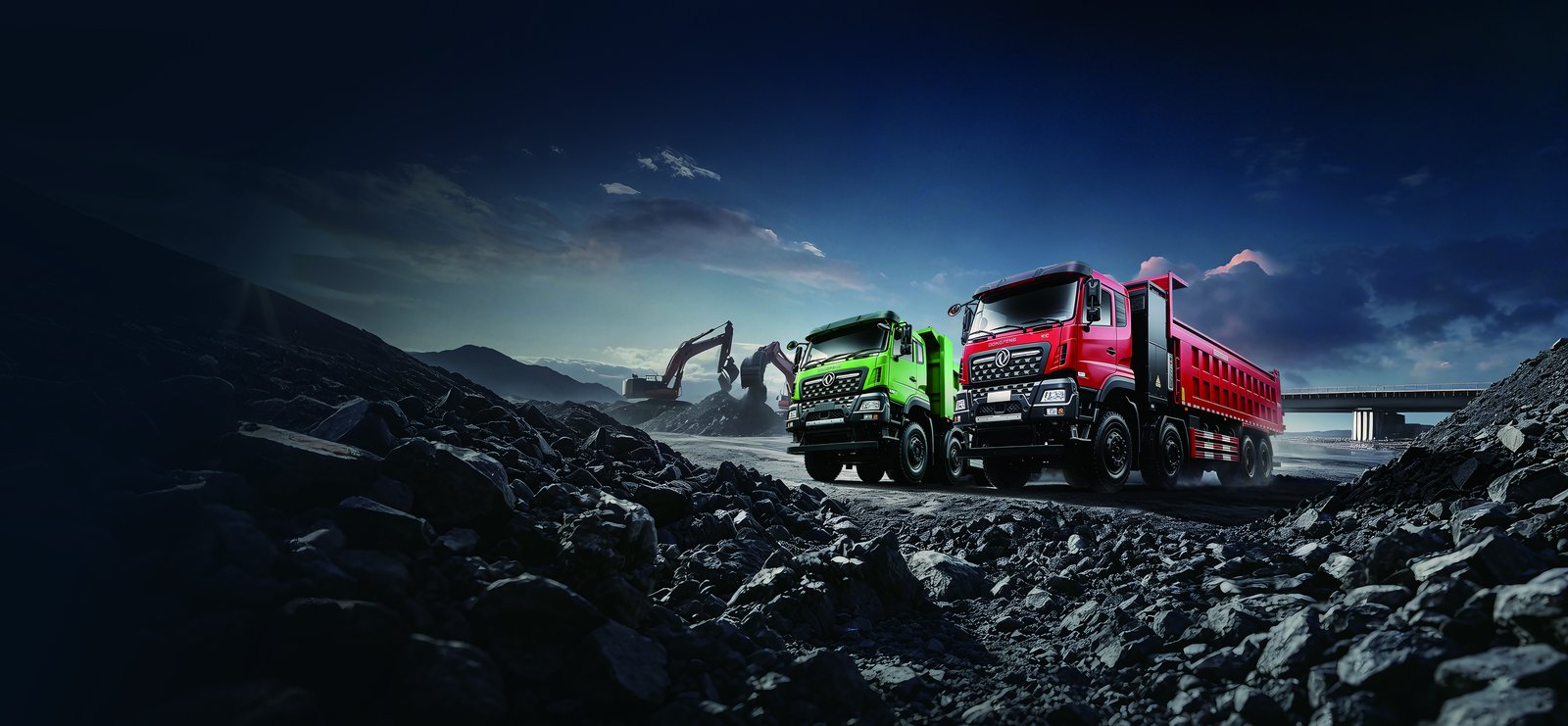
China's electric mixer segment has matured fast, and export buyers now face a genuine two-horse race: the Dongfeng TZ8J electric mixer, part of Dongfeng's commercial EV range built around CATL LFP packs and LvKong drives, and the electric mixer offerings from SANY, the construction-machinery giant that electrified its truck line on the strength of its own construction-equipment customer base. Both are credible machines. Neither is universally the right answer — the right choice depends on your duty cycle, your market's service infrastructure, and how your fleet mixes mixers with other vehicle types. This comparison lays out the engineering, economics and export-support differences honestly, and closes with the five questions that decide it.
The philosophical difference shows up everywhere downstream. Dongfeng is one of the world's largest commercial vehicle manufacturers, and the TZ8J descends from a heavy-truck chassis lineage — its priorities are chassis durability, cab ergonomics for long shifts, and integration with a broad truck family (the same CATL-LvKong electrical architecture runs across the TE tractors, TZ dump trucks and KT cargo range). SANY built its mixer business from the construction side: deep relationships with batching plants and concrete contractors, robust structures engineered like machinery, and a service network historically strongest around construction sites rather than truck fleets.
For a mixed fleet buyer, that lineage translates directly into maintenance economics: a fleet running TZ8J mixers alongside TZ dump trucks or KT box trucks stocks one family of HV components, one charger ecosystem, one telemetry platform. A mixer-only contractor working project-to-project may find the machinery-maker's site-centric support model a better cultural fit.
| Parameter | Dongfeng TZ8J | SANY electric mixer (comparable class) |
|---|---|---|
| Drum capacity | 8–12 m³ depending on spec | Comparable 8–12 m³ drum options |
| Battery chemistry | CATL LFP, 350–423 kWh class, liquid-cooled | LFP (CATL-class cells), comparable pack sizes by variant |
| Drive | LvKong electric drive 282–360 kW class; independent electric drum drive | Electric drive with integrated drum drive; configurations vary by generation |
| Real loaded range | 200–280 km (Gulf summer derating 5–8%) | Comparable by pack size; verify per-variant test data |
| Battery warranty | 8 years / 4,500 cycles | Warranty terms negotiable per deal; verify cycle and SOH thresholds in writing |
| Charging | Dual-gun DC fast charge, 60–90 min | DC fast charge, comparable charge curves by pack |
| Indicative FOB | USD 140,000–170,000 with drum | Comparable band; SANY pricing is typically project-quoted |
A candid note on specification tables: the headline numbers across Chinese electric mixers have converged. Pack sizes, drum volumes and quoted range sit within overlapping bands. The differences that matter over an eight-year ownership are below the headline — cell-to-pack integration quality, thermal management under sustained 40 °C+ duty, drum-drive control precision, spare-parts logistics to your market, and how the warranty handles SOH thresholds and cycle counting. Those are procurement questions, not brochure questions.
Because energy consumption per cycle is similar across comparable LFP mixers, the TCO difference between the two brands comes from the non-energy lines: maintenance structure, spares logistics, residual values and warranty administration. On a 12-mixer fleet over eight years, a difference of USD 1,500 per truck-year in those lines is USD 144,000 — several times the typical purchase-price gap. That is why the five questions above, not the brochure comparison, are the real decision. Buyers who negotiate the service layer hard end up happy with either machine; buyers who compare only spec sheets and price are gambling the fleet's uptime on an unsigned assumption.
A composite drawn from fleets we work with: a Gulf concrete group trialling electrification split an eight-unit pilot — four TZ8J mixers and four from a machinery-brand line — across two batching plants with identical duty. Both brands moved concrete reliably; the differences emerged in the second year. The TZ8J units' shared parts commonality with the group's newly arrived TZ dump trucks cut the spares inventory and workshop training load roughly in half, and the CATL pack documentation slid through a mid-term financing review without queries. The machinery-brand units shone on a project where the supplier's site team was embedded. The group's conclusion — typical of two-brand pilots — was not "one brand is better" but "match the brand to the fleet structure": truck-centric operations standardised on the TZ8J family, while a standalone megaproject subsidiary kept machinery-bundled units for that project's life.
Brand-versus-brand articles — including this one — can inform a shortlist, but the mixer decision deserves a pilot structured like the engineering decision it is. The playbook we recommend to concrete fleets weighing two suppliers:
Fleets that run this playbook typically find the machines converge and the service layers diverge — which is exactly the information a decade-long commitment needs. Sixty days of instrumented pilot data outperforms any brochure, any reference call, and any article.
Shaanxi Fenghan Trading is an authorised Dongfeng EV truck exporter. We supply the TZ8J electric mixer with full UN 38.3 battery documentation, factory acceptance inspection, RORO and container logistics, charger coordination and HV spares support — and we will put a comparison worksheet like this one in front of you with your duty-cycle numbers in it, because a fleet decision this size deserves arithmetic, not allegiance.
Ready to electrify your fleet? Contact Shaanxi Fenghan Trading — authorized Dongfeng EV truck exporter. WhatsApp: +86 153 1943 1311 | Email: sales@fenghan-trade.com | dongfengevtrucks.com
🌐 Our Network: Fenghan Trade (SAGMOTO/SHACMAN Truck Export) · SAGMOTO heavy duty diesel trucks