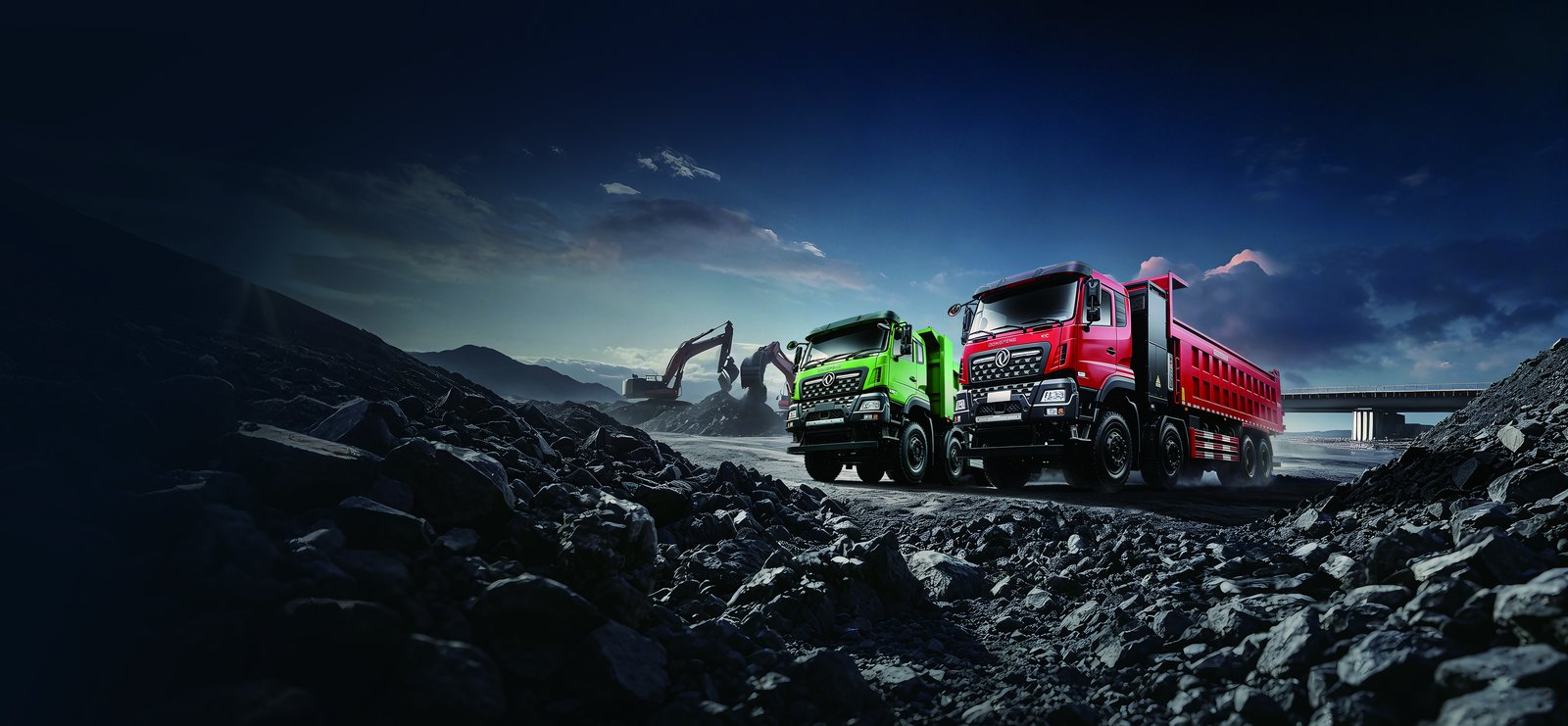
Ghana is Africa's largest gold producer, and its mining economy runs on diesel that arrives by road at mine-gate prices of USD 1.20–1.45/L — in a country whose grid is roughly 40% hydropowered with industrial tariffs around USD 0.08–0.12/kWh. That spread alone would justify a look at electric haulage. But the stronger force is reputational: the major miners operating in Ghana — Gold Fields, AngloGold Ashanti, Newmont, and the domestic producers that have grown behind them — all carry public net-zero commitments, and their contractors' fleets are inside those pledges. Mining-services tenders increasingly ask what haulage emissions cost per tonne, and "zero" is becoming the answer that scores. The TZ5Y, our 80t-class electric mining truck with roughly 600 kWh of CATL LFP energy and a 510 kW-class drive, is engineered for exactly this duty: heavy, fixed-radius, return-to-base haulage on mine roads where gradients are steep, the energy recovery is real, and the fuel bill is the biggest operating line after labour. This article covers the Ghana case: the duty, the economics, the tender context, and the deployment plan. For the national market picture, see our Ghana electric truck market guide; for the deep spec, our TZ3V electric dump truck page covers the family architecture the TZ5Y extends.
Gold-belt mine service haulage — the truck side of an operation whose big ore moves run on conveyors and 100t+ class equipment — has a specific shape:
On that duty, the TZ5Y's specification plays directly: full electric torque at zero rpm for the loaded ramp climbs (where turbo-diesel derates in the tropical heat), and regenerative braking on the descents recovering 15–25% of daily energy — the mine's own topography paying the fuel bill.
| Parameter | TZ5Y 6x4 electric | Diesel 6x4 mine spec |
|---|---|---|
| Payload class | 35–40 t | 35–40 t |
| Energy per km, loaded loop | 2.2–2.8 kWh (net of regen) | 65–85 L/100 km |
| Energy cost per 100 km | USD 20–31 | USD 85–120 |
| Daily consumption, 14 h duty | 2,600–3,400 kWh | 500–700 L |
| FOB reference | USD 155,000–180,000 | USD 85,000–105,000 |
A ten-truck TZ5Y fleet on double-shift duty at Ghanaian prices saves roughly USD 600,000–750,000 per year on fuel and maintenance against the diesel fleet — against an incremental capital cost (including the depot charging and grid connection) of USD 650,000–850,000. The payback lands at 12–16 months, and the eight-year CATL warranty frame covers the whole mining-services contract horizon. This is the fastest-payback electric mining duty in our entire portfolio — Ghana's energy prices plus the utilisation intensity do the work.
Two Ghana-specific procurement realities strengthen the case beyond arithmetic:
The engineering question for a Ghanaian mine is where the MW comes from. Three workable architectures:
Where the electric case still waits: mine-to-port ore haulage beyond single-charge range (the corridor charging does not yet exist), operations on rented generator power above USD 0.25/kWh (the savings shrink toward parity — though solar-plus-buffer rescues it), and fleets whose duty is too variable to fix a charging rhythm. Within the fixed-loop mine service envelope — which is most of the Ghanaian gold-belt truck market — the arithmetic, the tenders and the grid all point the same direction.
Ghana's gold has always rewarded whoever moved it cheapest. For the first time in the industry's history, the cheapest way to move it is also the cleanest — and the mining-services groups that bank that fact first will hold the contracts everyone else bids for.
The Ghanaian case generalises across West Africa's gold geology faster than any other duty we serve. Burkina Faso's belt mines around Essakane and Houndé run the same fixed-loop service haulage with diesel trucked over worse roads; Mali's Morila and Loulo complexes and the ASM-to-industrial transition zones along the Senegal river carry the same fuel logistics premium; Côte d'Ivoire's expansion of Tongon and the new developments around Chirano run on the same economics with a port corridor attached. The grid factors differ, the tariffs differ, the mining-services contracting structures differ — but the physics does not: heavy loads, steep ramps, twelve-hour shifts, diesel at mine-gate prices. Fleets that cut their electric teeth in Ghana's mature mining-services market export the operating discipline regionally, which is precisely how the strongest West African haulage groups have always grown.
Gold has always rewarded the lowest-cost tonne moved. The region that produces it is discovering the cheapest tonne is also the cleanest — and the mining-services groups reading that first are quietly booking the contracts.
Ready to electrify your fleet? Contact Shaanxi Fenghan Trading — authorized Dongfeng EV truck exporter. WhatsApp: +86 153 1943 1311 | Email: sales@fenghan-trade.com | dongfengevtrucks.com
🌐 Our Network: Fenghan Trade (SAGMOTO/SHACMAN Truck Export) · heavy duty mining dump truck 6x4 8x4