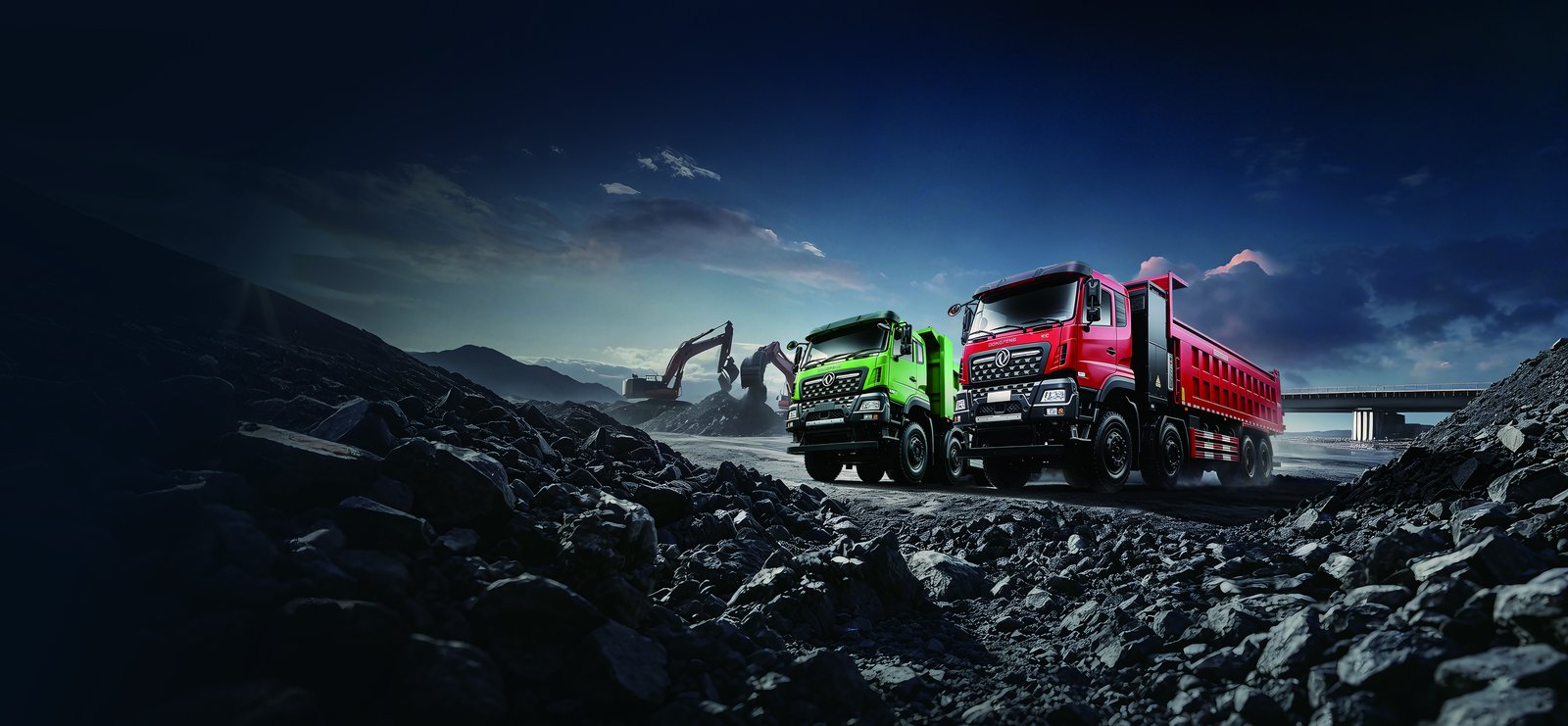
Mexico is the world's largest silver producer and a top-ten producer of copper, zinc and gold, with mining belts concentrated in Sonora, Zacatecas, Chihuahua, Durango and San Luis Potosí. Those operations run a haulage problem the industry shares globally: diesel trucks climbing out of open pits at punishing gradients, burning fuel at 50–65 L/100 km loaded, and facing rising pressure from both Mexican environmental permitting and international offtakers who want traceable low-carbon minerals. Several Mexican mining groups have begun converting haul fleets to electric, and the engineering answer that keeps 24/7 availability is battery swapping — a 5–6 minute automated pack exchange that turns an 80-tonne electric mining truck into a machine that never stops for energy. The Dongfeng TZ5Y, an 80 t GCW electric mining dump truck with CATL 600 kWh LFP and swap capability, paired with a CAS swap station, is the configuration we deliver for exactly this duty. Here is the full analysis for Mexican mine operators and contractors.
| Parameter | TZ5Y Specification |
|---|---|
| Configuration | 6x4 electric mining dump truck |
| GCW | 80 t |
| Battery | CATL LFP 600 kWh, liquid-cooled, swap-capable |
| Drive | Dual motor, 400 kW continuous / 550 kW peak |
| Range (loaded haul duty) | 200–250 km per full pack |
| Swap time | 5–6 minutes (CAS automated station) |
| Suspension | Heavy-duty mining suspension, reinforced 8+8 frame |
| Warranty | 8 years / 4,500 cycles (pack) |
| Indicative FOB | USD 140,000–180,000 |
Assumptions: 15 TZ5Y units plus one CAS swap station; 250 km/day per truck, 330 days/year; Mexican off-road diesel at USD 0.95–1.10/L equivalent; mine-site power at USD 0.07–0.10/kWh blended with 40% solar; trucks averaging 82,500 km/year:
| Annual cost per truck | Diesel mining tipper | TZ5Y (swap) |
|---|---|---|
| Fuel / energy | USD 38,000–48,000 | USD 9,000–12,500 |
| Engine, DPF, driveline maintenance | USD 7,500–9,500 | USD 2,000–2,600 |
| Brakes (descent regen saves pads) | USD 3,200 | USD 1,200 |
| Annual saving per truck | — | USD 35,000–45,000 |
| 15-truck annual fleet saving | — | USD 525,000–675,000 |
Subtract the swap station investment (USD 350,000–500,000 including charger inventory and civil works, partly offsettable against the grid upgrade it avoids) and the station still pays for itself inside its first year of full fleet operation. Over an 8-year horizon the 15-truck configuration saves USD 4–5 million versus diesel — before any carbon-credit or offtaker-preference value.
Mexico applies its normal commercial-truck import regime to Chinese-origin heavy trucks — duty plus possible compensatory measures depending on classification, and NOM (Norma Oficial Mexicana) emissions/technical compliance for registration. Because mining trucks operate on private concession roads, many units register under off-road/mining-equipment categories, which materially changes the compliance path versus public-road trucks — your customs broker in Veracruz, Manzanillo or Lázaro Cárdenas should confirm the classification strategy before ordering. We supply the complete document set: UN 38.3 test summary, IMDG Class 9 declaration for the 600 kWh pack, technical file for NOM review, and certificate of origin. Note that for mining use, buyers occasionally structure purchases through the mine's operating subsidiary with equipment-list treatment — a decision for the buyer's tax and customs advisors, but one that has repeatedly improved landed economics for our mining clients.
Sonoran pits run hot (40 °C+ summer working conditions) and Sierra Madre operations climb past 2,500 m. Electric drivetrains hold full power at altitude — no turbocharger derating — which is a genuine productivity advantage over diesel at high sites; the CATL pack's liquid cooling manages Sonoran heat, the same architecture we ship into GCC and African operations. Dust is the third adversary: we fit the sealed HV architecture with IP68 connectors and a reinforced filtration regime, and the swap station's enclosed pack racks protect battery inventory from blast-fines accumulation.
Mexican silver and copper increasingly sells into supply chains with traceable carbon requirements — automakers' copper offtakes and industrial silver buyers both now request Scope 3 data. A haul fleet running on solar-fed swap energy with telematics-verified kWh logs gives the mine marketing a number no diesel fleet can match: near-zero haul emissions per tonne moved, auditable per shift. Several of our mining clients now include the EV haul fleet in their annual sustainability reporting from year one — converting an operating-cost decision into a commercial one.
Our recommended Mexican mining sequence: a 3–5 truck pilot on the highest-tonnage, shortest-cycle route with one swap station, three months of validation against the diesel benchmark, then scaling to the full 15–20 truck fleet with a second station as the pit extends. Every element — trucks, station, solar array sizing, technician training — is planned together before the first unit ships, so the fleet lands commissioned and productive, not experimental.
A swap deployment succeeds or fails on station geometry. The rules we apply when siting a CAS station for a Mexican pit:
Mining procurement is conservative everywhere, and Mexican mine management is no exception — appropriately so, since haulage availability is revenue. The pilot structure that clears internal approvals efficiently:
One closing observation from our mining deployments across three continents: the technical questions (heat, dust, gradients, altitude) have all been solved in production hardware — the TZ5Y's specification is the accumulation of those solutions. What separates successful electric mining fleets from stalled evaluations is organisational follow-through on exactly the pilot discipline above. Mexican mining has that discipline in abundance; what it has lacked until recently is a supplier configuration that survives it. The TZ5Y-plus-swap package does.
Ready to electrify your fleet? Contact Shaanxi Fenghan Trading — authorized Dongfeng EV truck exporter. WhatsApp: +86 153 1943 1311 | Email: sales@fenghan-trade.com | dongfengevtrucks.com
🌐 Our Network: Fenghan Trade (SAGMOTO/SHACMAN Truck Export) · heavy duty mining dump truck 6x4 8x4