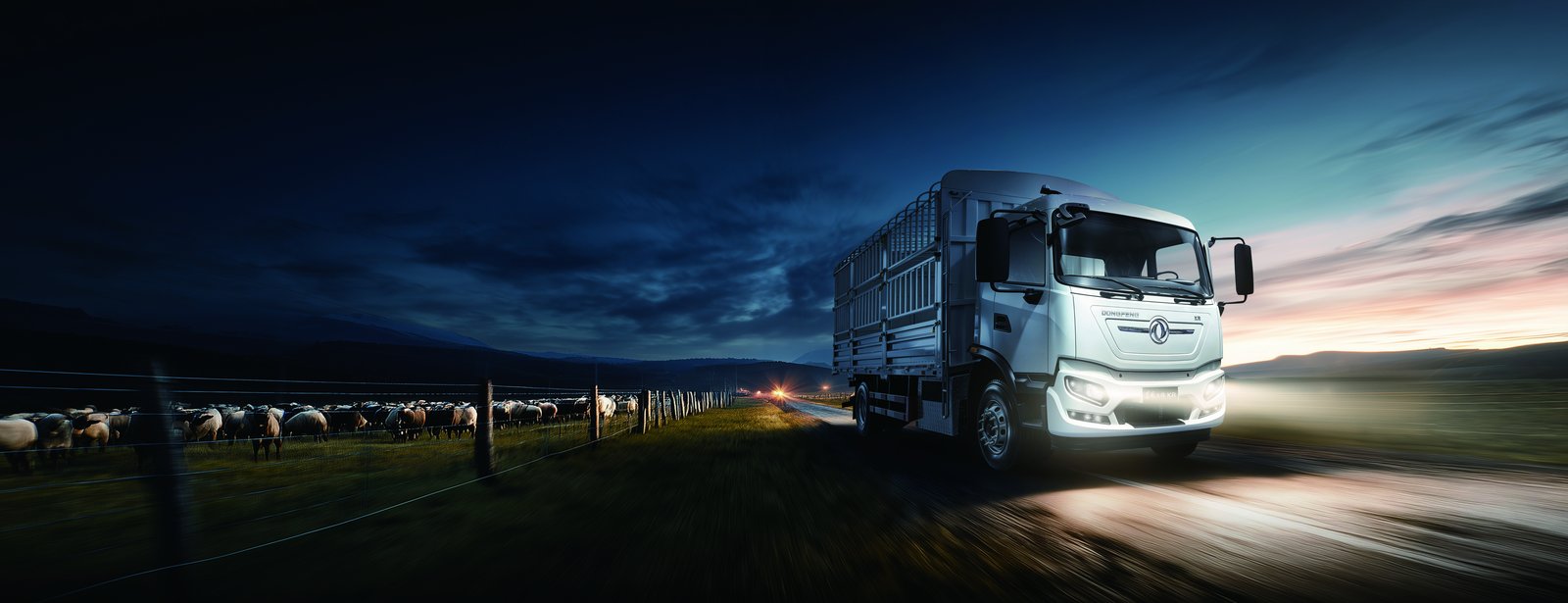
Vietnam is executing one of the largest infrastructure programmes in Southeast Asia: the North-South Expressway completion drive, metro lines under construction in Hanoi and Ho Chi Minh City, Long Thanh International Airport, and a continuous wave of industrial park build-out feeding export manufacturing. Every one of those projects moves aggregate, fill and demolition material with dump trucks — and dump trucks run short fixed-radius cycles from borrow pit to worksite, returning to the same yard every night. That is the single best duty profile for battery-electric haulage in existence. With ACFTA preferential duties on Chinese-origin goods and Vietnamese electricity among the cheapest in the region, the Dongfeng TZ3Z — an 8x4 electric dump truck with CATL 400 kWh LFP, 55 t GCW and 510 kW peak drive — is the natural first unit for Vietnamese contractors going electric. This analysis lays out the market and the numbers.
All three categories share the same geometry: a fixed site radius under 40 km, a controlled yard for charging, and punishing utilisation. The TZ3Z is engineered precisely for it.
| Parameter | TZ3Z Specification |
|---|---|
| Configuration | 8x4 electric dump truck |
| GCW | 55 t |
| Battery | CATL LFP 400 kWh, liquid thermal management |
| Drive | LvKong dual motor, 282 kW continuous / 510 kW peak |
| Range (loaded site duty) | 200–240 km — one to two full shifts |
| Charging | Dual-gun DC fast charge, 40–60 min to 100% |
| Suspension | 9/9/13 multi-leaf, heavy-duty front/rear axles |
| Warranty | 8 years / 4,500 cycles on the pack |
| Indicative FOB | USD 110,000–140,000 |
In site duty the TZ3Z's strong point is torque control on rutted haul roads: the electric drivetrain delivers full torque from zero rpm without clutch engagement or gear hunting, which both protects the driveline on loaded starts and reduces driver fatigue across double shifts. Regenerative braking on descent from elevated fills recaptures meaningful energy — on routes with 20–30 m elevation change per loaded cycle, regen returns 8–12% of consumed energy.
Assumptions: 20 trucks, 200 km/day, 300 operating days, 60,000 km/year each; Vietnamese diesel at VND 19,000–20,500/L; industrial power at VND 1,600–1,900/kWh (~USD 0.06–0.075); two dual-gun 240 kW chargers plus one 360 kW unit at the site yard:
| Annual cost per truck | Diesel 8x4 tipper | TZ3Z |
|---|---|---|
| Fuel / energy | USD 14,500–17,500 | USD 3,400–4,300 |
| Engine & driveline maintenance | USD 4,000–5,200 | USD 1,100–1,500 |
| Brakes & tyres (regen benefit) | USD 2,200 | USD 1,400 |
| Annual saving per truck | — | USD 14,000–17,000 |
| 20-truck annual fleet saving | — | USD 280,000–340,000 |
| 8-year fleet saving | — | USD 2.2–2.7 million |
With ACFTA preferential duty (confirmed with a Form E certificate of origin, which we provide with every shipment), the landed premium over a Chinese diesel 8x4 tipper typically clears within 24–32 months of expressway duty. Contractors financing through Vietnamese banks increasingly present exactly this table as the credit case.
Trucks ship RORO from Chinese ports to Hai Phong, Da Nang or Ho Chi Minh City (Cat Lai) in 5–12 days. Vietnam's registration process for imported trucks requires quality certification (VQ/QC registration through the vehicle registration authority) — we prepare the dossier, including UN 38.3 test summary and DG shipping documents for the 400 kWh pack, and our Vietnamese buyers clear through brokers experienced with electric vehicles. Form E issuance at our end is routine and takes days, not weeks.
Site-yards are the charging network: a 20-truck fleet on double shifts is served by two 240 kW dual-gun chargers operating at shift change (midday and midnight) plus a 360 kW unit for opportunity charging, all fed from a dedicated 22 kV site transformer that civil contractors already install for batching plants. Total charging infrastructure: USD 120,000–180,000, often shared with site offices and equipment. Where grid capacity is tight — mountainous expressway sections — we design solar-hybrid arrays with battery buffering that cover 30–50% of charging energy from the site's own generation.
Central Vietnam delivers both 38 °C summers and months of monsoon rain. The CATL pack's liquid cooling handles the heat; the IP68 HV architecture and high-mounted pack handle flooded site roads within stated wading limits. Our commissioning for Vietnamese fleets includes the wet-season inspection protocol and a mud-ingression check schedule for connectors — both standard practice across our Southeast Asian deployments.
Start with 5 trucks on your longest-cycle, highest-utilisation project (fastest payback), prove the charging workflow for one quarter, then scale to the full tipper fleet as the project pipeline continues. The trucks move between projects; the chargers move with them or stay at the central yard. This is the deployment pattern now running across our Vietnamese, Indonesian and Philippine construction clients — and the TZ3Z is the unit that makes it work at 55 t.
Vietnam's two mega-cities regulate construction traffic the way every dense Asian city eventually does: heavy trucks are banned from inner districts during daytime hours, pushing aggregate and muck movements into 21:00-06:00 windows. This schedule is usually an operational burden — but it is structurally unfair in favour of electric dump trucks:
Vietnamese contractors buy trucks through a mix of cash, bank financing and increasingly leasing structures attached to specific project contracts. Our role in that process:
Vietnam's construction pipeline is unusually deep: the transport ministry's road programme, the metro build-outs, industrial-park expansion tied to manufacturing FDI, and northern grid and energy projects together guarantee a decade of aggregate demand. Contractors who electrify their tipper fleets now are buying into that decade at the start — every project they win for the next eight years runs on trucks whose energy cost is falling relative to diesel (Vietnamese power tariffs are regulated and stable; global diesel is neither), whose maintenance is a fraction of diesel's, and whose night-work capability fits exactly where Vietnamese urban construction is going. The TZ3Z is the 55-tonne-class machine for that decade, and the contractors asking us for quotations now are, without exception, the ones winning the longest-cycle projects.
Construction sites move between provinces, and support planning should move with them. Every TZ3Z fleet order ships with a critical-spares kit sized for remote-site operation — the items that stop a haul day (HV connectors, control modules, charge-port hardware, suspension consumables) — and our commissioning engineers train the contractor's site technicians on daily inspection points and first-response protocols before handover. Remote diagnostics run over any mobile connection the site camp already has, which covers every expressway corridor in the country. Parts resupply runs air freight into Hanoi or HCMC (5–7 days from Xi'an for criticals) with consolidated sea freight for bulk consumables. The operating principle we build into every Vietnamese deployment: the fleet's availability should never depend on a part fitting in a courier box reaching a mountainous site, or on a single trained technician's presence — the kit and the training remove both dependencies on day one.
Ready to electrify your fleet? Contact Shaanxi Fenghan Trading — authorized Dongfeng EV truck exporter. WhatsApp: +86 153 1943 1311 | Email: sales@fenghan-trade.com | dongfengevtrucks.com
🌐 Our Network: Fenghan Trade (SAGMOTO/SHACMAN Truck Export) · heavy duty mining dump truck 6x4 8x4