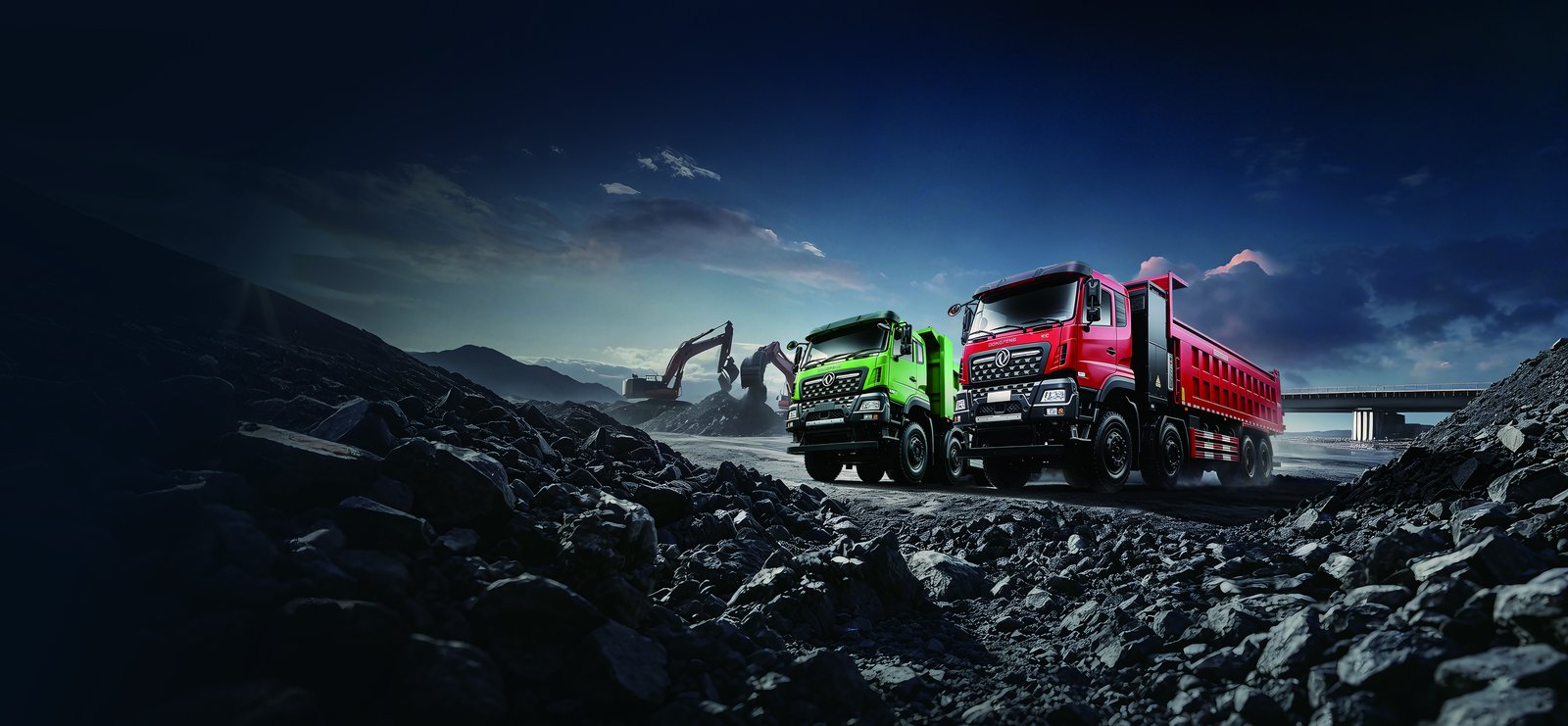
Most of the EV truck story is told at the surface — fuel saved, maintenance avoided, CO₂ removed. Underground, the story is bigger. In tunnels and underground mines, a diesel truck is not just a vehicle; it is a ventilation load. Every litre of diesel burned below ground must be flushed out by ventilation air before humans can work near it, and the fans that move that air are among the largest energy consumers on any underground project. Remove the diesel engine, and you remove most of the ventilation demand, half the heat load, all of the particulates — and a surprising amount of the project schedule. This application profile explains the physics and the finance, through the lens of the Dongfeng TZ3V: the 8x4 electric dump truck with CATL 600 kWh LFP power whose torque, silence and zero tailpipe make it a natural underground-adjacent hauler for ramp development, tunnel mucking support and portal-to-plant rock movement.
Regulations worldwide (China's coal and metal mine standards, EU and Australian underground norms) require a minimum airflow per kilowatt of diesel engine power operating below ground — commonly around 3–4 m³ of air per minute per diesel kW. The arithmetic is brutal: a 350 kW diesel dump truck working in a heading demands roughly 1,000–1,400 m³/min of ventilation on its own. Multiply by a fleet of trucks and loaders, add the fan power to push that air through kilometres of ducting (fan electricity scales with the cube of airflow), and underground projects routinely spend 25–40% of total site energy on ventilation — a cost line that exists almost entirely to dilute diesel exhaust. An electric truck produces no CO, no NOx, no diesel particulate matter (DPM — the carcinogen that drives the tightest exposure limits in underground occupational health). With electric haulage, ventilation design shrinks toward the dust-and-heat minimum, fan stages are deferred or deleted, and the power that ran fans becomes available for charging.
| Underground cost driver | Diesel truck | TZ3V electric |
|---|---|---|
| Ventilation demand | 3–4 m³/min per engine kW | Dilution requirement near zero |
| Fan energy (typical heading) | 200–500 kW installed | 30–60% reducible |
| Heat load | ~2.5× engine power rejected | ~15–25% of diesel equivalent |
| DPM / CO / NOx | Continuous monitoring & evacuation risk | None at tailpipe |
| Noise at face | 90–100+ dB(A) | 69–72 dB(A) class |
| Refuelling logistics | Fuel trucks & storage below ground | Charge at portal/underground bay |
Honesty first: a ramp-development heading uses 30–60 t underground dump trucks (AD45/KTU-class) that we do not build. Where the TZ3V — an 8x4, 95 t GCW-class on-highway-format electric dump with CATL 600 kWh and dual motors totalling 400/550 kW — wins is the portal-side and tunnel-project ecosystem that surrounds underground works:
Underground-adjacent haul profiles are steep: portal ramps, switchbacks, spoil-pad climbs. This is where the TZ3V's dual-motor torque and regenerative braking compound into advantage. A loaded climb at 8–12% grade draws the CATL 600 kWh pack hard — but the return descent empty returns 25–40% of that energy through regen, energy a diesel truck converts into brake heat (and then must ventilate). Underground mines are also naturally warm; removing a 350 kW diesel heat source per truck from the portal zone measurably cuts the cooling burden that deep mines fight, and the LFP chemistry's thermal stability removes the battery-side fire concern that mine safety boards raise first — CATL LFP cells pass nail-penetration and thermal runaway propagation tests that NMC chemistries fail, and the pack's liquid cooling holds cell temperatures in the safe envelope even at sustained high-torque climbing.
Consider a metro-line tunnel project with four headings and a common spoil route: portal to spoil ground 9 km, 18-hour hauling, 22 trucks. The diesel plan requires 24-hour operation of two 250 kW auxiliary fans plus the main ventilation for garage and heading air; curfew complaints from the residential district near the haul route already cost 3–4 night hours per week. Converting the surface fleet to TZ3V units and pushing charging to the portal yard on the project's construction-power supply:
| Annual cost, 22-truck surface fleet | TZ3V electric plan | Diesel plan |
|---|---|---|
| Fuel / energy | ~USD 610,000 | ~USD 1,720,000 |
| Maintenance & consumables | ~USD 210,000 | ~USD 520,000 |
| Ventilation power saving (portal zone) | –USD 120,000 | baseline |
| Night-curfew revenue recovered | ~+900 productive hours/yr | lost |
| Annual operating delta | ~USD 1,540,000 in favour of electric | |
Against a fleet conversion premium of roughly USD 1.3–1.6 million including portal charging, the programme crosses payback inside the first full year — and the schedule gain (night hours unlocked, headings not waiting on ventilation windows) is often worth more than the energy line on a penalty-laden tunnelling contract.
Charging design for tunnel projects is simpler than it looks, because construction power already exists. The standard pattern: a portal-yard charger bay on the project's temporary supply — two to four 240 kW DC units (one per 6–8 trucks at this duty) plus AC positions for the lighter support vehicles — with an optional underground bay near the crusher where haulage runs below grade. Swap-station formats also apply at large scale: on projects running 30+ electric trucks, a portal swap station converts the fleet to continuous operation exactly as it does in open-pit mines. Construction-power tariffs are typically a fraction of diesel cost per kWh-equivalent, and the project's schedule end date is fixed — which makes the fleet's residual value at completion a genuine planning item; TZ3V units roll from a finished metro project to the next city's tunnel programme with full 8-year battery warranty intact.
For work below grade, mine and tunnel safety boards ask the right questions, and the answers are structured into the machine: HV insulation monitoring with automatic contactor drop on fault; crash and rollover-rated pack enclosures; no fuel storage, no hot exhaust surfaces near personnel; emergency e-stop access at ground level; and telemetry visibility of battery state for the shift engineer. On the human side, drivers report the working-environment difference immediately — no DPM taste at the end of a shift, conversation-level cab and face communication, and none of the cognitive fatigue of 8 hours of diesel noise. Recruitment and retention of haul drivers, a chronic constraint on tunnelling projects, quietly improves.
Underground, the diesel truck's true cost was never just its fuel — it was the fans, the schedule windows, the exposure monitoring and the curfews stacked on top. The Dongfeng TZ3V (CATL 600 kWh LFP, 8x4, 95 t-class GCW, 40-tonne payloads, regen descents, FOB USD 145,000–170,000) removes the tailpipe from that stack and pays for itself roughly twice over on tunnel-project economics. Shaanxi Fenghan Trading supplies the trucks, the portal-charging design coordination and the underground-safety documentation pack; if your project moves rock through a portal, this is the EV truck conversation worth having.
Ready to electrify your fleet? Contact Shaanxi Fenghan Trading — authorized Dongfeng EV truck exporter. WhatsApp: +86 153 1943 1311 | Email: sales@fenghan-trade.com | dongfengevtrucks.com
🌐 Our Network: Fenghan Trade (SAGMOTO/SHACMAN Truck Export) · heavy duty mining dump truck 6x4 8x4