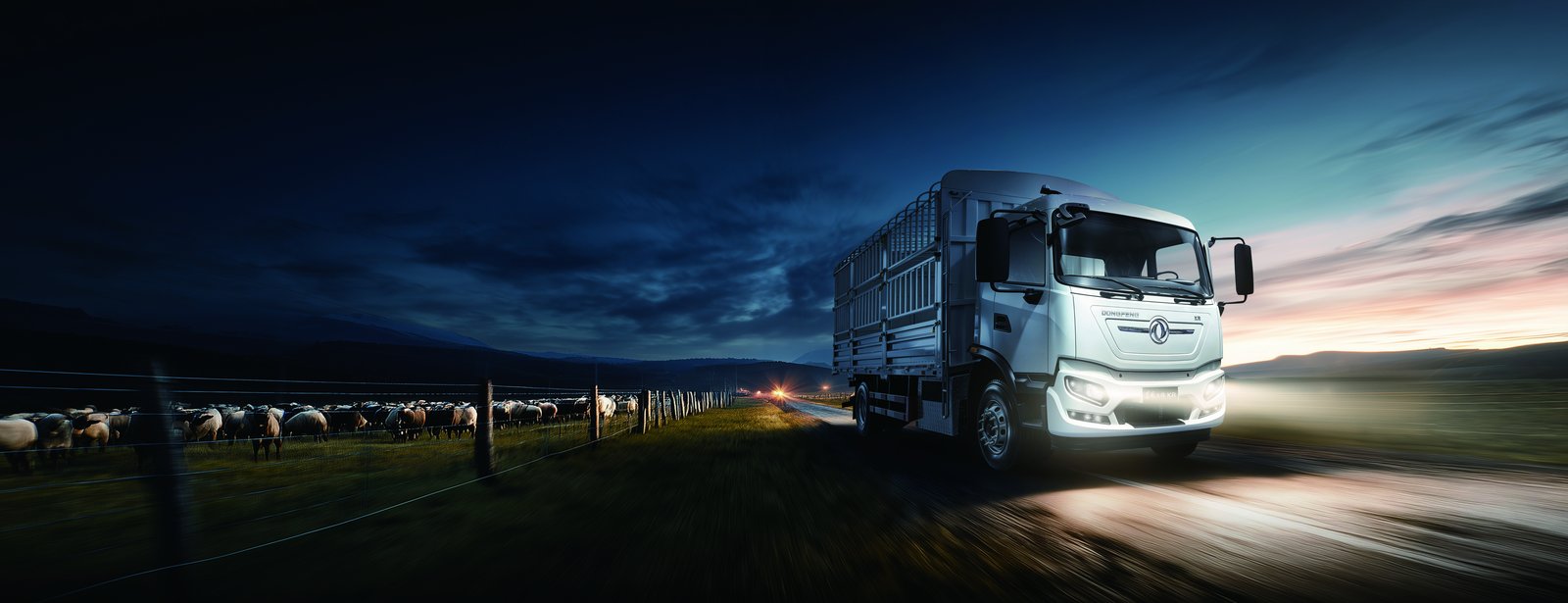
Thailand's 2026 electric vehicle roadmap puts the commercial EV truck at the center of its decarbonization plan. The EV 3.5 package, excise tax restructuring, and Board of Investment (BOI) privileges together lower the landed cost and the operating cost of an electric truck for Thai fleets more than any program that came before it. For overseas buyers and local operators alike, the math now favors battery electric trucks for urban and corridor distribution.
The Thai government extended its EV promotion beyond passenger cars into the 3.5-ton and heavier commercial segment. Under the 2026 framework, battery electric trucks qualify for a reduced excise rate, partial or full import duty relief on complete built-up (CBU) units, and BOI corporate income tax holidays for operators that localize charging or assembly. For a fleet buyer, the practical effect is a lower upfront price and a faster total cost of ownership (TCO) payback than a diesel equivalent.
Bangkok and the Eastern Economic Corridor (EEC) are the first zones where these rules bite. Municipal fleets and logistics operators in these corridors receive priority under the low-emission access scheme, which we cover below. Provincial hubs such as Chiang Mai and Khon Kaen are scheduled to follow by 2028, so the window to lock in early incentives is now.
The policy also aligns with Thailand's target of 30 percent EV production share by 2030. Commercial vehicles are a smaller volume but a larger emissions lever, which is why the 2026 revision tilts benefits toward trucks rather than cars. Importers who register before the annual quota cap is reached secure the best duty treatment, and the allocation is expected to tighten as more fleets convert.
Conventional diesel trucks face an excise rate near 25 percent of declared value plus a standard CBU import duty of 20 percent for units sourced from China. The 2026 EV truck policy resets the excise base for battery electric trucks to a preferential band of 0 to 2 percent, and qualifying models under the EV 3.5 package receive a duty waiver for a defined quota period.
| Cost component at import | Diesel 18t truck | KT5M electric truck |
|---|---|---|
| FOB price | USD 52,000 | USD 55,000 |
| Excise (of value) | 25% | 2% |
| Import duty (CBU) | 20% | 0% (EV 3.5 quota) |
| Landed duty plus excise | USD 23,400 | USD 1,100 |
The difference of roughly USD 22,000 per unit at the border is the single largest lever the 2026 policy gives Thai buyers. The KT5M electric cargo truck is the model our Thai customers deploy most often because its 262 kWh LFP battery and 240 kW motor fit urban distribution duty cycles of 200 to 260 km per day.
Beyond the headline duty cut, the excise saving compounds across a multi-unit order. A fleet importing 15 KT5M units saves about USD 330,000 at the border before a single kilometer is driven, which by itself can fund the depot charger installation needed to run the trucks.
The BOI offers a corporate income tax exemption of 3 to 8 years for companies that invest in EV fleet infrastructure. A depot that installs DC fast chargers and commits to local maintenance training can stack this with the import benefits above. For a 20-truck deployment, the tax holiday can be worth more than USD 200,000 over the exemption window.
Operators should register the EV unit as a separate legal entity to maximize the exemption, because the tax holiday applies to the income of that entity rather than to the parent's mixed fleet. We help Thai buyers structure the BOI application so the charger investment and the vehicle import are filed together, which shortens approval from months to weeks.
Bangkok is phasing in low-emission zones that restrict daytime access for high-emitting diesel trucks in the city core. An electric truck with zero tailpipe emissions keeps full access during peak delivery windows, which protects route density and on-time performance. Fleets that delay electrification risk losing central Bangkok delivery slots after 2027.
The EEC industrial estates already grant preferential gate timing to zero-emission trucks, cutting queue time at factories by an estimated 30 minutes per visit. For a milk-run operator doing 12 stops a day, that time saving is itself a measurable productivity gain on top of energy savings. Municipal cleaning and refrigerated delivery contracts in the city are also beginning to specify zero-emission vehicles, making the electric truck a qualification requirement rather than a nice-to-have.
The table below models a Thai distribution truck running 60,000 km per year. Energy uses Thailand's commercial electricity rate near THB 4 per kWh and diesel near THB 30 per liter, with a 4 km per liter diesel assumption.
| Annual cost item | Diesel 18t | KT5M electric |
|---|---|---|
| Energy (60,000 km) | THB 540,000 | THB 150,000 |
| Preventive maintenance | THB 90,000 | THB 45,000 |
| Excise plus duty at import (spread 5 yr) | THB 150,000 | THB 7,000 |
| 5-year operating total | THB 3,900,000 | THB 2,010,000 |
A Thai fleet saves about THB 1.89 million (roughly USD 53,000) per truck over five years, before counting the BOI tax benefit. Buyers in the Thailand EV truck market should model this saving against their own diesel baseline and duty quota timing.
Thailand's charging network is densest around Bangkok, the EEC, and the main intercity corridors, which matches where electric trucks operate first. A depot charger rated at 120 to 240 kW restores a KT5M from 20 to 80 percent in 45 to 75 minutes, and overnight AC charging covers a standard urban loop. Provincial charging is expanding along the Bangna-Trat and Mittraphap corridors, opening longer lanes for electric cargo by 2027.
For fleets without on-site power, public DC hubs near markets and ports accept fleet cards at a slight premium over depot rates. We recommend a hybrid approach: a depot charger for the base load plus a public fast-charge membership for contingency and extension runs.
The KT5M is the entry point, but Thai operators can scale across the Dongfeng electric range as duty cycles grow. The table compares the three cargo models most relevant to Thailand.
| Model | Battery | Motor | Range | GVW | FOB USD |
|---|---|---|---|---|---|
| KT5M 4x2 cargo | 262 kWh | 240 kW | 250 km | 18t | 48k-62k |
| KT5L 4x2 cargo | 262 kWh | 240 kW | 260 km | 18t | 50k-65k |
| KTH3 6x4 cargo | 300 kWh | 282 kW | 280 km | 25t | 55k-70k |
For pure city distribution the KT5M and KT5L are interchangeable on range, while the KTH3 suits heavier 25t regional loads between Bangkok and the EEC. All three share the CATL LFP battery and the 8-year or 4,500-cycle warranty that underpins Thai resale confidence.
We recommend a four-step rollout. First, reserve the EV 3.5 duty quota in the quarter you plan to import, because the cap is allocated annually. Second, complete a BOI pre-screen so the tax holiday applies from the first unit. Third, install a depot charger sized to the pilot fleet, typically 1 port per 3 to 4 trucks. Fourth, run a 2 to 5 truck pilot on the KT5M for 90 days to validate energy cost per km before scaling to 20 or more units.
Because the policy quota is time-limited, fleets that reserve CBU allocation in 2026 lock in the 0 percent duty treatment before the volume cap is reached. We recommend requesting a formal quotation and a BOI pre-screen in the same quarter to avoid a price step-up later in the year.
Ready to electrify your fleet? Contact Shaanxi Fenghan Trading — authorized Dongfeng EV truck exporter. WhatsApp: +86 153 1943 1311 | Email: sales@fenghan-trade.com | dongfengevtrucks.com
🌐 Our Network: Fenghan Trade (SAGMOTO/SHACMAN Truck Export) · SAGMOTO heavy duty diesel trucks