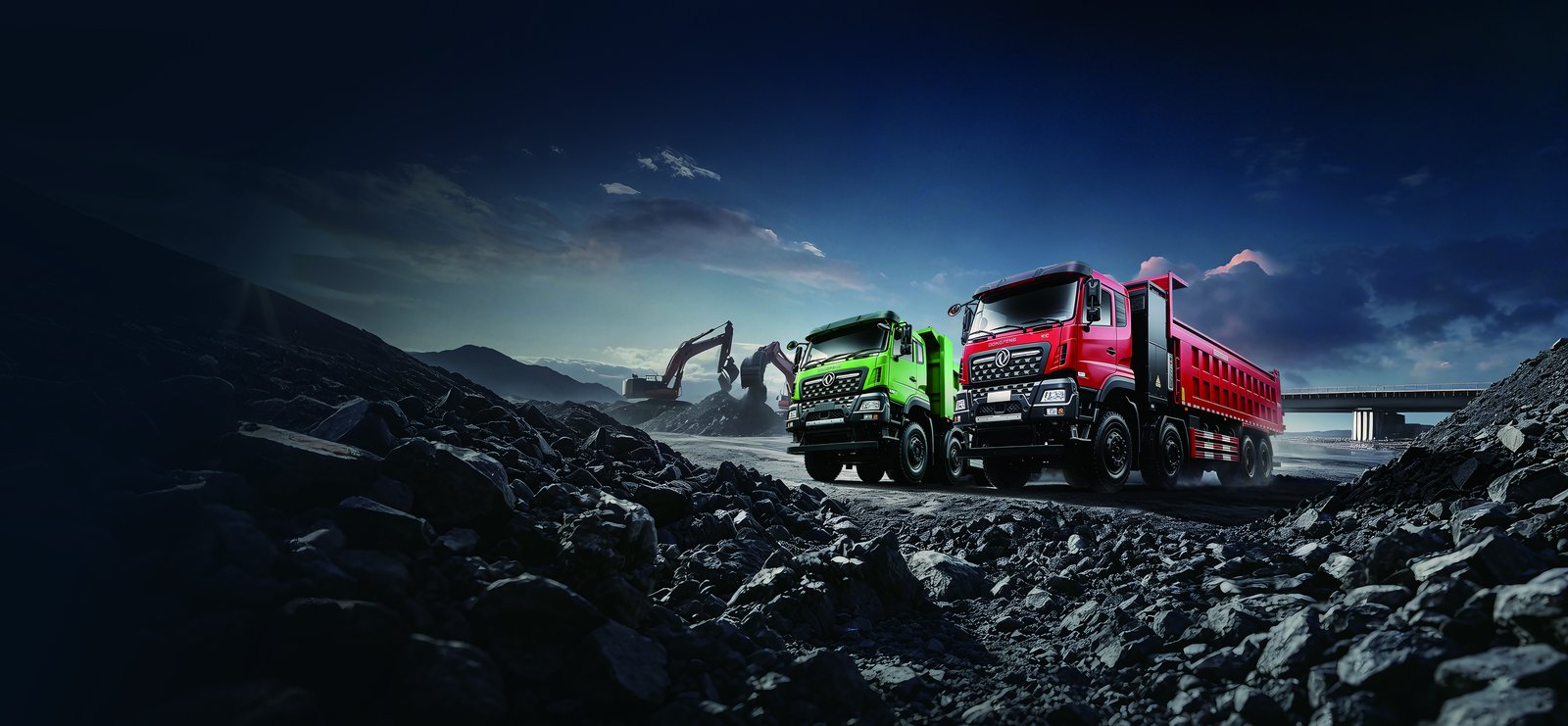
Long-haul electrification is the hardest segment in trucking, and the two platforms framing the global debate could not be more different: the Scania 45R, Europe’s benchmark battery-electric tractor, and the Dongfeng TE9L, the Chinese heavy-duty industry’s answer built for corridor economics. European fleets default to Scania on brand trust; emerging-market corridor operators increasingly ask whether the badge justifies a price roughly two and a half times higher. This comparison puts the numbers on the table: range and charging architecture, corridor productivity, five-year TCO, and the support reality outside Western Europe.
Long-haul electric trucking is a charging-infrastructure problem wearing a vehicle problem’s clothes. A 40 t combination at highway speed consumes 1.3-1.6 kWh/km; meaningful daily distance therefore depends on either very large batteries, very fast charging, or both. The two platforms embody different philosophies. The Scania 45R carries roughly 400-450 kWh usable and relies on Europe’s growing MCS-capable corridor network. The TE9L carries 600 kWh — among the largest packs fitted to a road tractor — and fast-charges at 360-500 kW, targeting corridors where infrastructure is sparse and the truck must carry its autonomy with it. For African, Middle Eastern, Central Asian and Latin American corridors, that philosophical difference is not academic; it decides which routes are possible at all.
| Parameter | Dongfeng TE9L 6x4 | Scania 45R 4x2/6x2 |
|---|---|---|
| GCW rating | 49 t | 40-45 t (market-dependent) |
| Battery | 600 kWh CATL LFP, liquid-cooled | ~416-624 kWh LFP (R/S variants) |
| Motor | LvKong 510 kW peak / 2,800 Nm | ~400-450 kW continuous class |
| Range at 40 t (highway) | 350-420 km | 320-390 km (variant) |
| Fast charge | 360-500 kW DC, 20-80% ~60 min | 375 kW MCS class |
| FOB price band | US$145,000-172,000 | €350,000-420,000 (list, EU) |
The price line reframes the entire comparison. One Scania 45R costs roughly what two and a half TE9Ls cost — and corridor freight is a utilisation business. A fleet moving 100 loads a week cares about cost per delivered tonne, and the capital side of that equation favours the Chinese platform so heavily that the European truck must win every operating line by large margins to catch up. It does not: energy consumption per kilometre is within 5-8% between the two, and both are 55-65% cheaper per kilometre than diesel on corridor duty.
Productivity modelling for a 600 km daily corridor tells the story. The TE9L covers 350-420 km per charge at 40 t; the day needs one 60-minute fast charge, slotting into the mandatory driver break that most jurisdictions require anyway. The Scania’s smaller-pack variants need two stops on the same route. On European corridors with 350 kW+ chargers every 150 km, that difference is manageable. On the corridors our customers actually run — Lusaka-Dar es Salaam, Riyadh-Dammam, Almaty-Tashkent — chargers are sparse, and the truck with the bigger battery and the higher charge ceiling writes its own timetable instead of negotiating with the map. The TE9L was specified for precisely this infrastructure reality, and it shows.
Driver environment is the Scania’s genuine strong card: the R-series cab is superb, and European driver-shortage economics reward it. But cab quality is not a US$200,000 gap, and the TE9L’s high-roof sleeper cab — full standing height, proper bunk, independent climate control running off the traction battery — answers the question adequately for corridor work. Fleet buyers should sit drivers in both; then look again at the price line.
Model a 150,000 km/year corridor tractor over five years. Energy: near-parity, both platforms around US$0.20-0.30/km depending on tariff. Maintenance: the Scania’s European service network is excellent — in Europe; outside it, service coverage thins fast, while our export structure ships parts kits with the fleet, stocks CATL modules regionally and monitors drivetrains by telemetry. Capital: the TE9L’s price advantage of roughly US$180,000-230,000 per truck, at a 10% cost of capital, is worth US$25,000-30,000 per year before the wheels turn. Residual: the European badge historically holds value, but electric residuals are unproven for all brands, and battery-health documentation — which our telematics provides natively — is becoming the real residual driver. Net result on five-year cost per kilometre: the TE9L lands 30-40% below the Scania on identical corridor duty.
The Scania 45R is the right answer for Western European fleets with MCS corridor coverage, driver-retention pressure, and balance sheets that reward brand residual values — it is an excellent truck in its native habitat. For the corridors we serve — the Gulf, Africa, Central Asia, Latin America — the evaluation inverts: infrastructure is thin, capital is expensive, distances are long, and support must travel with the truck. Buyers evaluating Gulf corridor deployments can review our Saudi Arabia market page for the operating context. In these markets, the TE9L’s autonomy-first specification and price point are not a compromise; they are the correct engineering answer to the actual problem.
This comparison is not close on the metrics that decide emerging-market fleet purchases. The TE9L delivers equivalent corridor productivity, a larger battery, a higher charge ceiling, and a support structure designed for export markets, at roughly 40% of the European truck’s price. Fleet electrification is a scale game — the emissions and cost wins come from electrifying all the kilometres, not the flagship few — and capital that buys two and a half electrified tractors instead of one wins it outright. Respect the Scania for what it is; buy the TE9L for what your corridors actually need.
Beyond the head-to-head, sophisticated corridor operators should evaluate a question the comparison format hides: what fleet does a fixed budget buy? Take a US$1 million tractor budget. Option A: two Scania 45Rs (with change), electrifying roughly 300,000 corridor-km per year between them. Option B: six TE9Ls, electrifying roughly 900,000 corridor-km per year — three times the zero-emission freight, three times the diesel displacement, and a resilience profile where one truck’s downtime idles a sixth of the electric capacity rather than half. For a fleet whose business case is cost-per-tonne and whose customers increasingly count scope-3 emissions, Option B wins on nearly every metric except per-unit cab refinement. The European truck’s quality is real; it is simply priced for a market structure — EU residuals, EU service density, EU driver economics — that does not exist on the corridors where our customers operate.
The residual-value argument deserves a final honest treatment, because it is the Scania’s strongest card. European-brand trucks historically hold value well — in Europe, in diesel. Electric residuals are unproven for every brand, and the emerging evidence suggests battery-health documentation matters more than badge: a five-year-old electric tractor with telematics-verified SOH and cycle history trades on its data, not its grille. Our fleets generate that documentation natively, and the swap-capable architecture adds a residual floor — a truck whose battery can be exchanged is never a battery-risk purchase. Buyers should therefore discount the residual argument appropriately: it favours the European badge modestly and only in European conditions, while the capital-efficiency argument favours the TE9L everywhere, immediately, and by a margin measured in whole additional trucks.
Ready to electrify your fleet? Contact Shaanxi Fenghan Trading — authorized Dongfeng EV truck exporter. WhatsApp: +86 153 1943 1311 | Email: sales@fenghan-trade.com | dongfengevtrucks.com
🌐 Our Network: Fenghan Trade (SAGMOTO/SHACMAN Truck Export) · 4x2 6x4 tractor truck prime mover