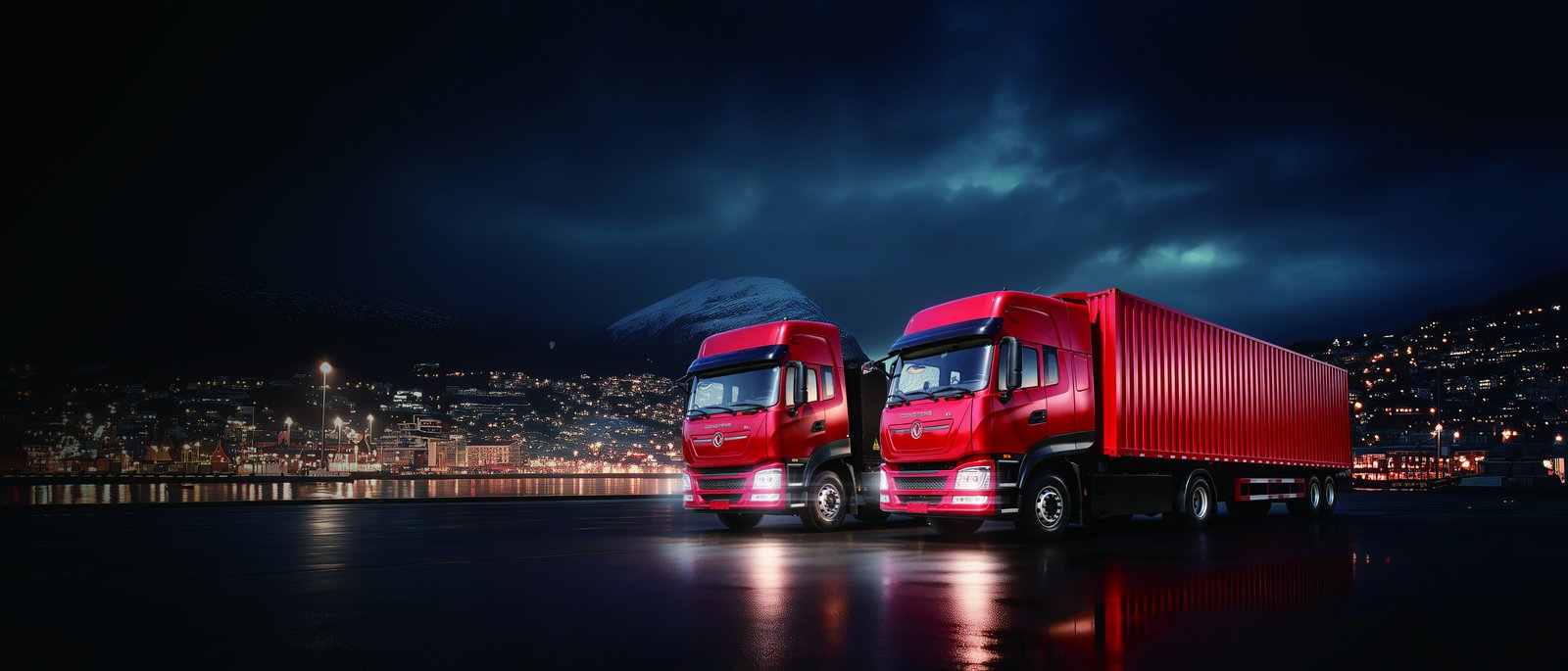
The TE9L long-range electric tractor is the right platform for Jordan's long, hot freight lanes because it pairs a 600 kWh CATL LFP pack with a 510 kW motor and a liquid-cooling loop tuned for 45 °C ambient. An electric truck crossing from Aqaba to Amman or up to the northern border must keep full power through the summer without the pack capping charge rate, and the TE9L is specified exactly for that duty. Importers in the Jordan electric truck market get a production unit that runs the corridor today rather than a prototype.
The figures below are the export specification values, not marketing estimates, and they drive both range planning and charger sizing.
| Parameter | TE9L value |
|---|---|
| Battery capacity | 600 kWh CATL LFP, liquid-cooled |
| Motor power | 510 kW traction motor |
| Real-world range | up to 350 km at 40 t GCW |
| Energy use | ~1.55–1.71 kWh/km |
| DC fast charge | 120 / 240 / 360 kW, 20–80% in 60–90 min |
| Battery swap | 5–6 min where cab-swap depots exist |
| Battery warranty | 8 years / 4,500 cycles |
| Curb weight | ~10.4 t (tractor only) |
| FOB price | US$140,000–180,000 |
The Aqaba–Amman run is about 330 km with a sustained climb of roughly 1,100 m, which is the hard case for any battery tractor because the ascent draws heavy current and the descent offers regen. At 1.6 kWh/km average including the grade, the 600 kWh pack covers the leg with margin to spare, arriving in Amman with 15–25% state of charge even on the hottest day. That margin is the difference between a schedulable truck and a range-anxious one, and it is why the TE9L fits Jordan better than a 350–422 kWh unit on this specific lane. The return leg, mostly downhill, recovers energy and extends the next outbound charge.
The pack sits in a sealed enclosure with a dedicated coolant loop independent of the cabin. In 45 °C ambient the loop holds cell temperature in the 25–40 °C working band by routing heat to a front-mounted radiator with a temperature-controlled fan. During a 360 kW charge the same loop keeps charge acceptance high so the 20–80% window stays near 70–85 minutes instead of stretching past two hours as an air-cooled pack would. Drivers pre-condition the cabin on shore power before departure, which protects the first 20 km of range that would otherwise be spent cooling the box in the heat.
A Jordan fleet running Aqaba and Amman needs chargers at both ends and ideally a mid-corridor stall near the Dead Sea descent.
At a FOB of US$140k–180k, the TE9L lands in Aqaba with CIF adding roughly US$9k–13k. Jordan's industrial tariff around 0.08–0.12 JOD/kWh makes electric energy roughly one-quarter of diesel per km. Over 100,000 km/year the energy saving recovers the premium versus diesel inside about 22–30 months, and the 8-year battery warranty covers the full payback window. Fleets should also budget the cooling-loop coolant swap at 200,000 km, a low-cost item that protects pack life in heat.
The 510 kW motor holds 85–90 km/h up the Aqaba grade without bogging, and the quiet cabin cuts fatigue on the long desert sprint. Regenerative braking on the descent returns energy and halves pad wear. New EV drivers need one day of familiarization, and dispatchers need the telematics login so state of charge is visible before the truck reaches Amman. The single-speed reduction removes shift decisions, which shortens the learning curve for drivers moving off diesel.
The 8-year / 4,500-cycle battery warranty covers roughly 1.35 million full-equivalent cycles, far beyond the annual duty, so the pack is under contract for the whole payback. Resale at 36 months runs about 45–52% of landed cost when the battery health report stays above 85%, which the telematics export proves to the next buyer. Scheduled service is light: reduction-gear oil check at 60,000 km, coolant swap at 200,000 km, and brake pads lasting about twice as long as diesel. These low upkeep costs are what make the TE9L bankable on a five-year lease.
Jordan registers fully built trucks against the GCC-derived standards applied locally, and the TE9L's right-hand-drive layout and certified lighting match the local type approval, so registration is a paperwork exercise rather than a re-engineering job. Importers should budget the 8%–14% special tax on commercial EVs plus standard customs handling, and confirm the battery safety certificate travels with the unit because the Aqaba inspection gate checks it. Because the pack is LFP rather than NMC, the thermal-runaway classification is friendlier and some free zones waive the separate battery handling fee that NMC imports pay, which trims the landed cost by a few percent and speeds the gate.
The 600 kWh pack also changes the financing math. Banks that hesitate on smaller EVs see a 350–422 kWh unit as marginal for the Aqaba–Amman leg, but the TE9L completes the leg with margin, so the truck is financeable against a real duty cycle rather than a best case. Fleet operators should present the corridor table above to the leasing desk; the 300 km single-charge leg is the number that unlocks the loan, and it is backed by the 8-year battery warranty that the bank can name as collateral. A financed TE9L therefore lands on the fleet books the same way a diesel would, with no green-premium penalty that breaks the payback.
A 350 kWh tractor would need a midpoint charge on every Aqaba run, adding 30–45 minutes and a second charger stall at the Amman yard. The 600 kWh TE9L removes that stop, which is why the higher FOB pays back despite the larger pack. On a two-driver rotation the saved midpoint dwell is worth roughly one extra loaded leg per day, and at 1.6 kWh/km that extra leg is about 530 kWh of paid freight movement. Over a year the recovered capacity alone covers a meaningful slice of the price gap versus the smaller unit, before the per-kWh energy saving is counted. For Jordan's longest lanes the bigger pack is not a luxury, it is the spec that makes the route single-charge and the driver's day predictable.
The same logic applies to resale. A 600 kWh unit with margin retains drivers and contracts in a way a marginal one does not, and the telematics battery-health report keeps the used value firm at 36 months. Fleets that buy the smaller pack to save capital often find they cannot cover the peak summer lane and lose the contract anyway, so the TE9L is the lower-risk purchase even before the energy math is opened. Specifying it from the start avoids a costly swap later when the lane grows.
Lock these items so the exporter configures the correct unit:
The TE9L long-range electric tractor makes the Aqaba–Amman lane a schedulable electric freight route through 45 °C heat. For importers in the Jordan electric truck market, it is a production-ready platform that pays back on energy alone. Contact Shaanxi Fenghan Trading for a configured quote and a depot charging review.
Ready to electrify your fleet? Contact Shaanxi Fenghan Trading — authorized Dongfeng EV truck exporter. WhatsApp: +86 153 1943 1311 | Email: sales@fenghan-trade.com | dongfengevtrucks.com
🌐 Our Network: Fenghan Trade (SAGMOTO/SHACMAN Truck Export) · 4x2 6x4 tractor truck prime mover