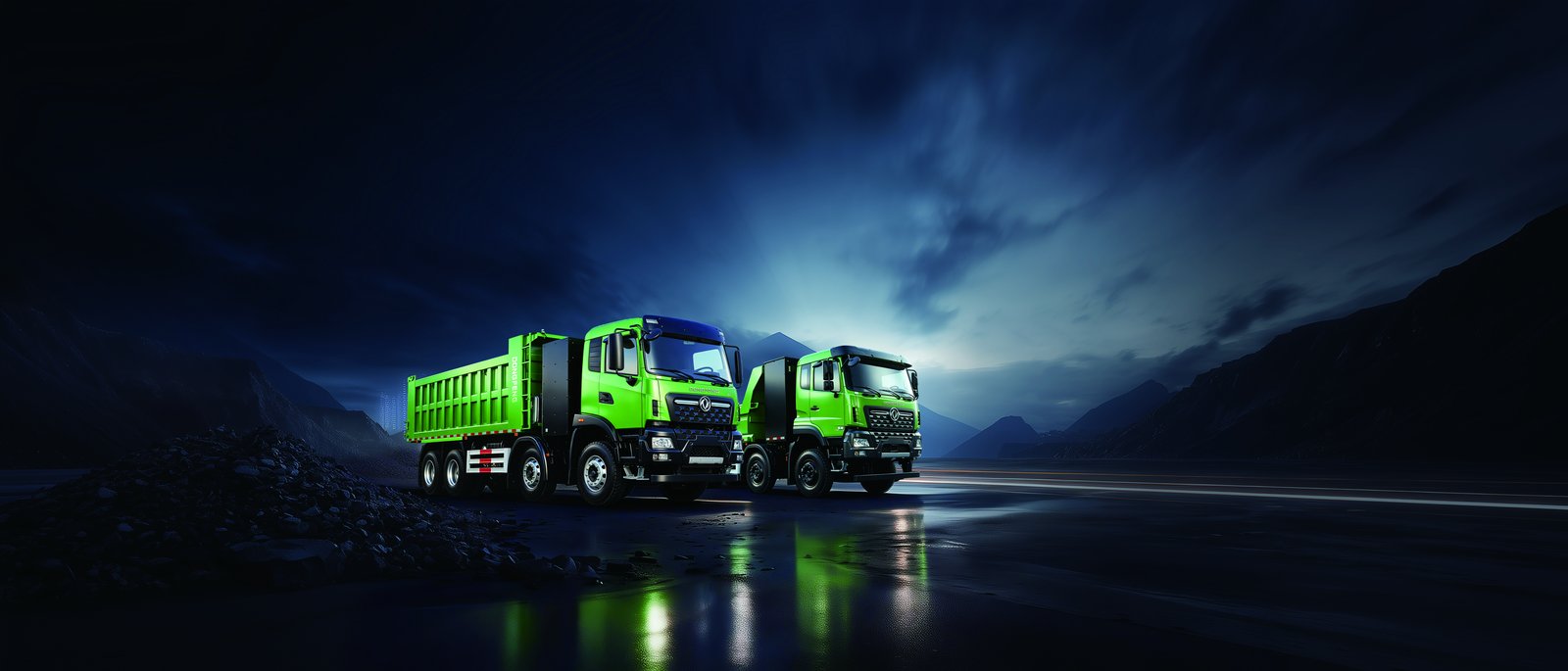
Uzbekistan is scaling its copper production aggressively, and the centre of that ambition is the Almalyk belt — the massive open-pit complex at Yadgar and the surrounding mining district of the Tashkent region, feeding the Almalyk mining-metallurgical combine and its smelter and refinery complex. Expansion means haulage: ore, overburden, concentrate and reagents moving in high-tonnage cycles between pit, plant and railhead. We have covered Uzbekistan's city logistics and cotton corridors; this piece is the mining belt's electric truck strategy — the TE8P 6x4 electric tractor (CATL 600 kWh LFP, 550 kW peak, 120 t GCW) on concentrate and reagent haulage, supported by the TZ3V 8x4 electric dump truck on the ore and overburden cycles. Country import context is in the Uzbekistan market guide.
Open-pit copper logistics runs four heavy flows:
The mine's own power infrastructure is the enabling fact: a complex of this scale is one of the country's largest industrial power customers, with substations, workshops and round-the-clock electrical engineering staff — a charging host that makes every depot we design for look modest.
| Metric | Diesel heavy tractor | TE8P electric |
|---|---|---|
| Rating | 500 hp-class, 90–110 t GCW | 120 t GCW, 550 kW peak |
| Fuel/energy on concentrate duty | ~45 L/100 km loaded | ~1.6–1.8 kWh/km loaded |
| Annual energy cost (60,000 km) | ~USD 29,000 | ~USD 4,800–5,400 at Uzbek industrial tariff |
| Altitude behaviour | Turbo-diesel derates measurably at 500–1,500 m | Full power at any altitude |
| Indicative FOB | USD 95,000–120,000 | USD 150,000–180,000 |
The annual energy saving — roughly USD 24,000 per tractor at Uzbekistan's inexpensive industrial power — repays the CAPEX premium in about two years of concentrate-haul duty. On overburden cycles the TZ3V's economics are stronger still: our mining-fleet analyses across several markets consistently show quarry and mine-cycle duty repaying the electric premium in 20–30 months at African and Central Asian energy prices.
The build follows the flows:
Three reasons beyond the fuel line. First, energy security: a mine haul fleet running on the national grid is immune to the diesel supply logistics that long distances and import dependence make fragile. Second, ESG positioning: Uzbekistan's mining sector sells into global copper markets where buyers increasingly audit supply-chain emissions — a concentrator whose haulage runs on electricity (and increasingly on the solar build-out Uzbekistan is investing in) carries a materially better carbon story per tonne of cathode. Third, the working environment: electric haul trucks are quieter, vibration-lighter and fume-free in the pit, which in a tight skilled-labour market is a retention argument mine managers make unprompted.
The belt's continental winters need the cold package (heated thermal management, heat-pump cab, plugged-in overnight protocol — the same specification we detail for the cotton corridor), and the pit's dust needs the sealed-drivetrain logic from our quarry sprinkler piece: no air intake, no turbo, no oil-borne ingestion wear. Both are standard on our Uzbekistan-specified units, with Russian-language documentation for the mine's engineering and operating teams.
Mining belt units arrive by rail from China through the Dostyk/Alashankou gateways — rail suits heavy tractors and tippers well — or by sea via Amirabad and overland. Import handling covers Uzbek customs at the favourable EV rate, conformity documentation, and registration. For a mine deployment we add a site-depot spares inventory sized to the fleet and a technician training programme run on site, so the mine's maintenance organisation owns the HV skill set from month one.
Uzbekistan is spending a decade's worth of industrial ambition on its copper belt, and the haulage that moves it can run on the country's own grid at a fraction of diesel cost. The combine that electrifies its ore and concentrate flows first will hold a cost-per-tonne position — and a carbon-per-tonne story — that the rest of the sector will spend years chasing.
Ready to electrify your fleet? Contact Shaanxi Fenghan Trading — authorized Dongfeng EV truck exporter. WhatsApp: +86 153 1943 1311 | Email: sales@fenghan-trade.com | dongfengevtrucks.com
🌐 Our Network: Fenghan Trade (SAGMOTO/SHACMAN Truck Export) · heavy duty mining dump truck 6x4 8x4