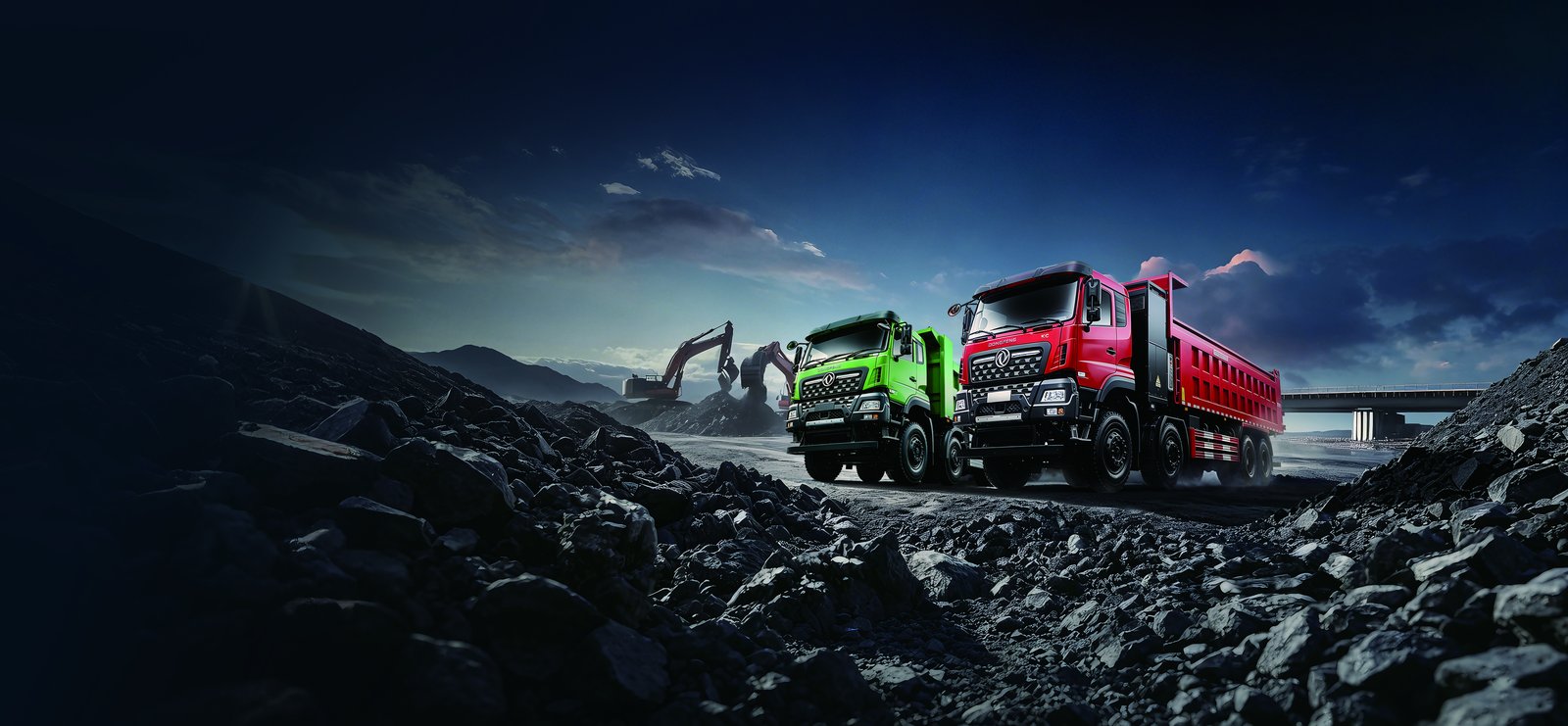
Saudi Arabia's third act is mining. The Vision 2030 programme designates minerals as the kingdom's "third pillar" after oil and petrochemicals — an estimated USD 2.5 trillion in mineral resources, with phosphate, bauxite, gold, copper, and zinc output targeted to multiply through the late 2020s. Ma'aden, the national mining champion, is executing the build-out: the Phosphate 3 project north of Wa'ad Al Shamal, bauxite-to-aluminium chains in the north, gold expansion across the Arabian Shield. Every one of those tonnage targets rides on haulage — mine to plant, plant to railhead, plant to Ras Al-Khair's industrial port — and the kingdom's projects increasingly carry emissions clauses, because Vision 2030's giga-programme financing is green-labelled. Heavy-haul electrification in this environment is not a CSR slide; it is scope-3 arithmetic on a national balance sheet. This article models the TE8P electric heavy-haul tractor on Saudi mining corridors, with the wider Saudi market guide as context.
Saudi heavy-haul is defined by corridor geometry and ferocity of climate. The characteristic legs: bauxite and phosphate runs between the northern mines and processing complexes (100–300 km one-way), concentrate hauls to the North-South Railway's transfer terminals, aluminium ingot and finished product to Ras Al-Khair, and the industrial cluster logistics around Wa'ad Al Shamal and Turaifi. Ambient temperatures in the northern interior exceed 45°C in summer; dust is constant; grades are moderate but long. A 6×4 heavy tractor hauling 90–120 t gross combinations on these corridors burns 55–70 L/100 km in diesel terms — an energy bill that scales brutally with every tonne of national mining ambition. The TE8P class — our flagship heavy-haul electric platform with CATL LFP energy in the 400–600 kWh envelope and a LvKong drive rated up to 510 kW — exists precisely for this profile: sustained high power in extreme heat, on fixed corridors, at GCW that light electric trucks cannot contemplate.
| Cost line (200 km loaded corridor leg, ~100 t GCW) | Diesel heavy tractor | TE8P electric |
|---|---|---|
| Energy | USD 130–165 (110–140 L) | USD 55–75 (350–450 kWh) |
| Maintenance reserve | USD 30–40 | USD 8–12 |
| Overhaul reserve (engine/clutch/aftertreatment) | USD 25–35 | 0 |
| Per-leg total | USD 185–240 | USD 63–87 |
A tractor cycling a 200 km corridor once daily, 25 days a month, saves USD 3,000–3,800 monthly in operating cost — against a heavy-haul electric FOB in the USD 150,000–180,000 band, the premium clears in roughly 30–40 months on single-shift duty and materially faster on the two-shift rotations the northern mines run. The 8-year, 4,500-cycle CATL warranty covers the pack through that entire horizon and beyond — the decisive risk-transfer in a market where asset lives run long.
Any electric truck sold into Saudi mining duty lives or dies by its thermal engineering, and this is where the TE8P's engineering earns its price: liquid-cooled LFP packs with generous radiator surface sized for sustained 45°C+ ambients, battery pre-conditioning before fast-charge sessions so 240 kW charging does not derate into slow charging on July afternoons, and power electronics whose junction temperatures stay in their comfort window under continuous 500 kW-class draw. LFP chemistry is the correct choice at these temperatures — thermally stable, cycle-tolerant at high state of charge, and unbothered by the deep daily cycling corridor duty demands. The proof point we offer every Saudi mining customer: run the TE8P and any competitor through an instrumented week in August, and compare charge curves at 14:00. Thermal margin is not a brochure line; it is measurable, and it is the difference between a fleet that holds schedule and one that melts its own business case.
Saudi mining logistics runs through Ma'aden's own fleet operations and the contract haulers that serve its projects — both buy against Vision-2030-aligned ESG scoring, and both increasingly specify emissions data as a tender deliverable, which the TE8P's telematics produces natively. Import runs through Jeddah or Dammam (22–30 days from China) under the SASO conformity framework we detailed in our Saudi certification guide, with the conformity file — including the HV-safety and EMC evidence — a pre-contract deliverable we supply as standard. For contract haulers, the financing route runs through the kingdom's Islamic-finance institutions, whose green-fleet programmes price electric heavy vehicles favourably against diesel. The first-mover pattern we recommend: a pilot section of two to four TE8Ps on the highest-density mine-to-plant leg, instrumented and documented, converting into a fleet order on the pilot's data — the same staged path that has won every heavy-EV mining deployment we have run from Indonesia to Chile.
The kingdom is building a mining industry of continental scale in a single decade, and it is doing so under the world's most explicit national ESG mandate. Every tonne of Saudi phosphate and bauxite that moves by 2030 will be audited — by lenders, by partners, by a government that has staked its reform brand on the green transition. Heavy-haul electrification is one of the few places where the emissions ledger and the cost ledger point the same direction, and the corridors are long enough, the duty heavy enough, and the sun strong enough that the numbers work without subsidy of imagination. The operators who put the first electric heavy-haul tractors on the northern corridors will define the reference fleet for the kingdom's mining decade. We build corridor-specific energy, thermal, and TCO models for Saudi mining customers — built on your tonnage, your route, and your August.
Every thermal claim in this article is checkable, and the check is a week in August. The instrumented test we run with Saudi fleet candidates puts data loggers on pack temperature, charge power, cooling-loop performance, and ambient across the hottest operating week of the year, on the actual corridor, at the actual GCW. The output that matters is the charge-power-versus-pack-temperature curve: how many kilowatts the truck accepts at 44°C ambient after a loaded leg, how quickly pre-conditioning pulls the pack into the fast-charge window, and how the curve holds across consecutive days of continuous duty. The difference between a platform engineered for the Gulf and one engineered for a temperate brochure appears on that curve within forty-eight hours — the under-cooled truck's line sags into derate territory exactly at the hours the schedule needs it most, while the properly engineered one holds its session rate with a modest taper. We publish our curves and invite the comparison because August is the honest month, and any vendor who hesitates at the invitation is answering the thermal question in their own way.
The same instrumentation week produces the operational plan that follows the purchase: the charge-schedule template tuned to the corridor's real temperature profile (fast charges stacked into evening and early-morning windows, AC top-ups carrying the midday), the canopy and shade positions mapped against the yard's sun path, and the cooling-system service interval validated against the dust load the site actually generates rather than the manual's generic figure. In a market where the difference between engineering and marketing is measured in charge minutes, the instrumented week converts the spec sheet's promises into the fleet's baseline — and the baseline is what the eight-year warranty's disciplined operation is judged against.
The final output of the August test is cultural: the operators and drivers who ride the instrumented week see the thermal system working — pack temperatures held, pre-conditioning doing its quiet work — and the fleet's worst month loses its mystery before the trucks even arrive. Thermal confidence, like the trucks themselves, is something you build in advance.
Ready to electrify your fleet? Contact Shaanxi Fenghan Trading — authorized Dongfeng EV truck exporter. WhatsApp: +86 153 1943 1311 | Email: sales@fenghan-trade.com | dongfengevtrucks.com
🌐 Our Network: Fenghan Trade (SAGMOTO/SHACMAN Truck Export) · 4x2 6x4 tractor truck prime mover