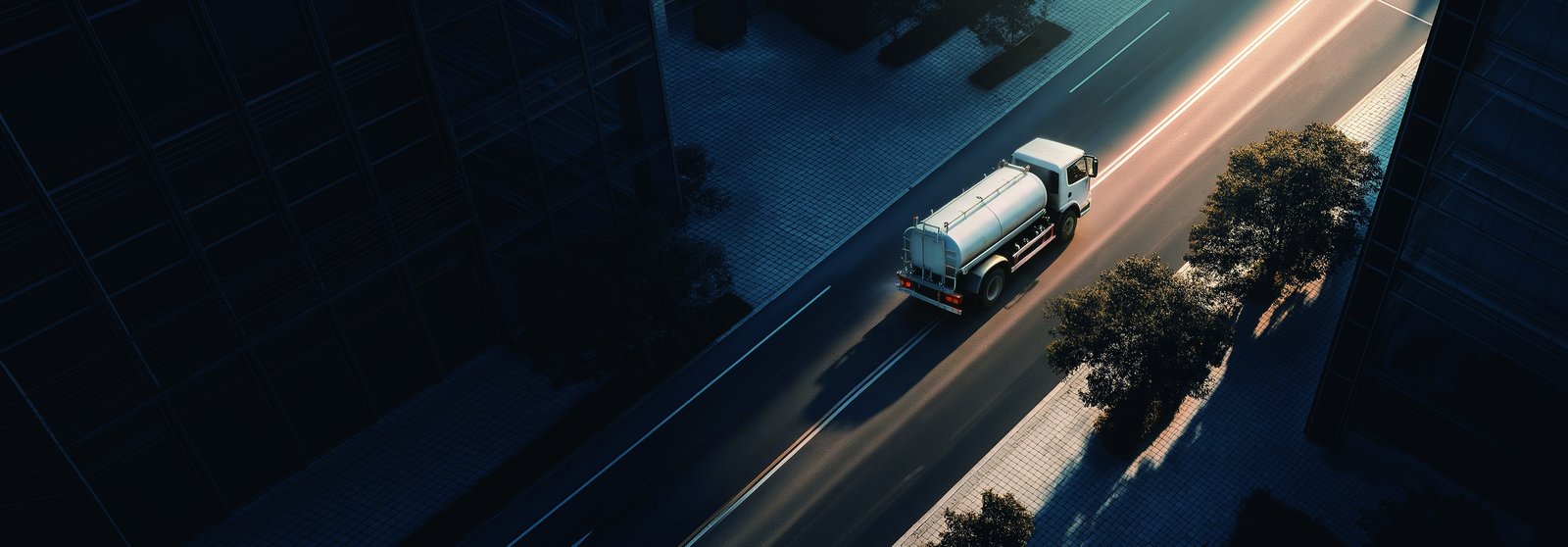
Peru is the world's second-largest copper producer, and the country's mining logistics run on one brutal pattern: concentrate and cathode moving from operations in the 3,000–4,500 m sierra down to port terminals at Ilo, Matarani and Callao, on corridors where the grade never stops changing and the diesel never stops burning. Heavy haulage at 90–120 t GCW is the hardest segment to electrify in trucking — and it is also where the fuel bills are biggest, which is why Peruvian mining contractors have become some of the most serious enquirers for our TE8P electric tractor, the 600 kWh, 120 t-GCW-capable flagship of the Dongfeng electric tractor line. This article works the full Peruvian case — duty cycles, altitude physics, economics — and sits alongside our Peru electric truck market guide.
Three freight patterns dominate the copper logistics chain:
At 4,000 m, atmospheric density is roughly 62% of sea level. A turbocharged diesel compensates partially but never fully — derated output, richer burn, higher EGT and accelerated component wear are chronic realities of sierra trucking that Peruvian fleets simply price in. An electric driveline does not breathe:
| Factor at 3,500–4,500 m | Diesel tractor | TE8P electric |
|---|---|---|
| Rated output availability | ~75–85% of sea level | Essentially 100% — motors are not air-breathing |
| Climbing 6-8% grades at 90t | Gear hunting, thermal stress | Continuous torque, liquid-cooled, stable |
| Descent energy | Brake and retarder heat | Regeneration — 60–75% of potential energy recovered |
| Fuel/energy per km (laden) | 0.60–0.75 l/km | 2.4–3.0 kWh/km |
| Cold-start reliability at −5 °C | Glow plug/ether theatre | Full torque from first rotation |
On the mine-to-port direction — the direction that carries the payload — a TE8P descending 2,500 m from a sierra operation recovers on the order of 180–220 kWh into its 600 kWh pack. In effect, the mountain pays part of the freight bill.
Diesel in Peru trades at fully commercial import-parity levels (roughly USD 1.05–1.25/litre for bulk consumers in recent years, with IGV recovery for registered operations), while mining-linked industrial power runs USD 0.06–0.09/kWh and Peru's grid is itself hydro-dominated — one of the cleanest heavy-vehicle energy supplies in the Americas. Modelled for a 120,000 km/year concentrate cycle:
Against a landed premium of USD 95,000–115,000 over a comparable 500+ hp diesel heavy tractor, payback lands at 19–22 months. For a 15-unit contractor fleet, that is USD 1.0–1.1 million of annual margin swing — the kind of number that gets mining-services boards to move.
Heavy haulage at these GCWs cannot rely on public charging; it needs engineered infrastructure, and the corridors make that straightforward:
LHD configuration, Spanish-language manuals and decal sets, and brake systems certified for sustained 8% descents are baseline. Beyond that, Peruvian heavy-haul fleets should specify: enhanced cooling-pack pre-filtration for dry-season dust on the sierra roads; the 600 kWh CATL LFP pack (not a smaller one — heavy haul at altitude leaves no headroom for under-specification); retarder-integrated regenerative braking with EBS blend; and our 24-month on-site parts consignment for corridor-critical spares. Delivery runs 45–60 days from order with 30–35 days ocean transit to Callao, with overland moves to Arequipa or Moquegua by low-bed trailer.
A 120-tonne electric mining tractor in the Andes is an engineering story, but the decision to deploy one is a risk-management exercise, and the honest register has five entries. First, corridor charging dependency: the operation leans on two charging sites, so both are engineered with redundancy — dual dispensers, modular cabinets, and for the mine-side station, the buffer capacity to ride through a grid event, because a charging outage in remote Peru is measured in lost haul-hours. Second, altitude derating discipline: the thermal margins are designed for sierra duty, but the maintenance regime must actually enforce the cooling-system inspection intervals that keep those margins real — our preventive schedule builds them in, and the mine's own engineers audit them. Third, spares logistics: a heavy tractor parked for a part that is two weeks away is a six-figure loss in a region without a dense service network; our Peruvian deployments include consignment stock on site for exactly the parts the duty-cycle data says will be needed, and the remote technical desk exists so that most faults are diagnosed and fixed without any part travelling at all. Fourth, driver capability: the TE8P's torque behaviour on loaded descents rewards trained drivers and punishes habits imported from older machinery — the descent-regen training is one day and non-negotiable. Fifth, contract structure: mining haulage contracts in Peru reward operators who can demonstrate emissions and cost performance; the fleet's telemetry produces both as standard outputs, which converts this risk register's last entry from a liability into the tender's differentiating paragraph.
The register's summary line for the board: every entry above is an engineering or process mitigation, not a technology question mark — which is what distinguishes a deployment risk from a science project.
Peru's copper story extends beyond one corridor, and the heavy-haul electrification portfolio extends with it. The Antamina and Las Bambas operations to the north and south run the same mine-to-port or mine-to-rail geometry with the same grade and altitude profile — meaning a TE8P fleet proven on one corridor transfers to the next with route recalibration rather than re-engineering. The zinc and silver corridors of the central sierra (the Ancash and Pasco belts) add volume to the same pattern. And the port end of every one of those corridors — Ilo, Matarani, Callao, Paita — is a natural charging site where concentrate discharge dwell already exists in the daily schedule. For a mining-services contractor, the strategic asset is therefore not any single fleet but the operating file: the duty-cycle data, the driver capability, the charging relationships and the maintenance structure that make the second corridor's electrification a fraction of the first's effort. Our Peru-facing deployments are built to accumulate exactly that file, because in Andean mining logistics the operator who holds it is the operator the next tender calls first.
Ready to electrify your copper corridor fleet? Contact Shaanxi Fenghan Trading — authorized Dongfeng EV truck exporter. WhatsApp: +86 153 1943 1311 | Email: sales@fenghan-trade.com | dongfengevtrucks.com
🌐 Our Network: Fenghan Trade (SAGMOTO/SHACMAN Truck Export) · 4x2 6x4 tractor truck prime mover