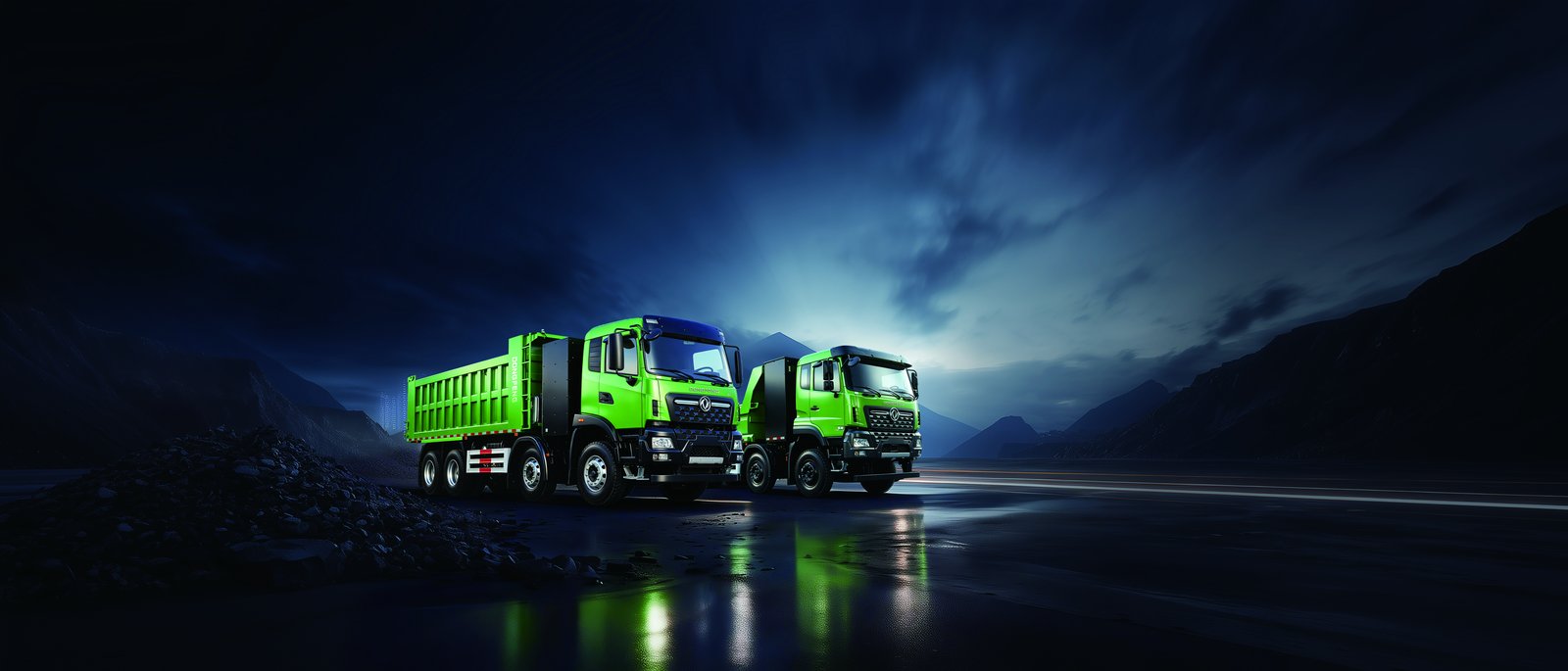
South Africa is the most advanced electric truck conversation happening anywhere in Africa's mining sector — and for once, the driver is not policy but pure operating cost. The country's platinum, chrome, manganese and coal operations run some of the highest truck-fuel bills on the continent, diesel trades at fully commercial prices with no subsidies, and the grid — for all its load-shedding notoriety — sells industrial power to large users at rates that make electrified haulage dramatically cheaper than diesel per tonne moved. The mining houses have noticed. This article lays out where an electric mining truck fleet fits the South African operating reality, built around two RHD-configured models from our range: the TZ3V electric dump truck and its heavy-haul sibling, the TZ5Y, in the framework of our South Africa electric truck market guide.
Four factors converge in South Africa that barely exist elsewhere on the continent:
South Africa is right-hand-drive, and so is most of the SADC it trades with. Our TZ-series mining dump trucks ship in factory RHD configuration — pedals, cab layout, mirror and camera placement all mirrored from the ground up rather than converted — with the same CATL LFP pack and dual-motor driveline as the LHD versions we ship to West Africa and Latin America. For mines evaluating Chinese electric trucks, the practical differences to interrogate are the ones that show up in week 50, not week 1:
| Evaluation item | What to require |
|---|---|
| Battery pack | CATL LFP, liquid-cooled, IP68, 8-year/4,500-cycle warranty in writing |
| Motors | Dual-motor rear drive, continuous rating adequate for 8% grades at GCW without thermal derate |
| Charging | CCS2 DC (South African standard), 10–80% under 60 minutes at 240 kW+ |
| Braking | Regeneration with blended service braking — critical on long loaded descents to plant |
| Dust sealing | Sealed HV connectors, cyclonic pre-filtration on cooling intakes for dry-season Bushveld dust |
| Support | Documented parts supply — we stock Johannesburg or direct-to-mine consignments |
The platinum corridor (Rustenburg–Thabazimbi belt): chromite and PGM concentrate hauls from pit to smelter or rail. The TZ3V 8x4 with 600 kWh CATL pack and 95 t GCW capability runs loaded at 60–70 t on hauls of 20–35 km, meaning two to three cycles per charge in mixed traffic and four to five on dedicated mine roads where the 0.9–1.1 kWh/km (tare) to 2.2–2.6 kWh/km (loaded) consumption profile is most efficient.
The coal and manganese corridors (Mpumalanga, Kalahari): longer paved hauls of 40–80 km between pit, siding and wash plant. Here the sweetener is swap-capability: TZ-series trucks with the swap-enabled battery architecture can exchange a depleted 600 kWh pack in 5–6 minutes at a containerised station, converting a 45-minute charge stop into a fuel-stop equivalent and enabling true 24-hour cycling with a truck-to-pack ratio of 1.15–1.3.
For a 20-truck fleet running 200 loaded km/day each, comparing the TZ3V against a 37 t diesel tipper at South African prices:
The honest objection to any electricity-based technology in South Africa is grid reliability. The mining answer is already being built: most haulage-relevant operations hold curtailment exemptions or sheddable-load agreements, and the houses building their own solar increasingly pair it with battery buffering sized to charge trucks through stage-4 interruptions. A 10 MW solar array plus 20 MWh of buffering runs a 20-truck fleet almost independently of the grid — and the same arrays that hedge load shedding also zero out the trucks' carbon reporting. Our depot-design team models these layouts, including generator backup for the fast-charge bays, as part of the standard export engineering package.
Trucks ship from China to Durban in 24–30 days, with inland transport to Rustenburg or Mpumalanga by low-bed. SARS applies standard commercial-vehicle duties; mining capital equipment classifications can in some structures reduce the effective rate, and our documentation team works with the client's clearing agent on the correct tariff heading before shipment. ITAC import permits for new commercial vehicles are handled by the local partner — a process our existing SADC import experience maps out step by step.
The technical evaluation of an electric mining truck in South Africa does not happen with the fleet manager — it happens with the mine's electrical engineer, and the meeting has a different agenda than the commercial one. What that engineer wants to see, in our experience, and what we bring to it: the truck's charging load profile (not the nameplate — the actual current draw profile across a session, with its harmonics and power-factor behaviour, from the charger's engineering file), because it will be connected to the mine's reticulation and must play nicely with variable-speed drives and the mill control system. The charger's protection coordination data, so the mine's protection study can place it in the network without nuisance trips. The truck's regenerative behaviour on the downhill loaded legs, because a fleet braking regeneratively into a weak section of mine network is an electrical event the engineer needs to model, not discover. And the electromagnetic compatibility documentation — mines are full of instrumented systems, and HV vehicles are new enough that the question is fair even when the answer is boring.
We bring these documents to the first meeting rather than the third because the meetings that go well technically are the ones where the engineer's questions were answered from a file, not from an email promise. It is also why our South African deployments pair the truck order with a site study: one week of load data, one protection review, one charging schedule modelled against the mine's actual tariff structure and load-shedding exposure. The study costs a fraction of one truck and it is the difference between a fleet that integrates with the mine and a fleet the mine's engineers quietly route around.
For the commercial team's part of the file: ITAC permit guidance, the SARS tariff heading worked through with the clearing agent before shipment, and the per-truck CO₂ documentation for the sustainability reporting the mine's head office increasingly requires — the three documents that keep a South African import moving through the systems that govern it.
Ready to electrify your mine haulage? Contact Shaanxi Fenghan Trading — authorized Dongfeng EV truck exporter. WhatsApp: +86 153 1943 1311 | Email: sales@fenghan-trade.com | dongfengevtrucks.com
🌐 Our Network: Fenghan Trade (SAGMOTO/SHACMAN Truck Export) · heavy duty mining dump truck 6x4 8x4