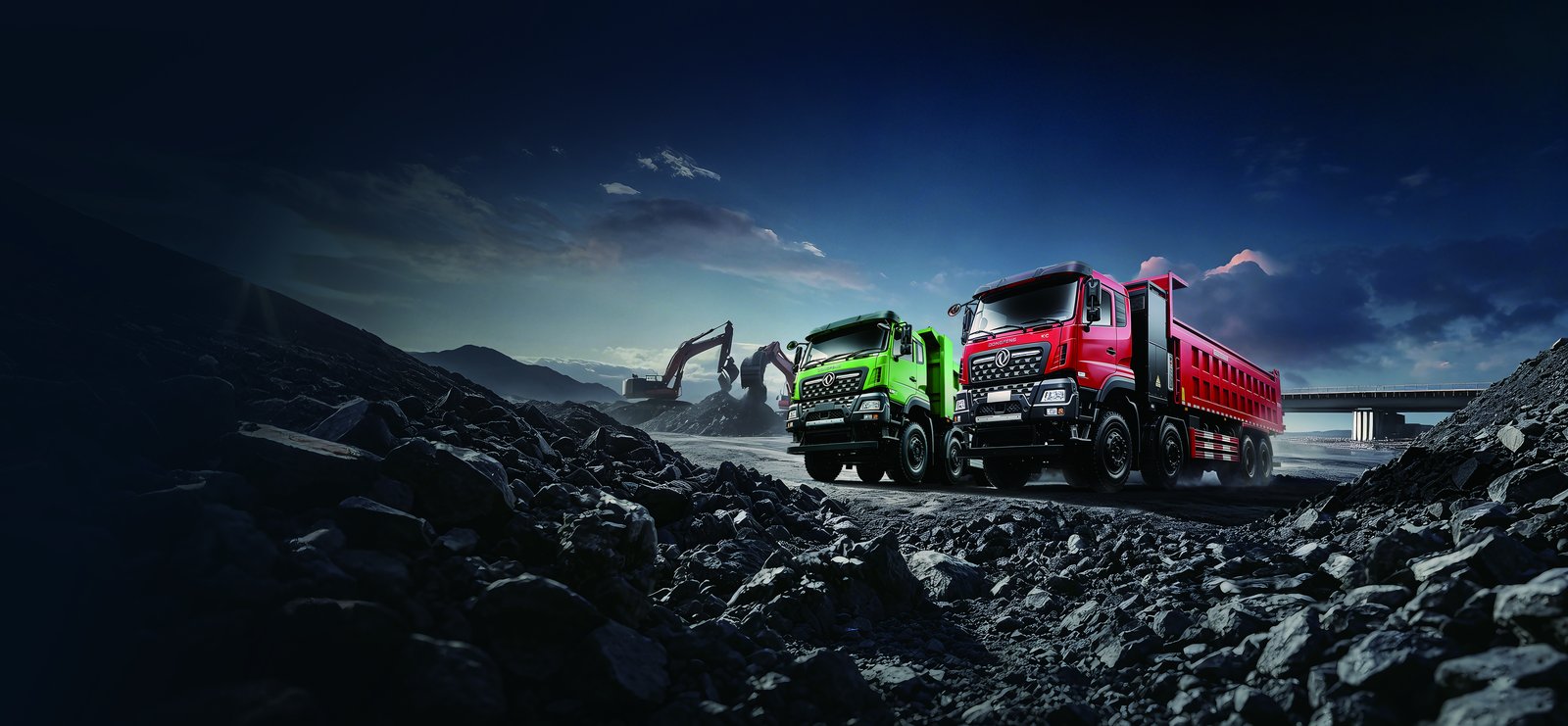
Right-hand drive electric trucks are a hard requirement in every market where traffic keeps to the left, and confirming the correct hand of drive before the build is the single most common way overseas fleet buyers avoid a costly rejection at the port of entry. An EV truck delivered with the steering wheel on the wrong side cannot be registered, cannot pass local type approval, and is extremely expensive to correct after assembly. For the 2026 export season Dongfeng offers factory-built RHD across its most popular distribution, cargo and tractor models, which means the cab structure, wiring harness, steering column and pedal assembly are integrated at the plant rather than converted in a third-party workshop.
The first question any left-traffic regulator asks about an imported commercial vehicle is which side the driver sits on. If your EV truck arrives left-hand drive into a right-hand-drive jurisdiction, the vehicle is treated as non-compliant and will be held at the border until either a conversion is approved or the unit is re-exported at your expense. Specifying RHD at the order stage removes that risk entirely and keeps your delivery schedule intact. It also protects your warranty, because a factory RHD build carries the full manufacturer certification rather than a workshop modification record that local inspectors may dispute.
The following left-hand-traffic markets are the core destinations for our RHD electric truck program. If your operation sits in any of these countries, you should specify RHD on the order so the vehicle arrives road-legal without modification:
The South Africa electric truck market guide is a useful reference for one of the largest and most mature RHD fleets in the region, and the same left-traffic logic applies to the smaller corridor markets that feed through the Southern and Northern African routes. Buyers in these markets should treat RHD as a baseline specification rather than an option.
An aftermarket conversion typically cuts the original firewall, reroutes the brake and accelerator linkages, swaps the dashboard, and rebuilds the steering gear to the opposite side. That approach introduces wiring faults, airbag routing problems and structural weakness that local regulators frequently reject. A factory RHD unit, by contrast, is homologated as designed: the crash structure is intact, the high-voltage cabling follows the original routing, and the diagnostics port behaves exactly as the manufacturer intended. For fleet buyers who need predictable insurance premiums and clean warranty claims, factory RHD is the only option we recommend.
Factory RHD adds roughly two to four weeks to standard production because the line must stage the mirror cab set and re-verify the steering geometry. The table below summarizes typical lead-time and price impact for the most requested RHD models. Note that there is no major price premium at the factory for the RHD configuration itself; the cost difference is dominated by battery size and payload rather than the steering hand.
| Model | Drivetrain | Battery | Power | Range | RHD lead time | FOB range |
|---|---|---|---|---|---|---|
| TE8L electric tractor | 6x4 | 424 kWh | 360 kW | 250-300 km | +2-4 weeks | USD 95k-130k |
| KT5J electric cargo | 4x2 | 262 kWh | 282 kW | 240-290 km | +2-4 weeks | USD 58k-82k |
| KT5M electric cargo | 4x2 | 262 kWh | 282 kW | 250-300 km | +2-4 weeks | USD 60k-85k |
All three of these models are available with RHD at the factory and carry the same CATL liquid-cooled LFP battery, the same LvKong drive motor, and the same 8-year or 4,500-cycle warranty as their left-hand-drive siblings. The TE8L electric tractor is the flagship RHD tractor for regional haulage, while the KT5J and KT5M cover urban and suburban cargo work with the same proven chassis.
Specifying RHD does not change the powertrain. Every RHD unit ships with a CATL LFP pack that is liquid-cooled for hot-climate durability, supports DC fast charging at 120, 240 or 360 kW, and can reach 20-80 percent state of charge in 45 to 90 minutes. Swap-enabled variants complete a battery exchange in five to six minutes. The warranty covers 8 years or 4,500 charge cycles, whichever comes first, so the steering configuration has zero effect on your total cost of ownership calculation.
Many RHD buyers run refrigerated box bodies, and the good news is that the electric PTO that drives the refrigeration unit is independent of the steering side. A right-hand-drive cargo chassis accepts the same insulated box, the same rear roll door and the same electric standby refrigeration as a left-hand unit. Fleet operators in hot RHD markets such as Thailand and Malaysia should still plan for a 5-12 percent range reduction when the cab and cargo cooling run together at 35°C, and pre-cool on grid power before departure to preserve battery range.
These steps sound minor, but they prevent the most common early incidents in mixed fleets and keep your insurance record clean during the first quarter of operation, when unfamiliarity is highest.
Because the RHD premium at the factory is negligible, the total cost of ownership comparison against a left-drive rival is essentially the same as the underlying model. Energy cost per kilometer, battery degradation over 4,500 cycles, and maintenance on the LvKong motor all scale with duty cycle rather than steering side. The only RHD-specific line item is the slightly longer lead time, which you manage by ordering two to four weeks earlier than you would for an LHD unit bound for a right-hand market.
RHD cabs share roughly 90 percent of parts with their LHD counterparts, so regional service hubs already stock the common items: suspension, brakes, traction battery modules and motor bearings. The unique RHD parts are the steering column, the dashboard loom and the mirror assembly, all of which we ship in kit form for the major corridors. For Southern Africa, the South Africa electric truck market guide lists the local support expectations in detail and helps you plan the spare parts pipeline before the first vehicles land.
Place the RHD requirement in writing on the purchase order, confirm the target market's type-approval paperwork with our export desk, and allow the additional two-to-four-week staging window. If you are running a mixed fleet, we can phase deliveries so that the RHD and LHD units arrive in the same shipment but are clearly segregated by VIN. Our team can pre-stage the documentation that local excise and transport departments expect, so your vehicles reach the road without a conversion detour or an unexpected holding period at the port.
Standardizing a fleet on factory RHD protects resale value, because a vehicle built correctly for the market is easier to on-sell to the next operator than a converted unit with a modified firewall. Lenders and insurers also price factory-built RHD more favorably, which lowers your financing cost across the fleet. When you later rotate units between depots in the same left-traffic region, the consistent cab layout reduces driver retraining and spare-parts complexity, so the two-to-four-week ordering lead is paid back many times over in smoother operations and stronger residual values.
Ready to electrify your fleet? Contact Shaanxi Fenghan Trading — authorized Dongfeng EV truck exporter. WhatsApp: +86 153 1943 1311 | Email: sales@fenghan-trade.com | dongfengevtrucks.com
🌐 Our Network: Fenghan Trade (SAGMOTO/SHACMAN Truck Export) · SAGMOTO heavy duty diesel trucks