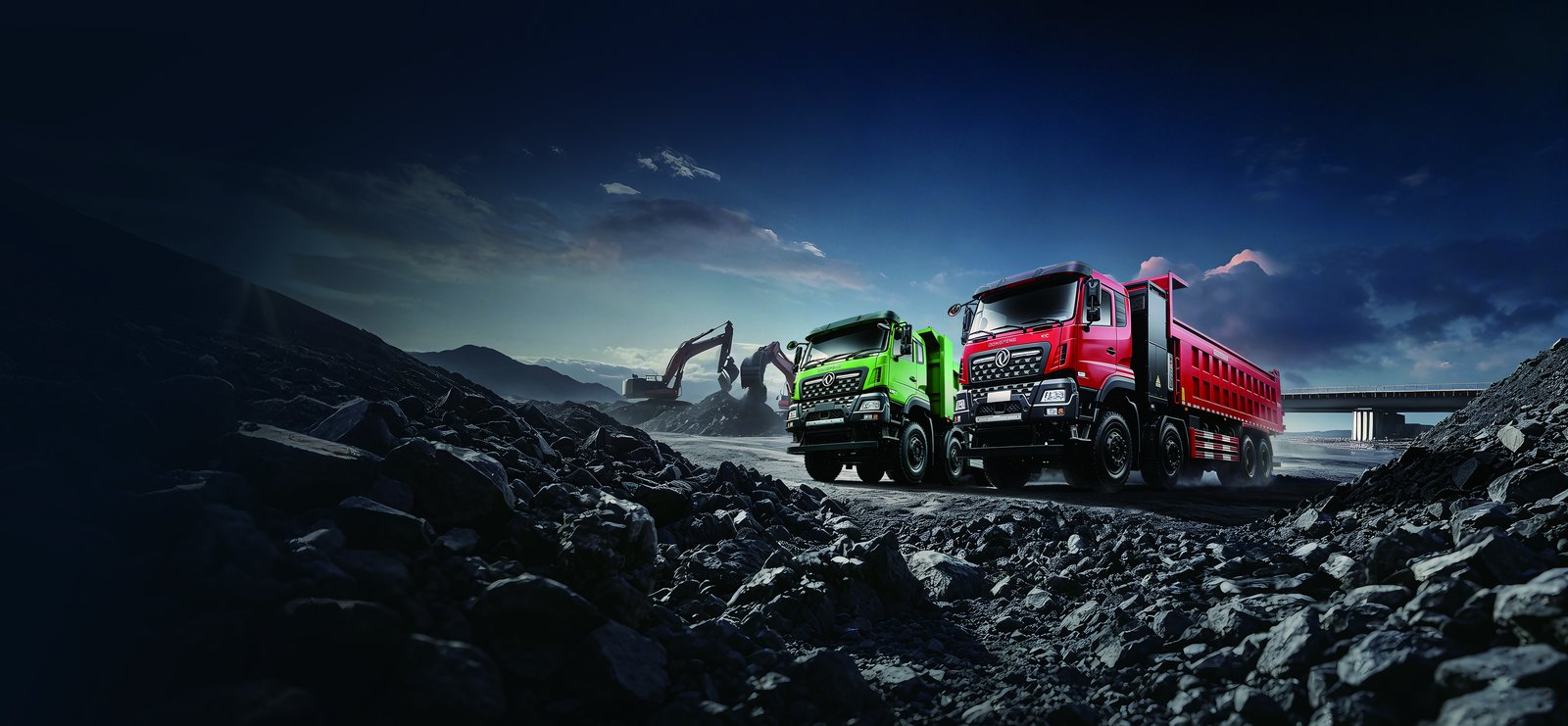
Cambodia is building. Phnom Penh's skyline adds towers every quarter, satellite cities and industrial parks spread through Kandal and Preah Sihanouk provinces, and public infrastructure — ring roads, the new airport at Kandal, bridges over the Mekong and Tonle Sap — consumes aggregates and fill in enormous volumes. The dump trucks feeding this boom run some of the tightest, most repetitive haul cycles in Southeast Asia: sand dredged from the Mekong and Tonle Bassac to city sites, laterite and rock from Kandal and Kampong Speu quarries to concrete plants. Short legs, heavy loads, hard stops, dust, and 35°C heat — duty that eats diesel tippers and flatters an EV truck. This guide covers the TZ3Z electric dump truck in Cambodian service, and follows our wider regional coverage such as the Vietnam infrastructure market guide.
A tipper on Phnom Penh duty does 6–12 loaded cycles a day on legs of 10–35 km, spends long stretches queuing at dredging barges and site gates, and brakes constantly in chaotic traffic on Russian Boulevard and National Roads 1–6. The cost profile of a diesel truck on this duty is dominated by idle fuel (3–5 L/h), brake and clutch wear, and cooling-system stress in year-round heat. Each of those lines either vanishes or shrinks by half in an electric tipper: the TZ3Z burns nothing at the barge queue, regenerative braking saves its friction brakes, and the sealed drivetrain ignores the dust that kills diesel air filters.
Cambodia's electricity is another advantage: the grid has added hydro capacity and imports from Laos, and industrial tariffs sit well below the diesel-equivalent cost per kilometre. With pump diesel around USD 1.05–1.15/L in Phnom Penh, the arithmetic below is what contractors are quietly running.
| Daily cost line (220 km, loaded cycles) | Diesel 6×4 tipper | TZ3Z electric |
|---|---|---|
| Fuel / energy | USD 75–95 | USD 22–30 |
| Oil, filters, AdBlue | USD 10–15 | USD 2–3 |
| Brakes & clutch | USD 8–12 | USD 2–4 (regen) |
| Overhaul reserve | USD 10–14 | 0 |
| Daily total | USD 103–136 | USD 26–37 |
The TZ3Z carries a ~350–400 kWh CATL LFP pack good for 200 km+ of loaded city hauling, with a LvKong drive rated up to 360 kW — enough torque to launch a full sand load up the flooded ramps of the riverfront loading points without a clutch in sight. FOB pricing for 6×4 electric tippers runs USD 90,000–120,000 depending on body spec; against the daily differential above, Cambodian contractors see payback in roughly 26–34 months, faster on the double-shift sand barges that run 16 hours a day during the dry season.
Cambodia is one of the easiest EV import destinations in Asia: the government has signalled EV-friendly policy, right-hand-drive is the standard (matching our RHD configurations), and Chinese-built commercial vehicles are already common on Cambodian roads. Shipping from China runs 12–18 days — among the shortest transit times we serve — via Sihanoukville Autonomous Port or up the Mekong to Phnom Penh Autonomous Port. Duties on completely knocked-down or locally assembled commercial vehicles attract incentives, but complete-unit imports at standard tariff lines remain the pragmatic route for first fleets; a Phnom Penh customs broker confirms current rates, and the ASEAN framework shapes classification of the battery-inclusive value.
Charging is a solved problem at fleet scale: one 240 kW DC charger at the depot plus a mid-size solar canopy covers five to eight tippers on overnight cycles in the dry season, with a stationary buffer battery to ride through the grid's peak-hour restrictions. Fenghan's commissioning includes driver training — regenerative braking technique adds real range on Phnom Penh's stop-start routes — and a first-line HV maintenance course for the workshop team.
The pattern we recommend in Cambodia mirrors other first markets: two TZ3Z units on the highest-idle barge-to-site circuit, six months of shift data, then extension to quarry circuits and eventually box-body distribution units for Phnom Penh's booming FMCG sector. Cambodian contractors work on thin margins and fast payment cycles — exactly the profile that benefits most from an operating-cost structure nobody can undercut. When your competitors are paying USD 100+ a day in diesel and you are paying USD 30 in electricity, every tender you bid becomes asymmetric. We prepare landed-cost and cycle-energy models for Cambodian projects using your actual loading points and site addresses.
Cambodian duty adds three environmental factors that deserve explicit maintenance planning, and none of them is a reason for hesitation — they are simply the local chapter of the discipline every electric fleet runs. The first is the monsoon. From May to October, Phnom Penh's streets flood repeatedly, and while the TZ3V's pack is sealed and its HV connectors rated for water immersion far beyond street flooding, the discipline that matters is not driving through standing water above the axle line and scheduling a post-flood connector and insulation inspection for any truck that did. It is a fifteen-minute check with the insulation tester, it is in the service manual, and fleets that run it after every serious flood event keep their insulation alarms at zero. The second is dry-season dust: the electric drivetrain ignores it entirely — no air filter, no turbo — but the radiator loop and charger want their monthly blow-down through the November–April months, exactly when the construction calendar runs hottest.
The third factor is the barge-queue reality of sand duty: trucks spend long hours at the Mekong landing points, which is idle time a diesel truck spends burning fuel and an electric truck spends costing nothing. The maintenance note attached to that reality is the air-conditioning loop — drivers keep cabs cool through the queue on electric A/C with no engine running, and the cabin filter becomes a monthly consumable rather than a quarterly one. It is the single most-noted "unexpected benefit" in tropical fleet feedback: the crew's working day transforms when the cabin is quiet, cool, and fume-free through a six-hour loading window.
Put together, the Cambodian maintenance calendar is a one-page document: monthly radiator and connector service in dry season, post-flood insulation checks in wet season, cabin filters monthly, and the standard 10,000-km rotation. Set against the diesel alternative's oil, filters, clutch work, and the cooling-system casualties of 35°C duty, the comparison is not close — which is why the operators who run both side by side in Phnom Penh quietly re-order electric.
Ready to electrify your fleet? Contact Shaanxi Fenghan Trading — authorized Dongfeng EV truck exporter. WhatsApp: +86 153 1943 1311 | Email: sales@fenghan-trade.com | dongfengevtrucks.com
🌐 Our Network: Fenghan Trade (SAGMOTO/SHACMAN Truck Export) · heavy duty mining dump truck 6x4 8x4