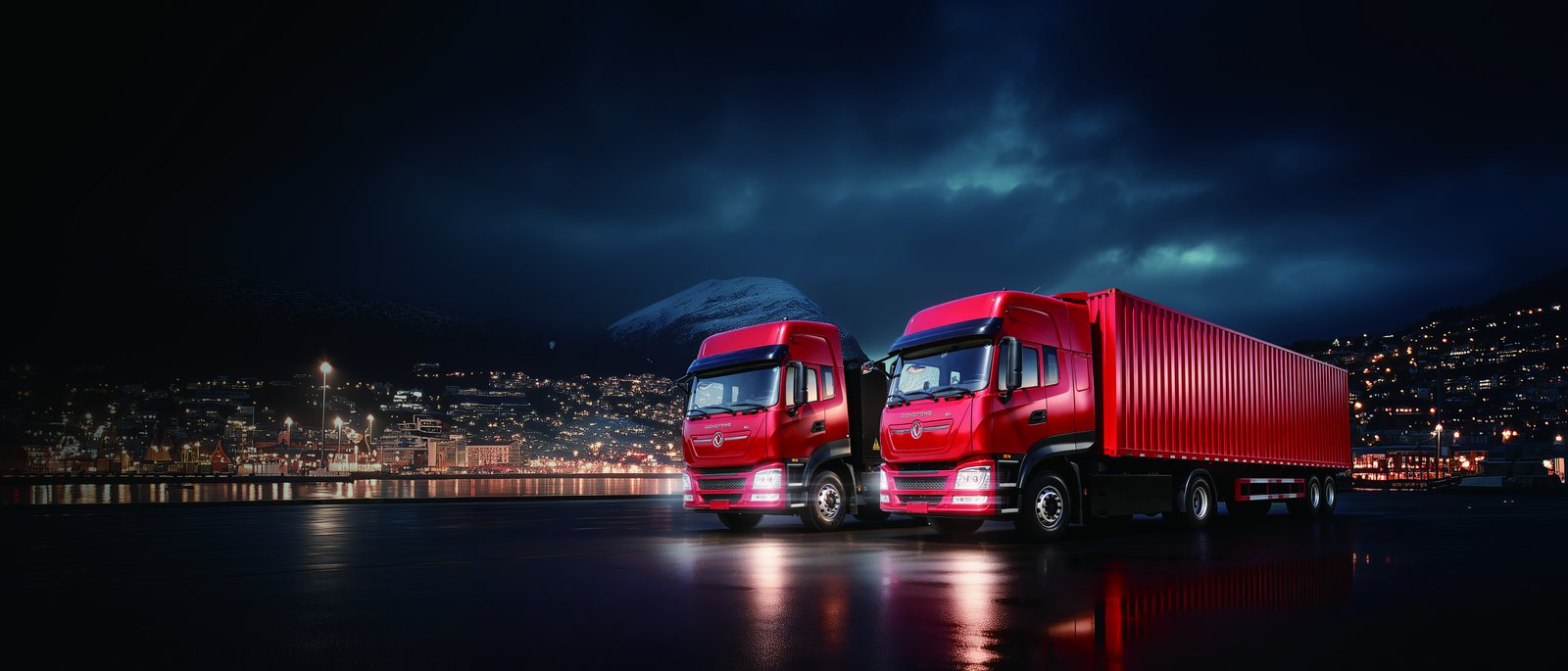
Peru is one of the few Latin American markets where the national tax framework actively rewards fleet electrification, and for a buying team pricing a ten-truck order the difference between the diesel and the EV truck path is measured in tens of thousands of dollars before the first kilometre is driven. This guide walks through the real 2026 policy landscape — the SUNAT import treatment, the Lima and Callao municipal incentives, the Aduanas documentation set, and a fully worked landed-cost example built around the Dongfeng KT5M electric cargo truck. If you are structuring a Peru electric truck acquisition, the policy layer is where the business case is won or lost, and it repays a careful read before the commercial negotiation begins.
Peru applies the General Sales Tax (IGV, 18%) and the Selective Consumption Tax (ISC) on vehicles, but electric commercial vehicles sit in a far more favourable position than their diesel equivalents. Under Supreme Decree frameworks that Peru has maintained and expanded since the 2019 electric-mobility law, battery electric trucks are exempt from the ISC surcharge that diesel trucks carry, and the ad-valorem import duty on fully built electric trucks is set at the preferential 0% — 6% band rather than the 9% — 11% applied to comparable diesel cargo trucks under the Andean Community (CAN) common external tariff. The practical effect for an importer is a 9-12 percentage point reduction in duty-plus-ISC burden on a US$55,000 FOB electric truck, which is an upfront saving of roughly US$5,500-7,500 per unit versus a diesel of equal value.
The second national lever is depreciation. Peruvian tax rules permit accelerated depreciation on certified clean-technology equipment, which lets a fleet operator write down the EV truck premium against taxable income faster than the straight-line schedule applied to diesel assets. For a company in the 29.5% corporate income tax band, front-loading depreciation on a US$20,000 per-truck premium is worth roughly US$5,900 in net present value per truck over the first three years. Buyers should ask their tax advisor to model this explicitly, because it is frequently omitted from first-pass TCO comparisons and it materially shortens payback.
Beyond the national layer, the Metropolitan Municipality of Lima and the Provincial Municipality of Callao have layered their own measures, and these matter for the urban distribution fleets that dominate Peru’s EV truck demand. Lima’s environmental zoning scheme grants zero-emission commercial vehicles access to restricted circulation corridors during peak hours where diesel trucks face off-peak circulation restrictions, and Callao’s port logistics zone offers reduced municipal parking and loading fees for certified electric units. The municipality also waives the annual vehicle-ownership tax (the SOAT-adjacent municipal contribution) for zero-emission trucks for the first five registration years.
For a Lima-based distributor running the Cono Norte to Callao port shuttle — a 25-45 km duty cycle perfectly suited to the KT5M — the combined municipal perks are worth roughly US$800-1,200 per truck per year in avoided fees and, more importantly, in unlocked delivery-window access that diesel competitors cannot use. We advise fleet buyers to register the vehicles in the municipality where the incentive is strongest relative to their operating base, because the benefits attach to the registration jurisdiction.
Clearing an electric truck through Aduanas del Perú requires a specific documentation package, and the battery safety file is the item that catches first-time importers. The standard set is: the commercial invoice and bill of lading, the certificate of origin under the CAN framework where applicable, the technical data sheet and three-dimensional drawing, the UN R100 battery safety certificate (which we supply with every export), the charger compliance documentation, and the Spanish-language homologation dossier confirming the unit meets Peru’s vehicle technical regulation. SUNAT assigns the tariff classification under heading 8704 (motor vehicles for transport of goods); the electric variant is sub-classified to attract the preferential rate described above.
Our standard export pack delivers all of this pre-translated, and a competent Peruvian customs broker clears a properly documented electric truck in 5-9 working days at the Callao terminal. The single most common cause of delay is a mismatch between the declared battery chemistry and the UN R100 certificate, so we align those documents at the order stage rather than at the port. The vessel from Shanghai to Callao sails in 32-38 days; we recommend filing the broker mandate and the SUNAT import declaration the moment the bill of lading is issued, so clearance runs in parallel with the final leg of the voyage.
The table below builds a realistic landed cost for a single KT5M electric cargo truck delivered to a Lima yard, and sets it against the diesel equivalent so the incentive effect is visible. The KT5M carries a 140-180 kWh CATL LFP battery, a LvKong 150-190 kW motor, 4.5-6 t payload, and a 200-240 km real-world range; at current FOB bands it sits in the US$48,000-62,000 range.
| Cost component | KT5M electric truck | Diesel equivalent |
|---|---|---|
| FOB Shenzhen / Shanghai | US$55,000 | US$33,000 |
| Ocean freight + RoRo | US$2,800 | US$2,600 |
| Import duty (0% EV vs 11% diesel) | US$0 | US$3,630 |
| ISC (exempt EV vs 10% diesel) | US$0 | US$3,300 |
| IGV (18% on CIF+duty) | US$10,464 | US$7,126 |
| Broker + terminal + municipal | US$1,900 | US$1,700 |
| Total landed cost | US$70,164 | US$51,356 |
| Municipal incentive (5-yr value) | -US$4,500 | US$0 |
| Effective first cost | US$65,664 | US$51,356 |
The example shows the electric truck still carries a US$14,300 effective premium over the diesel after incentives — but that premium is recovered in energy and maintenance savings of roughly US$10,000-12,000 per truck per year on Lima urban duty, which compresses payback to 15-20 months. The incentive layer removes about US$11,000 of the raw price gap, and without it the payback would stretch past the warranty horizon. Policy is not a footnote here; it is the difference between a bankable case and a marginal one.
Most Lima distributors operate from a single yard in Cono Norte, Ate or Callao, which makes depot charging the natural model. A ten-KT5M fleet draws roughly 300-400 kVA at peak managed charging; Lima’s distributor (Luz del Sur or Enel) processes industrial connections of this class in 8-16 weeks. We file the grid application on purchase-order day because the vessel transit from China is reliably longer than the connection lead time, and the last thing a buyer wants is trucks on the yard with no power. A 120 kW DC fast charger plus one 22 kW AC post per two trucks covers a two-shift Lima operation, and the KT5M’s 20-80% DC charge in about 40 minutes fits the natural midday loading window.
Peru’s incentive structure is more generous than many neighbours, and fleets operating across the Andean corridor should compare it directly with the Chilean and Colombian frameworks. We maintain a dedicated Peru electric truck market page with current FOB bands, port transit times and the municipal incentive schedule, and our Lima-based partners can walk a buying team through the SUNAT filing in Spanish. For distributors running sister fleets in Ecuador or Chile, platform standardisation on the KT5M halves parts inventory and technician training cost across the region.
The bottom line for Peruvian fleet buyers is straightforward: the policy environment already does a large share of the electrification work for you. Read the incentive schedule before you negotiate the truck price, build the landed-cost model with the duty and ISC exemptions in it, and the EV truck business case in Lima and Callao stands on its own — without waiting for diesel prices to rise or for a carbon mandate to arrive.
Ready to electrify your fleet? Contact Shaanxi Fenghan Trading — authorized Dongfeng EV truck exporter. WhatsApp: +86 153 1943 1311 | Email: sales@fenghan-trade.com | dongfengevtrucks.com
🌐 Our Network: Fenghan Trade (SAGMOTO/SHACMAN Truck Export) · SAGMOTO heavy duty diesel trucks