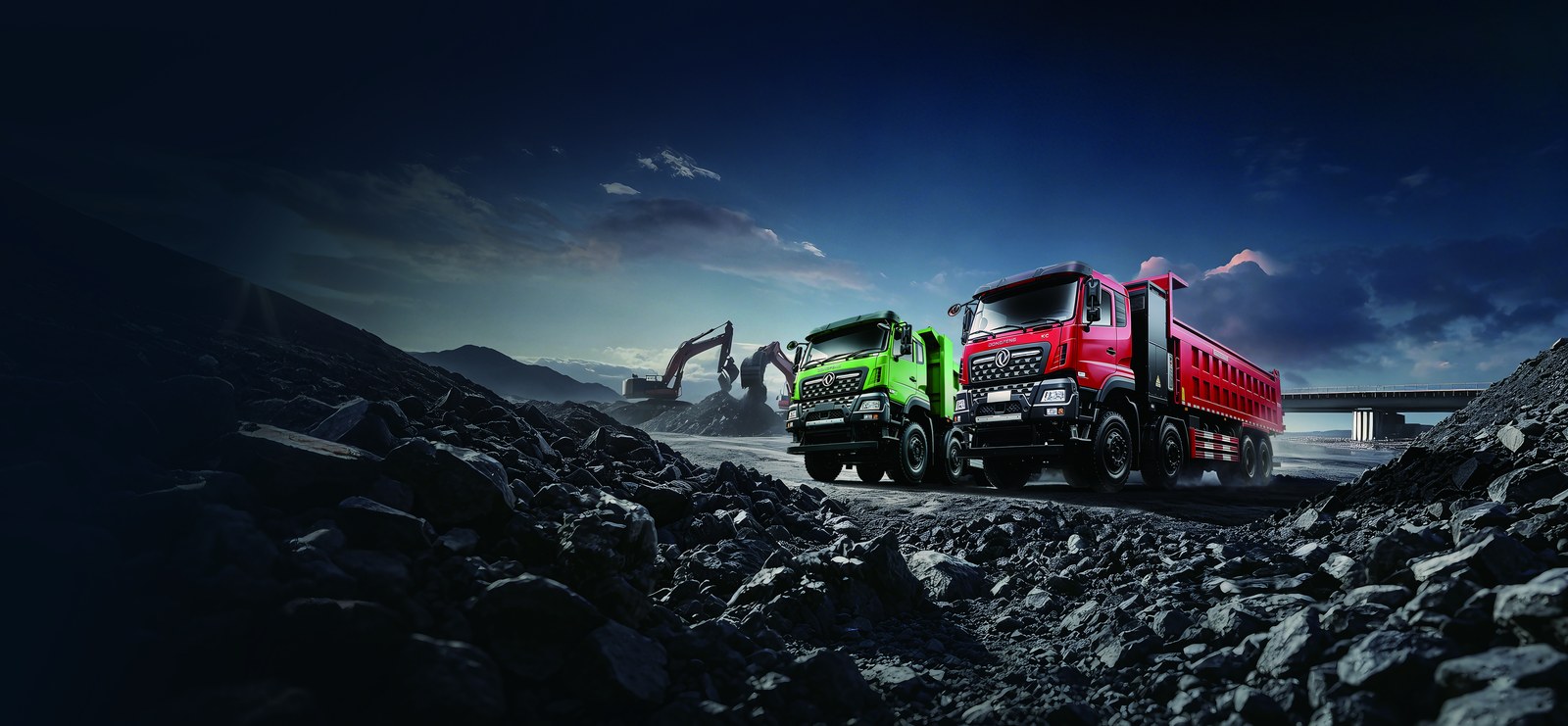
Medan is the commercial capital of North Sumatra and the logistics hub for one of the world’s largest palm oil producing regions — the mill-to-port and estate-to-mill haulage that moves fresh fruit bunches (FFB) from plantation to mill within hours of harvest, then crude palm oil and kernels from mill to the Belawan export terminal. That freight is short, repetitive, estate-based and brutally sensitive to two forces: the round-the-clock harvest clock (FFB must reach the mill within 24 hours or free fatty acid ruins the oil) and the ISPO sustainability certification that now gates access to European and premium buyers. This article examines the Dongfeng KTH3 electric truck for North Sumatra palm logistics: what the 262 kWh pack delivers on estate-to-mill runs, how plantation solar charging closes the loop, and how the Indonesian import path works. For a sector where sustainability is a sales license, an EV truck is both a cost play and a certification asset.
Estate-to-mill haulage is the most predictable freight in Indonesian agri-logistics. FFB collection points sit 5-40 km from the mill, the trucks run fixed loops all day and return to the estate workshop every night — classic return-to-base duty. A KTH3 on this pattern covers 120-220 km daily across multiple short loops, at 20-40 km/h on estate roads with rolling laterite grades. The 262 kWh CATL LFP pack covers a full day of FFB shuttle with margin, and the estate workshop is the natural charger site. The mill-to-Belawan leg (Medan port, 20-30 km) and the mill-to-depots runs add a second wave that the same depot charging handles with a midday top-up. No public charging is required; the entire operation runs from the estate yard, which is exactly why plantation electrification is the lowest-risk EV truck entry in Southeast Asia.
The ISPO dimension is the strategic driver and it is specific to this sector. The Indonesian Sustainable Palm Oil (ISPO) standard — mandatory since 2020 and tightening toward Paris-aligned metrics — scores estates on emissions across the value chain, and Scope 1 (own diesel truck) emissions are the most visible line a mill controls directly. An electric FFB fleet converts that line from a liability to a certification strength, and premium buyers in the EU and Japan now ask for the transport emissions number specifically. A KTH3 fleet charged from estate solar is, on paper, a near-zero Scope 1 transport operation — a credential no diesel fleet can show.
| Parameter | KTH3 6x4 Electric Cargo Truck |
|---|---|
| GVW / payload | 28 t / 18-20 t (FFB or bulk body) |
| Battery | 262 kWh CATL LFP, liquid-cooled |
| Motor | LvKong 360 kW peak / 2,400 Nm |
| Real-world range (loaded, estate profile) | 200-240 km |
| DC charge 20-80% | ~50 min at 240 kW |
| Gradeability | ≥30% — laterite estate roads at load |
| Regeneration on estate descents | 18-25% of round-trip energy recovered |
| Battery warranty | 8 years / 4,500 cycles to 70% SOH |
| FOB price band | US$82,000-100,000 |
The sealed HV system is the feature North Sumatra’s climate demands. Estate roads flood in the November-March wet season and the laterite turns to slurry; the KTH3’s HV system is sealed to IP67, the pack sits above the wading line, and there is no air intake, turbo or exhaust to ingest water and dust. The traction control modulates motor torque in milliseconds on slippery laterite, where a diesel’s clutch and throttle response is an order of magnitude slower. Estates that run electric report fewer wet-season breakdowns and no flooded-engine write-offs — a real number in a region where a submerged diesel is a total loss.
Indonesian industrial diesel runs roughly US$0.75-0.85 per litre (B35 subsidized, but estate fleets buy commercial). A 28 t cargo truck on FFB duty burns 0.50-0.60 L/km; at US$0.80/L, about US$0.42 per kilometre. The KTH3 consumes 1.3-1.5 kWh/km on estate grades; at PLN industrial tariffs of roughly US$0.10-0.12/kWh, US$0.14-0.18 per kilometre, and at estate-solar effective cost of US$0.05-0.07/kWh, under US$0.10. On 200 km per day, 300 days a year, the grid-charged saving is roughly US$17,000-20,000 per truck annually; with solar it doubles to US$24,000-28,000. Maintenance — no engine, clutch or DPF, plus 3x brake life — adds US$5,000-7,000. Against a purchase premium of US$35,000-45,000, payback is 18-24 months grid-charged, 12-16 months with solar. The ISPO certification value sits on top of that and is not in the fuel math.
North Sumatra receives 4.0-4.5 peak sun hours daily, and every palm estate already has open land and a milling load — the natural hybrid is a 200-500 kWp solar canopy over the estate workshop and truck park, feeding the chargers and the mill’s own load, with PLN grid as backup. A 300 kWp array offsets 45-60% of a 10-truck fleet’s annual charging energy and pays for itself in under five years on charging load alone. We deliver the single-line diagram, the solar-hybrid controller config and the PLN interface pack with the truck order, because the charger and solar lead times usually exceed the 22-30 day vessel transit from China to Belawan. For estates already running biomass or solar at the mill, adding truck charging is the obvious next load to soak.
One operating note: the FFB clock means charging must fit the slack in the loop. Because the KTH3 charges during the natural meal and maintenance window and the trucks run fixed loops, the available hours align to the harvest shift rather than the refuel stop — no driver waiting at a diesel bowser while FFB ages in the trailer. Estates that sequence charging into the existing break structure report higher effective utilisation than the diesel fleet it replaces, which the TCO models above do not even count.
Indonesia exempts or reduces luxury tax and import duty on certified battery electric vehicles under its KBLBB program, and Belawan and Tanjung Priok handle RoRo truck imports with 22-30 day sailings from China and efficient customs for documented industrial vehicles. We supply the Indonesian-language homologation dossier where required, the SNI and Kemenperin references, and UN R100 battery certification. Groups with multi-island operations should also review our Indonesia electric truck market page, which covers the parallel Riau, Kalimantan and Sulawesi plantation and mining corridors where the same KTH3 platform serves both with shared parts and training.
After-sales ships with the trucks: a two-year fast-moving parts kit per fleet, CATL module stock reachable in 10-14 days, and telematics remote diagnostics with Bahasa and English support. The drivetrain’s maintenance calendar — brake inspections, coolant checks, software updates — removes the workshop dependency that grounds diesel trucks during peak harvest, which is the worst possible week to lose a truck on an estate.
The natural first adopters are the integrated mills with captive estate-to-mill loops and their own power infrastructure — they control both ends of the duty cycle, can site solar and chargers at the workshop, and live the ISPO score every audit. Independent FFB transporters are second. The combination of short fixed loops, captive estate power, and a certification line that increasingly decides market access makes North Sumatra palm logistics the cleanest EV truck case in Southeast Asia. The estates that electrify first bank a cost and ISPO advantage their diesel competitors cannot answer — and the buyer is already asking for the number.
Ready to electrify your fleet? Contact Shaanxi Fenghan Trading — authorized Dongfeng EV truck exporter. WhatsApp: +86 153 1943 1311 | Email: sales@fenghan-trade.com | dongfengevtrucks.com
🌐 Our Network: Fenghan Trade (SAGMOTO/SHACMAN Truck Export) · SAGMOTO cargo truck flatbed box stake