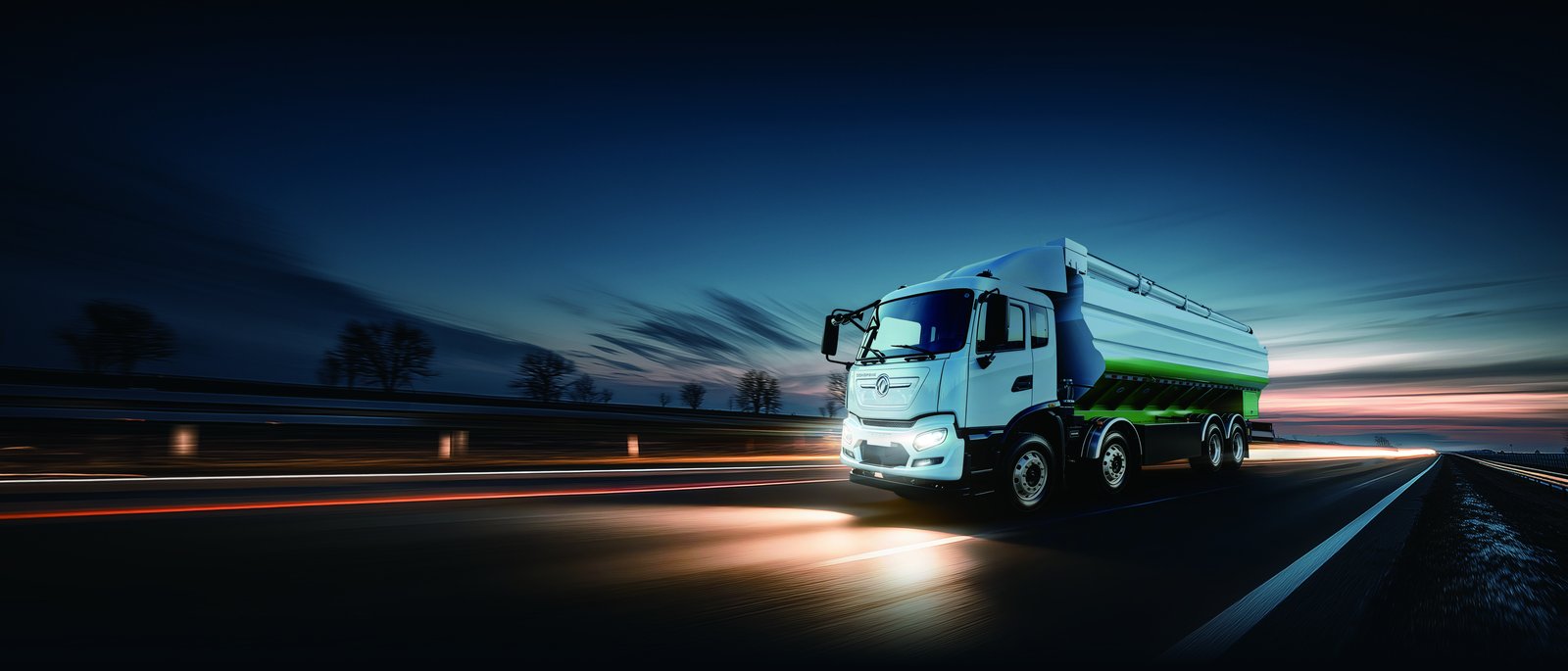
Manila is a port city and a distribution city at the same time, and that duality is exactly what an integrated EV truck programme exploits. Containers land at Manila International Container Terminal and South Harbour, get drayed 10–30 km to warehouses in Caloocan, Parañaque and Laguna, then re-emerge as multi-stop distribution runs through a metro area that ranks among the most congested on earth. Every leg of that chain is short, fixed and return-to-base — the three structural conditions under which electric trucks out-compete diesel without subsidy. We have already covered the EVIDA law and the KT5J's number-coding advantage in our Philippines market analysis. This piece is the operator-level blueprint: pairing drayage tractors with delivery trucks on one depot, one charger set and one energy contract, with the numbers that make Manila one of the strongest EV truck business cases in Southeast Asia.
Manila drayage is idle-heavy duty. Truck queues at MICT gates routinely run 45–120 minutes; corridor speeds on C-3, R-10 and the Parañaque spine average under 20 km/h in daylight windows. A diesel tractor assigned to this work burns 40–55 L per shift with the majority of engine hours at idle or near-idle. The Dongfeng TE46 4x2 electric tractor (CATL 400 kWh LFP, 42 t GCW, LvKong 350 kW peak) eliminates that burn entirely and covers the duty on one overnight charge: 5–7 gate-to-warehouse round trips, 130–200 km, at 1.6–1.8 kWh/km. Drivers report the other benefit that Manila operations people care about: instant torque moving a laden 40-footer out of a gate queue at walking-stop-walking pace, where a diesel unit slips its clutch thousands of times a day.
The distribution layer splits by weight class. The KT5J electric delivery truck (CATL 262 kWh, ~4.5–5 t class) is the multi-stop machine for FMCG, e-commerce and pharma drops across Quezon City, Makati and Pasig — 90–130 km/day, 60–110 stops, with regenerative braking recovering 30–40% of traction energy in traffic this dense. Its EVIDA registration also exempts it from Metro Manila's number-coding scheme, effectively adding one productive day per truck per week versus a coded diesel unit — a 20% capacity bonus no TCO model should ignore. The KT5M electric box truck (CATL 262/310 kWh, 18 t GVW, up to 65 m³) takes the warehouse-to-hub trunk runs and bulky retail distribution, 100–200 km/day on a single charge.
| Parameter | TE46 drayage | KT5J multi-stop | KT5M box trunk |
|---|---|---|---|
| Battery | CATL 400 kWh | CATL 262 kWh | CATL 262/310 kWh |
| Daily distance | 130–200 km | 90–130 km | 100–200 km |
| Daily energy | 230–340 kWh | 60–95 kWh | 110–210 kWh |
| Diesel rival burn/day | 40–55 L | 16–24 L | 24–38 L |
| FOB price band | USD 120k–140k | USD 75k–92k | USD 85k–105k |
Meralco commercial and industrial rates have been running at the equivalent of USD 0.14–0.19/kWh — high by regional standards, which changes the optimisation problem. Diesel in Metro Manila retails around PHP 58–68/L (roughly USD 1.00–1.20/L). Per shift, an electric drayage tractor saves 30–45% on energy versus its diesel rival and a KT5J saves 35–50% — real but not spectacular margins. Two levers widen them decisively:
The Electric Vehicle Industry Development Act gives registered EV importers and operators a package that materially improves fleet math: the number-coding exemption in Metro Manila (the capacity bonus discussed above), preferential registration with the LTO, and — critically for import economics — duty-free treatment on completely knocked-down and specific EV categories plus reduced excise exposure depending on the classification route. The practical procedure for fleet buyers: secure EVIDA-compliant registration of the imported units with the Board of Investments / LTO, which requires the standard technical file (UN 38.3 battery summary, type documentation, CCC/COC where applicable). We supply the full document pack with every Dongfeng EV truck shipment and guide the registration filing with your Philippine customs broker. One caution: incentive categories and rates are updated by IRR amendments — confirm the current position for your vehicle class with your broker at order time, the same as with any live policy regime.
Shipping from China is short and dense: 7–12 days from Shanghai or Qingdao to Manila South Harbour or the MICP compound. RORO is standard for tractors and box trucks; containerised shipment works for the KT5J class where a buyer wants bonded-yard flexibility. The ASEAN-China FTA (ACFTA) lets trucks with the required ASEAN-China certificate of origin enter at preferential rates versus MFN — the certificate must be issued against the commercial invoice at the China end, and we handle it as part of every export to the Philippines. Philippine duties on trucks otherwise run in the 10–20% band with 12% VAT, and the EVIDA EV categories can improve on that. The battery documentation pack (UN 38.3, IMDG declaration, state-of-charge certificate at 30–40% for sea freight) travels with the B/L; Philippine customs has cleared dozens of our electric truck consignments without battery-specific delays when the pack is complete.
| Fleet element | Units | Annual operating advantage vs diesel |
|---|---|---|
| TE46 drayage tractors | 10 | USD 175,000–230,000 |
| KT5J multi-stop delivery | 10 | USD 90,000–120,000 |
| KT5M box trunk | 5 | USD 55,000–75,000 |
| Depot (8 chargers, buffer, solar) | 1 | (amortised in figures above) |
| Programme total | 25 EV trucks | ~USD 320,000–425,000/year |
Figures assume blended charging at USD 0.10–0.12/kWh with the off-peak-plus-solar structure, diesel at USD 1.10/L, and include the maintenance gap in the electric fleet's favour. Add the number-coding productivity bonus on the KT5J wing (one extra revenue day per truck-week, worth USD 2,500–4,000 per truck-year for a leased-out distribution fleet) and the EVIDA registration savings at import, and the programme's payback on its capital premium lands in year 3–4, with an 8-year cumulative advantage of USD 2.3–3.2 million.
Manila duty adds a weather dimension most EV truck markets do not face, and the operating discipline is written into our Philippines handover. Before declared typhoon events: fleets charge to 95–100% (the one time the 100% ceiling rule is suspended), pre-cool or pre-heat cabs on shore power, and stage trucks on elevated ground. During flood events: standing-water routing rules apply as they do for any heavy vehicle — the trucks' IP67 pack enclosures and wading ratings cover incidental water, but no fleet should route through flood water that a diesel unit would also refuse. After events: the post-immersion protocol is a two-hour HV inspection — isolation resistance check, connector survey, pack telemetry review — before the truck returns to revenue duty. Fleets that treat the protocol as routine lose hours, not trucks, through typhoon season; the record across our Philippine deployments is zero pack losses to weather in three seasons of operation. That operational resilience, layered on the number-coding and EVIDA advantages, is why Manila's integrated programmes compound value quietly through the calendar year.
Ready to electrify your fleet? Contact Shaanxi Fenghan Trading — authorized Dongfeng EV truck exporter. WhatsApp: +86 153 1943 1311 | Email: sales@fenghan-trade.com | dongfengevtrucks.com
🌐 Our Network: Fenghan Trade (SAGMOTO/SHACMAN Truck Export) · SAGMOTO cargo truck flatbed box stake