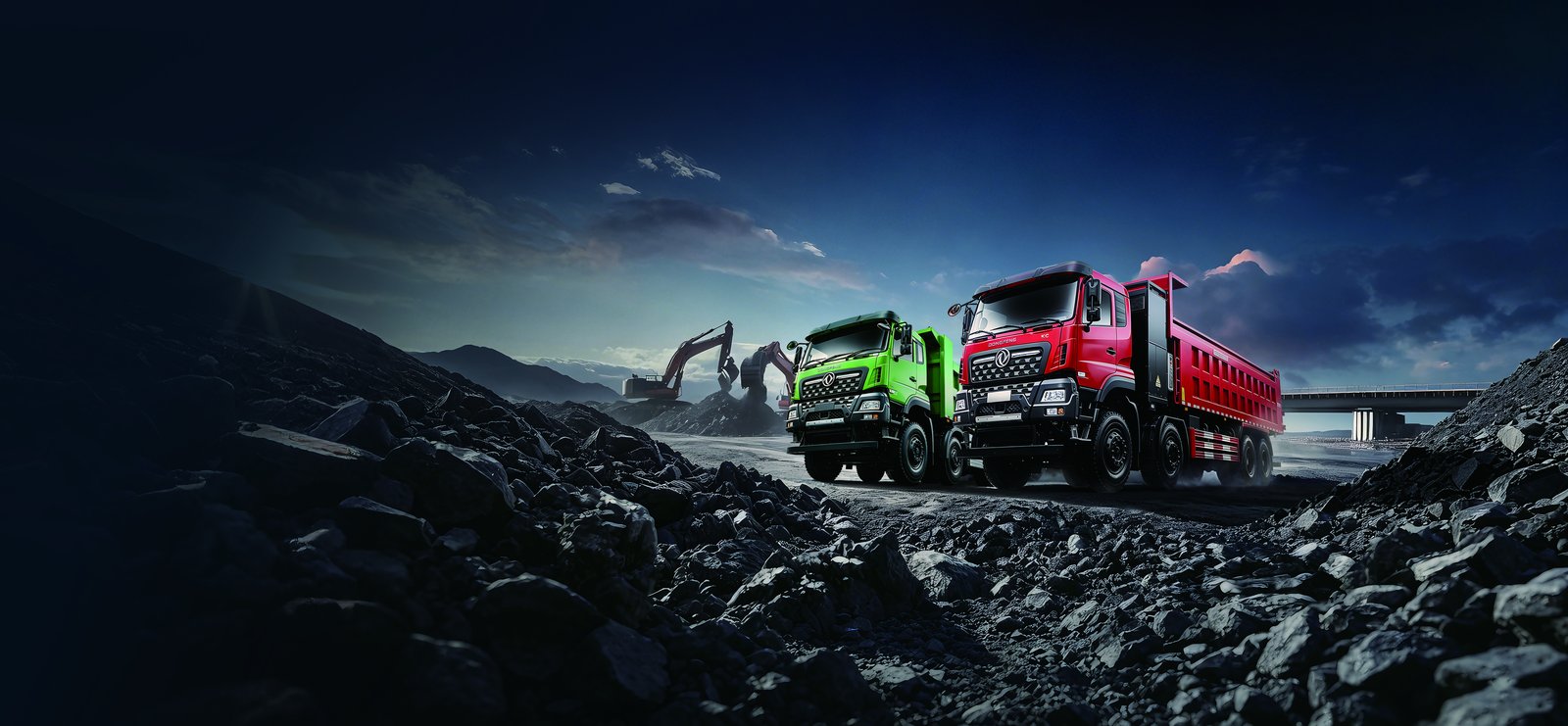
Malaysia is quietly assembling one of Southeast Asia's most credible electric truck cases. The country's grid is over 95% domestically fuelled with hydro and natural gas dominant, industrial electricity is moderately priced and stable in ringgit terms, the National Energy Transition Roadmap (NETR) has put commercial-vehicle decarbonisation into official planning, and the freight geography — everything funnels through the Klang Valley, with Port Klang handling the majority of national container volume within a 60 km radius of the warehouses it feeds — is almost laboratory-clean for electrification. This article maps where an EV truck fleet actually earns its keep in Malaysia, built around the TE8M electric tractor on port corridor haulage and the KTH3 electric cargo truck on Klang Valley distribution, in the context of our wider Malaysia electric truck market guide.
Port Klang's hinterland logistics runs on three dense, repeatable flows, each of them electrification-friendly:
Malaysia's National Energy Transition Roadmap explicitly targets transport electrification, and the practical instruments matter for fleet buyers:
| Instrument | Status | Fleet relevance |
|---|---|---|
| EV import duty / excise treatment | Favourable for CBU electric vehicles | Narrows the electric-vs-diesel price gap at import |
| Green Technology incentive schemes | Investment allowances for green assets | Charging infrastructure and fleet capex can qualify for tax allowances |
| Road tax on EVs | Structurally reduced versus engine-capacity-based diesel rates | Annual cost line favours electric from year one |
| MIDA green investment framework | Project-level incentives | Large logistics players can bundle EV fleet + charging into applications |
For a Malaysian logistics operator, the practical effect is that the TE8M's landed premium over a diesel tractor is materially offset before a single kilometre is driven — and the per-km operating advantage is then banked for eight years.
The TE8M is our recommendation for container haulage for one reason: pack sizing. At 423 kWh with 400 kW peak motor output and a GCW rating up to 80 t in heavy-haul specification (49 t in standard Malaysian highway config), it holds highway speed on the NKVE and Federal Highway grades without derating in 33 °C afternoon heat, and its 40-minute 10–80% fast-charge window aligns with the container turnaround dwell that already exists in the daily schedule. The KTH3, with its 8x4 rigid format, 31 t GVW and 264 kWh pack, is the volume model for distribution: palletised FMCG, retail replenishment and the last-mile-to-warehouse legs that never exceed 180 km in a shift.
Using industrial tariff around RM 0.45–0.55/kWh (≈USD 0.10–0.12) and subsidised-but-rising diesel at RM 2.15–2.90/litre, a TE8M running 350 km/day, 25 days a month:
The KTH3's numbers in the valley are stronger still on a percentage basis, because multi-stop duty is where electric efficiency compounds.
Malaysia's climate is a monotonous 32 °C and 80% humidity — the thermal design point our export packs handle through liquid cooling with condensation-managed enclosures. The bigger engineering reality is terrain: the route to East Coast ports (Kuantan via the Karak) and the Cameron Highlands produce sustained 4–6% grades where a marginal truck will derate. The TE8M's motor and inverter are rated for continuous grade duty, and regenerative braking on the descent recovers 10–15% of a Klang Valley-bound load's energy — a fact that turns the Karak corridor from a challenge into an asset.
Malaysia is one of the easiest markets in our network logistically: 7–10 day sailings from Chinese ports to Port Klang, English-language documentation as standard, and our Singapore-warehoused parts consignment covers the Klang Valley with 3–5 day delivery. RHD configuration comes from the factory. For operators wanting to trial before committing a full order, we support five-unit pilots with full charging layout design included.
For a Malaysian fleet manager who has just taken delivery of the first electric units, the first ninety days decide whether the numbers on the dashboard match the numbers in the business case. The playbook we hand over at commissioning runs like this. Weeks one to two: fixed driver assignments and the eco-driving coaching session — the single highest-leverage intervention in the whole period, because the difference between the best and worst drivers in a new electric fleet is routinely 15–20% in kWh per km, and the behaviours that drive it (anticipatory throttling, regen-pedal descents, HVAC discipline) are coachable in an afternoon. Weeks three to six: charging schedule tuning against the TOU tariff — most Klang Valley depots find that shifting the charge window by ninety minutes captures a materially cheaper rate, and the smart-charging controller makes the shift invisible to operations. Weeks seven to twelve: the first maintenance pass, deliberately early — brake inspection, tyre rotation per the electric-specific schedule, coolant loop check — establishing the inspection rhythm while the fleet is young and the data is clean.
Two Malaysia-specific notes belong in the playbook. The afternoon thunderstorm pattern on the peninsula is predictable enough to plan around: the telematics show consumption spikes when drivers fight standing water with aggressive throttle, and the driver league table fixes it within a month. And the Karak-corridor tractors (for fleets serving Kuantan) should log their grade-descent regen recovery as a deliberate KPI — the corridor's geography returns 10–15% of the day's energy, and watching that number keeps both the drivers and the finance team engaged with the technology's actual behaviour rather than its brochure behaviour.
The ninety-day review then compares measured kWh/km, uptime, and cost-per-trip against the pre-delivery model from the sizing study — and it is that comparison, in the fleet's own data, that converts the first five trucks into the next twenty.
Ready to electrify your Klang Valley fleet? Contact Shaanxi Fenghan Trading — authorized Dongfeng EV truck exporter. WhatsApp: +86 153 1943 1311 | Email: sales@fenghan-trade.com | dongfengevtrucks.com
🌐 Our Network: Fenghan Trade (SAGMOTO/SHACMAN Truck Export) · 4x2 6x4 tractor truck prime mover