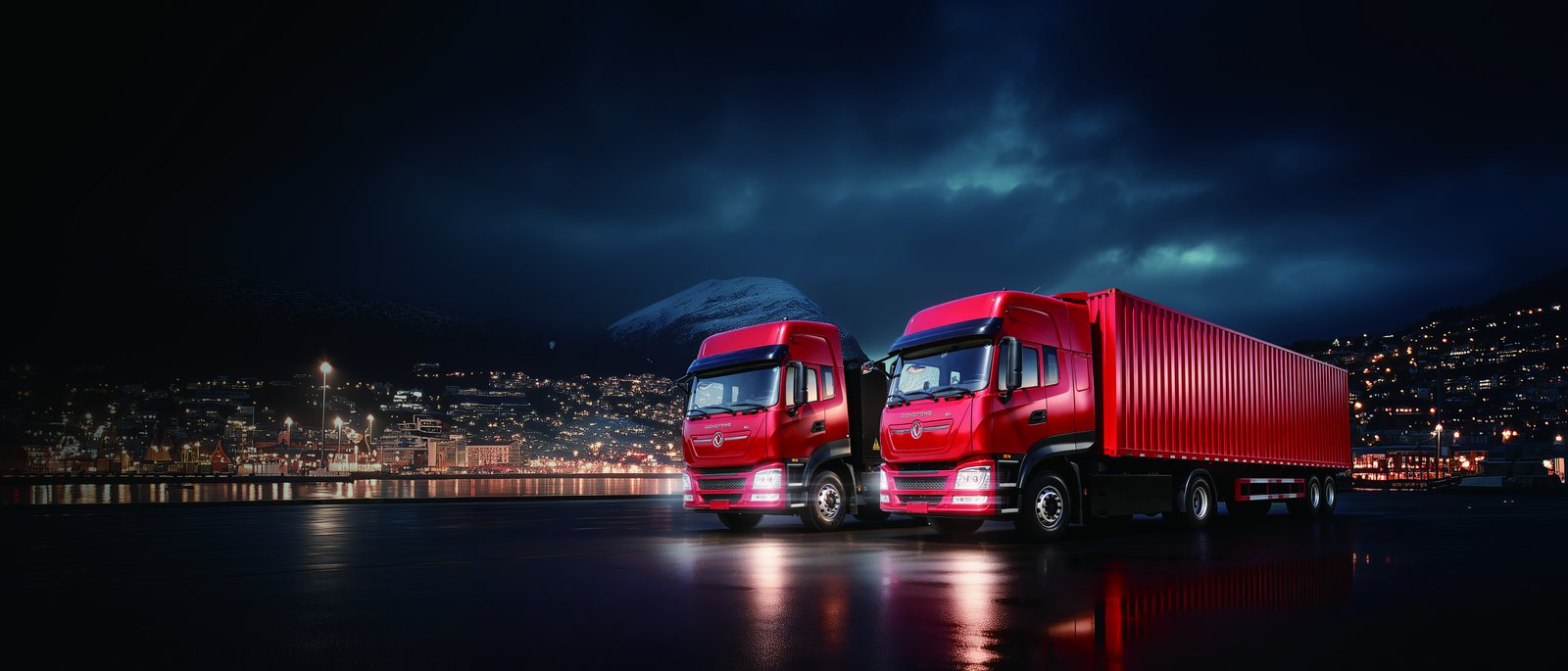
Buying electric trucks is the easy part; running them well is where the money is made. This guide covers daily operations for a KTH1 electric cargo truck fleet in Malaysia. See the KTH1 electric cargo truck page and our Malaysia electric truck guide.
Buying electric trucks is the easy part; running them well is where value is made or lost. A KTH1 fleet in Malaysia needs a charge plan, a maintenance rhythm, driver training and clear data. None of these is exotic, but together they determine whether the fleet delivers the promised energy savings or falls short. The operators who succeed are the ones who treat electrification as an operating change rather than a simple vehicle swap.
Every day starts with a range calculation, not a guess. A KTH1 with a real-world range of 230-260 km must be matched to tasks with margin for load, weather and traffic. For Malaysian fleets in Kuala Lumpur, Penang and Johor Bahru, the practical tool is a simple board that shows each truck, its planned route and its state of charge, so that no vehicle leaves with less energy than the job needs. This single habit prevents most range-related incidents.
| Specification | KTH1 value |
|---|---|
| Configuration | 4x2 electric cargo truck |
| Battery | CATL LFP 180 kWh |
| Drive motor | LvKong PMSM 180 kW (1,200 Nm) |
| Real-world range | 230-260 km |
| DC charge | 20-80% in 35-50 min |
| Capacity | payload 6-9 t |
| Battery warranty | 8 years / 4,500 cycles to 70% SOH |
| FOB China price | US$52,000-68,000 |
Charging must fit the shift pattern, not the other way round. If trucks run two shifts, charging happens between them; if they run one long day, overnight charging covers it. A KTH1 fleet should stagger charging so that the site supply is never overwhelmed and the tariff is never wasted. We provide a charge-planning tool sized to the fleet and the local Malaysia tariff, and help build the routine around it.
You cannot manage what you cannot see. The KTH1 reports energy consumed, state of charge, fault codes and utilisation through its telematics, and that data is the basis for every good decision: which routes suit which trucks, where energy is being wasted, when a pack is degrading, and how the fleet compares with diesel on cost per kilometre. For Kuala Lumpur, Penang and Johor Bahru fleets, a monthly review of this data usually reveals savings that were invisible day to day.
Uptime is revenue. A disciplined KTH1 maintenance programme — regular inspections, coolant and consumable checks, BMS health downloads — keeps trucks on the road and catches wear before it becomes a breakdown. Because the electric drivetrain has far fewer wear parts than diesel, the maintenance window is shorter, which supports higher availability. For Malaysia fleets, the aim is a planned, predictable service rhythm rather than reactive repair.
The sensible path to electrification is incremental. Start with a small number of KTH1 units on the most predictable routes, learn the energy profile, prove the savings, then scale. Each phase informs the next: where the chargers should be, which drivers need more training, how the tariff can be optimised. For Malaysian operators in Malaysia, this phasing turns a large capital decision into a series of manageable, evidence-backed steps.
The conditions that make an electric truck viable are all present in Malaysia. a mature grid and strong ESG reporting pressure from listed shippers. Freight demand concentrates in and around Kuala Lumpur, Penang and Johor Bahru, where routes are short and predictable and the depot is never far away. Fuel logistics add cost and delay that a fleet charging its own vehicles simply avoids. For a KTH1 electric cargo truck on a urban logistics and electronics supply duty cycle, this is not an experimental technology but a practical replacement for diesel, and the operators moving first are the ones who lock in the lowest cost per kilometre before their competitors do.
Electrifying a fleet in Malaysia is a project, and running it in phases is what keeps it manageable. Phase one is a site and route audit: list every duty cycle, measure real daily distance and load, and map the depot power supply. Phase two is a pilot of two to five KTH1 units on the most predictable routes, with chargers installed and drivers trained. Phase three is measurement — energy cost per kilometre, uptime, maintenance hours. Phase four is scaling what the data supports. Each phase de-risks the next and keeps the capital commitment matched to proven performance rather than optimism.
A KTH1 electric cargo truck carries a CATL LFP pack of 180 kWh and delivers a working range of 230-260 km, which fits a urban logistics and electronics supply duty cycle in Kuala Lumpur, Penang and Johor Bahru with margin. The drive motor produces 180 kW (1,200 Nm), and DC charging takes the pack from 20% to 80% in the time shown in the specification table above. FOB China pricing for this configuration is US$52,000-68,000, and the landed cost depends on the destination tariff and duty position, which we confirm before quotation. Against diesel, the decisive lines are energy cost per kilometre, maintenance cost per kilometre, and price certainty across the life of the truck.
Within the KTH1 range there are choices that matter more than cosmetics. The 4x2 layout suits the axle load and traction pattern of your duty cycle. Battery capacity of 180 kWh should be sized to the longest realistic daily route plus a safety margin, not to the biggest number on the brochure. Body and equipment specification — tipper, box, reefer, tank or compactor — should be matched precisely to the job in Malaysia. Getting these four decisions right at order stage is far cheaper than modifying a truck after it lands.
Buying an electric commercial vehicle from China is not the same as buying a diesel truck. The exporter must understand high-voltage shipping requirements, battery transport regulations, charging compatibility with the destination grid, and the spare-parts and service picture in Malaysia. Shaanxi Fenghan Trading has exported Dongfeng EV trucks across Africa, the Middle East, Central Asia and Latin America, and every shipment includes commissioning support, translated operator documentation and a starter spares package. For Malaysian customers, that support is the difference between a truck that works on paper and one that works on site.
Ready to electrify your fleet? Contact Shaanxi Fenghan Trading — authorized Dongfeng EV truck exporter. WhatsApp: +86 153 1943 1311 | Email: sales@fenghan-trade.com | dongfengevtrucks.com
🌐 Our Network: Fenghan Trade (SAGMOTO/SHACMAN Truck Export) · SAGMOTO cargo truck flatbed box stake