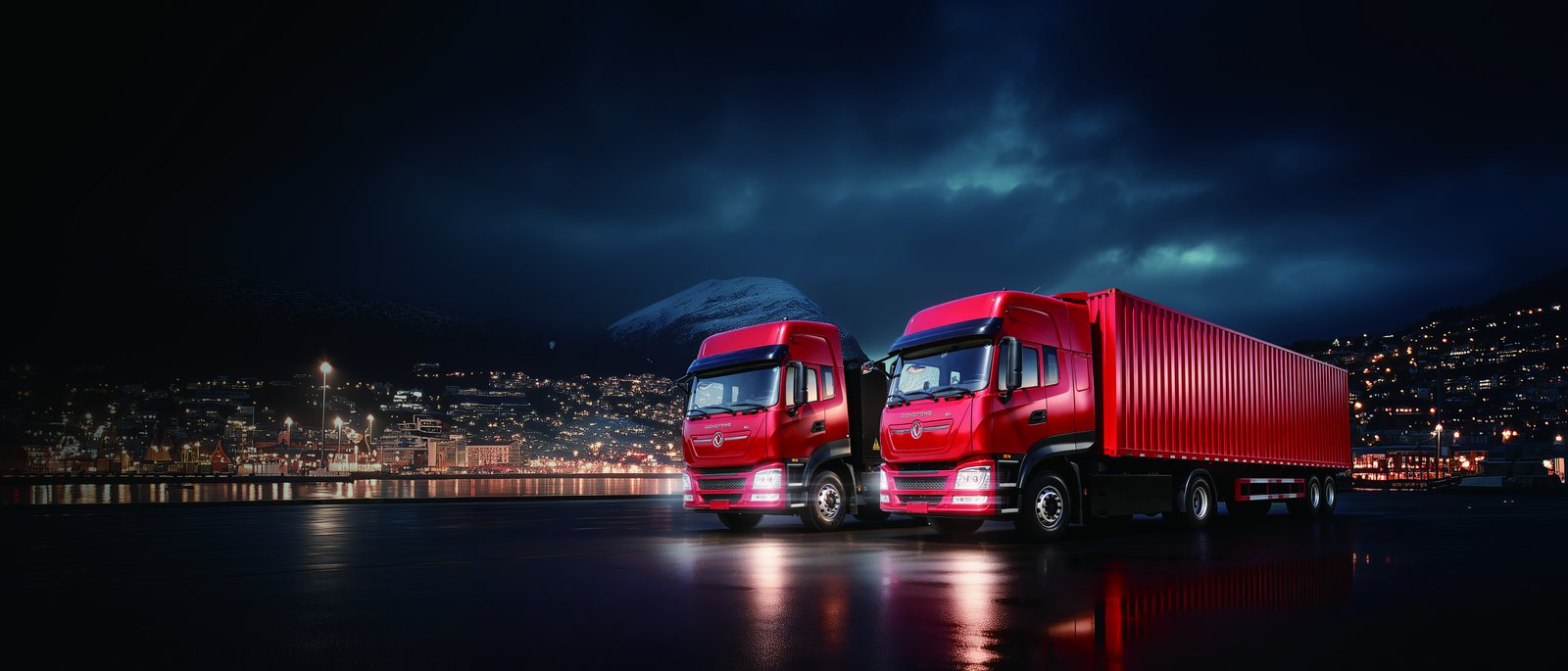
Lahore is Pakistan's distribution laboratory: 13 million people, the densest FMCG retail network in the country, and ring-road loops that keep a delivery EV truck inside a 60 km radius all day. Pakistan's National Electric Vehicle Policy has pushed import duty on EV commercial vehicles to some of the lowest rates in the region — 1% CBR on EV-specific tariff lines against 20%+ for equivalent diesel imports — and Punjab's grid, for all its load-shedding reputation, sells night-band industrial electricity at PKR 25-35/kWh (roughly $0.09-0.12), well under the $0.35-0.45 effective cost of diesel fuel per km on a typical delivery van. This piece lays out how we size KT5J and KT5M electric delivery fleets for Lahore operators, what the charging depot needs to survive the grid, and the honest numbers from a 15-truck business case.
Urban distribution in Lahore follows a hub-and-spoke pattern centred on Bedian Road, Ravi Road and the Badami Bagh wholesale cluster, with spokes 15-30 km long reaching DHA, Bahria Town, Gulberg and the southern housing schemes. A KT5J-class electric delivery truck running 40-50 drops per day covers 110-140 km, well inside its 262-350 km range envelope even at the 1.5-1.8 kWh/km consumption you see with stop-start traffic and a fully loaded box body. The KT5J electric delivery truck was engineered for precisely this shape of work: a 4.5-6 m cargo box, kerb-friendly turning circle for Lahore's inner-city galis, and a CATL LFP pack that tolerates 100% daily depth of discharge without warranty penalty.
The killer economic variable in Pakistan is not fuel price alone — it is the spread. Diesel in Lahore retails around PKR 260-280/litre, and light commercial fleets burn 18-22 litres on a day like the one described above. Electricity for the same route, even at commercial day rates, costs 60-70% less, and overnight charging on the off-peak band pushes the saving past 70%. When we model a 15-truck KT5J fleet over eight years, energy alone returns the entire diesel-equivalent purchase premium inside year two.
Every serious Pakistan fleet conversation arrives at the same question, so we answer it with engineering rather than hope. Lahore industrial feeders experience scheduled outages; a depot that pretends otherwise will strand trucks. Our standard Lahore depot design combines three layers: first, smart charging scheduled into the guaranteed night bands, with the fleet's 15 trucks drawing from just three 120 kW chargers because each truck needs only 3-4 hours of plug time; second, a 500 kWh-1 MWh battery energy storage buffer — increasingly viable in Pakistan as retired packs and containerised BESS prices fall — that absorbs cheap night energy and bridges four-hour outages; third, an optional 200-400 kW rooftop solar array, because Lahore averages 5.5 peak sun hours and Punjab's net-metering framework pays exporters of surplus power. The buffer layer turns load-shedding from a schedule risk into a non-event: trucks charge from the buffer when the feeder drops, and the buffer refills when the feeder returns.
| 15-truck KT5J depot, Lahore | Cost (USD) | Notes |
|---|---|---|
| 3 × 120 kW dual-gun chargers + install | $45,000-$60,000 | Night-band scheduling built in |
| 500 kWh BESS buffer | $55,000-$75,000 | Bridges stage-level outages |
| 200 kW rooftop solar (optional) | $90,000-$120,000 | Net-metering credited |
| Fleet annual energy saving vs diesel | $95,000-$120,000 | At 300 operating days |
Read that bottom line against the infrastructure capex: even the full three-layer depot pays back inside roughly 18 months of fleet energy savings, and the infrastructure asset persists through the next fleet cycle.
Pakistan's EV policy framework rewards proper classification. Completely-knocked-down and completely-built-up EV commercial vehicles import at preferential CBR rates on their dedicated tariff lines, but misclassification into diesel lines — a routine error when the importer's broker has never seen an electric truck invoice — forfeits the advantage. Our export package handles this end: we supply the Pakistan-specific documentation set including the EDB conformity references, HS classification support, UN 38.3 battery test summaries and the pre-shipment inspection paperwork that port customs at Karachi or Port Qasim will ask for. Buyers moving larger consignments should also review the national Pakistan electric truck market guide, which tracks the provincial variance — Punjab's registration fees and the Khyber Pakhtunkhwa incentives differ enough to matter at fleet scale.
Model honestly and the case still closes: a KT5J costs more at purchase ($42,000-$55,000 FOB against $28,000-$35,000 for an equivalent diesel Japanese-style cabover), but Lahore duty returns $6,000-$8,000 per truck per year in combined fuel and maintenance savings, and the low EV import duty plus Punjab's reduced registration levies claw back another $2,000-$4,000 of the premium at the customs stage. Payback lands at 24-30 months per truck, with the KT5M electric box truck — the larger sibling for wholesale runs to Ferozepur Road and the Ring Road retail parks — improving that number further on heavier, longer loops where diesel burn per km is worst. Maintenance adds a quiet dividend Pakistani fleet owners underrate: no turbo, no injectors, no clutch overhaul on stop-start duty, and regenerative braking stretching brake pad life two to three times. In a market where parts availability is a genuine anxiety, the drivetrain with 20 moving parts beats the one with 2,000.
Lahore's e-commerce platforms, dairy giants and FMCG distributors all face the same cost squeeze; the operators who electrify first get a cheaper per-drop cost base and a marketing story their corporate clients — increasingly running their own ESG scorecards — want to hear. Pakistan's EV import window is open now; the tariff advantage is policy-dependent, and fleets that wait for the perfect grid will watch early movers bank three years of savings in the meantime.
Our Lahore conversions run on a standard preparation checklist that removes most first-fleet risk before a single KT5J boards a vessel at Shanghai:
With that kit in hand, a five-truck pilot is a six-week exercise from order to data, and the expansion decision usually makes itself before the pilot quarter ends. Pakistan's import window is open, Punjab's grid is cheaper than its diesel by three to one, and Lahore's distribution geometry was drawn for exactly this fleet.
Ready to electrify your fleet? Contact Shaanxi Fenghan Trading — authorized Dongfeng EV truck exporter. WhatsApp: +86 153 1943 1311 | Email: sales@fenghan-trade.com | dongfengevtrucks.com
🌐 Our Network: Fenghan Trade (SAGMOTO/SHACMAN Truck Export) · SAGMOTO cargo truck flatbed box stake