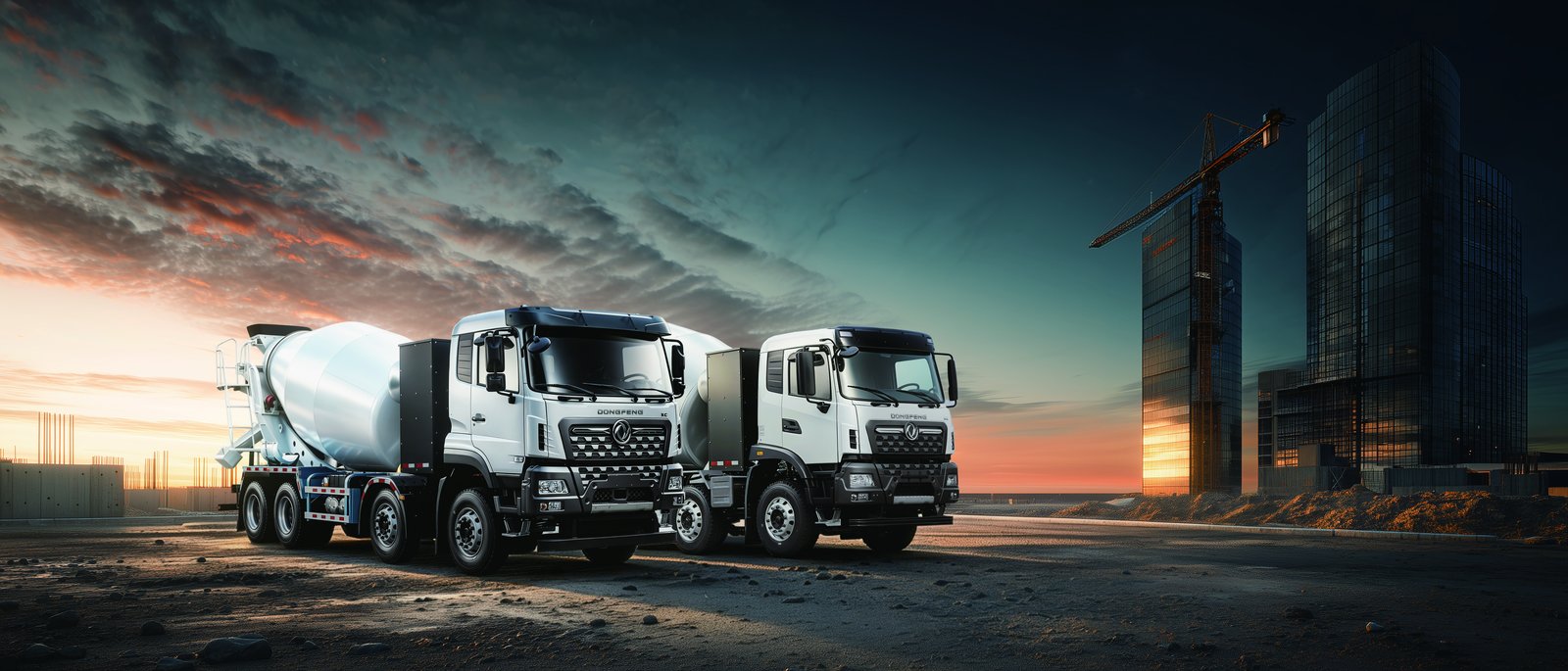
The 8x4 electric rigid is the workhorse class of regional cargo electrification: 31-tonne GVW trucks moving pallets, bagged commodities, construction materials and packaged goods on 150–300 km radials between ports, industrial zones and distribution centres. In the Chinese export market, the two names fleet buyers shortlist most often in this class are Dongfeng's KTH3 and Foton's Auman EST electric range. We published a KTH1-vs-Foton comparison two years into this programme; this article updates the comparison for the KTH3 — the 350 kWh battery of the KTH family against Foton's EST-A electric cargo platform — because the differences between these two EV truck philosophies matter more, not less, as fleets scale. We sell the Dongfeng side of this market and we are honest about it: the comparison below is written to be useful to a buyer who may well choose the Foton, and the decision framework at the end reflects where each truck genuinely wins.
Dongfeng's new-energy commercial line is built around a standardised battery platform: CATL LFP packs (262–600 kWh across the range) with the 8-year/4,500-cycle warranty, LvKong permanent-magnet drive motors, CCS2 charging as the export default, and battery-swap compatibility on the models where duty demands it. The buyer knows exactly which cell maker and warranty stand behind every truck, and any CATL-capable service network can work on the pack.
Foton's Auman EST electric range takes a more variant-driven approach: multiple battery suppliers and capacities across the EST line (commonly CATL and other tier-one Chinese cell makers depending on variant and build slot), Daimler-influenced cab and chassis architecture from the Auman joint-venture lineage, and strong domestic-market volume economics. For an export buyer, this means the Foton quote you receive must be interrogated cell-by-cell: the EST nameplate covers a family, and the battery spec, warranty and charging interface can vary between offers from different channels.
| Parameter | Dongfeng KTH3 | Foton Auman EST-A (typical) |
|---|---|---|
| Configuration | 8x4 rigid, 31 t GVW | 8x4 rigid, 31 t GVW class |
| Battery | CATL LFP 350 kWh (fixed) | 280–350 kWh class, supplier varies by variant |
| Drive | LvKong PMSM, 350–450 kW peak | PMSM, broadly comparable output |
| Range (laden, mixed duty) | 220–280 km | 200–260 km (variant-dependent) |
| Energy consumption | 1.3–1.6 kWh/km (cargo duty) | Comparable, 1.3–1.7 kWh/km |
| Charging | CCS2 DC standard export fit | CCS2 on export units — verify per offer |
| Battery warranty | 8 years / 4,500 cycles to 70% SoH | Typically 5–8 years, varies by supplier variant |
| FOB price band | USD 115,000–140,000 | USD 105,000–135,000 |
This is the round that decides most procurement outcomes, and it is where the KTH3's platform discipline shows. The 350 kWh CATL pack is not merely a marketing line — it is the difference between a fleet whose second-hand value, warranty claims and service network are legible to a bank in Almaty or Lagos, and one where the answer depends on which battery variant happened to be in the build. Foton's flexibility is a genuine advantage for domestic Chinese buyers chasing price points; for an export fleet holding trucks for eight-plus years, variant-dependency is residual-value risk. Our rule for buyers comparing the two: demand the battery contract, not the brochure — cell manufacturer, capacity, cycle-life warranty, and the SoH curve, in writing, attached to the VIN.
On the road, both are competent 8x4 electric rigids and the honest answer is that duty fit overlaps heavily. Differences emerge at the edges:
An 8x4 electric cargo fleet is a ten-year relationship with a parts channel. The comparison here is between programmes, not products:
The buyer's question is geographic: where do your trucks sleep, and who is within 500 km of that depot with high-voltage certification? Whichever brand answers that question better for your map wins round three, and round three decides more fleet outcomes than spec sheets.
Capital: the EST's lighter variants typically quote USD 8,000–15,000 below the KTH3 — real money on a 20-truck order. Operating: at parity of energy consumption the annual cost lines are within a few thousand dollars of each other, so the comparison is capital versus certainty. Lifetime: the KTH3's warranty and CATL pack residual (documented 85–92% SoH units commanding 55–70% of new price in the second-hand EV truck market) is the bankable line. A hybrid verdict most CFOs land on: if the trucks are financed with a residual-value covenant or the fleet resells at year 5–6, the KTH3's certainty is worth more than the EST's discount; if the fleet runs to destruction on owned cash, the cheaper unit can win on pure payback speed.
For fleets running a formal tender between the KTH3 and the Auman EST (or any pair of Chinese 8x4 electrics), the document that levels the field is a standardised technical annex. Require from each bidder: the battery contract per VIN (cell maker, capacity, cycle warranty, SoH curve); the charging interface and protocol certification; the cold-climate and hot-climate validation files for the specific variant; the regional service map with HV-certified points and response times; the spares price list for the 50 fastest-moving items; the software update framework and who controls rollout windows; and the residual-value policy — whether the vendor or dealer will underwrite a buyback or SoH floor. Score the answers, not the brochures. In the tenders we have participated in, the KTH3's standardised CATL specification wins the battery and residual lines; the Foton side is competitive wherever its local distributor is strong on service response and price. Both outcomes are legitimate — what the standardised annex prevents is the quiet loss on a line item nobody scored until year four of ownership, when it is too late to correct. Take the annex, make it binding to the contract, and either truck you buy arrives with the certainty the spec sheet implied.
Ready to electrify your fleet? Contact Shaanxi Fenghan Trading — authorized Dongfeng EV truck exporter. WhatsApp: +86 153 1943 1311 | Email: sales@fenghan-trade.com | dongfengevtrucks.com Whichever way the tender resolves, both trucks deliver the structural fact that matters most to cargo operators: an 8x4 electric rigid running regional duty saves 40-55% on energy and roughly half on powertrain maintenance against the diesel it replaces.
🌐 Our Network: Fenghan Trade (SAGMOTO/SHACMAN Truck Export) · SAGMOTO cargo truck flatbed box stake