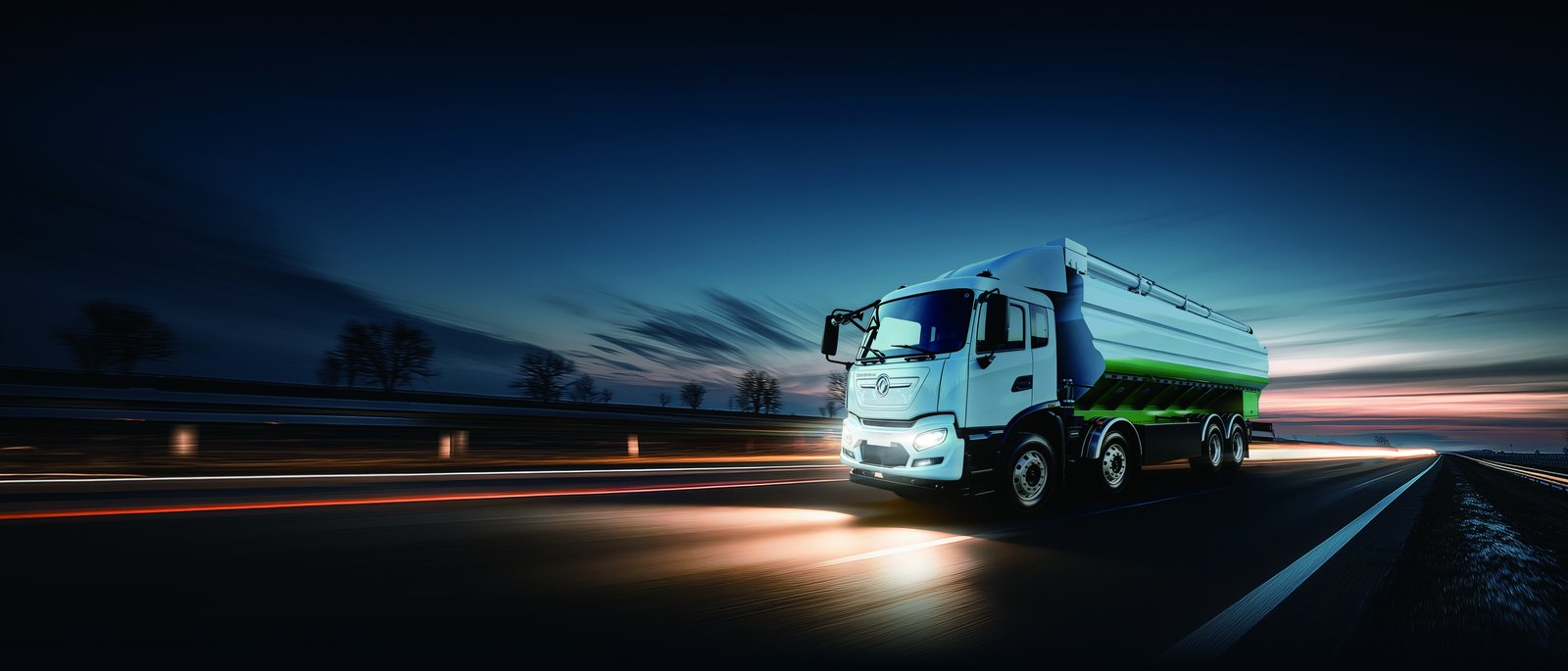
Agricultural logistics has a rhythm that no other freight matches: quiet for months, then a harvest surge that runs every truck to exhaustion for weeks, then quiet again. Grain corridors — the farm-to-elevator, elevator-to-mill, mill-to-market chains that move a country's food — are fixed-route, back-to-base and power-intensive at exactly the season when the economics are most visible. The Dongfeng KTH3 8x4 electric cargo truck with its 350 kWh-class CATL LFP pack is built for this duty, and agricultural regions are among the fastest to understand why: their corridors are short, their grain handling is already electrified at the elevator end, and their alternative — diesel trucked long distances into regions with weak fuel infrastructure — is the most expensive freight in the economy. This article covers the agricultural case: the duty cycles, the engineering questions specific to grain, the seasonal utilisation challenge and the worked economics. For the market context, see our Kazakhstan electric truck market guide — Central Asia's grain corridors are the flagship deployment of this exact duty.
| Cycle | Profile | Electric fit |
|---|---|---|
| Farm-to-elevator | 10–60 km loops, farm-gate loading over rough tracks, seasonal surge intensity | Strong: short loops, high torque on soft ground, return to the elevator — the depot |
| Elevator-to-mill / port | 80–300 km corridor runs at full payload, year-round | Strong on the shorter corridors and strengthening as charging infrastructure extends |
| Mill-to-market / feed distribution | 100–200 km city and regional delivery | Excellent — the classic return-to-base distribution case |
The elevator deserves the emphasis. Every grain region already has one or more electrically-fed handling hubs — dryers, conveyors, augers and storage fans running on three-phase power through the harvest. The trucks' charging architecture does not need to be invented; it needs to be plugged into infrastructure that has existed in the grain economy for decades.
The one structural question every agricultural fleet asks: what happens to an electric truck's economics when the harvest ends? Three honest answers:
A worked model for a grain corridor operator: 10 KTH3 units on a mixed pattern — harvest surge (20 km farm-to-elevator loops, 12-hour days for 60 days) plus year-round elevator-to-mill corridor work (150 km runs, 240 days), electricity at USD 0.08/kWh (agricultural corridor tariffs are typically among the cheapest in any grid), diesel at USD 1.10/L:
| Annual item (10 trucks) | Diesel fleet | KTH3 electric fleet |
|---|---|---|
| Fuel / energy | USD 310,000–365,000 | USD 42,000–50,000 |
| Maintenance (engines, aftertreatment, brakes) | USD 88,000 | USD 32,000 |
| Charging infrastructure (annualised) | — | USD 22,000 |
| Total annual operating | USD 400,000 | USD 100,000 |
A 4:1 operating ratio on corridor prices — USD 300,000 of annual savings against an incremental capital cost of USD 320,000–400,000, for payback inside 16 months. Two corridor-specific amplifiers push it further: agricultural tariffs are usually the cheapest electricity in the grid (the model already uses them), and the harvest surge's continuous short-loop duty is the highest-utilisation, fastest-payback truck work there is — the season pays the annual bill almost by itself.
Grain corridors run on fixed routes, cheap rural power, existing electric handling hubs and the harshest possible diesel economics — every input the electric case asks for, assembled by decades of agricultural infrastructure. The operators electrifying the elevator fleets now are quietly buying the cheapest tonne-kilometres in their national food chain.
It is worth sketching where this ends up, because agricultural regions that see the destination invest differently. The grain fleet of 2030 in a mature deployment is a mixed system: electric tippers on the farm-to-elevator loops and electric corridor tractors on the elevator-to-market legs, both charged from the handling hubs' own power; solar arrays over the elevator yards whose midday output peaks exactly when the off-season trucks are parked and charging; seasonal battery-swap floats mobilised for the harvest weeks and demobilised after; and the whole operation's kWh-per-tonne-grain metric tracked in the elevator's grain-quality software alongside moisture and protein — because at that point, energy is just another input the agronomist manages. The operators building toward that picture now are the same ones whose grandfathers electrified the first dryers: the pattern is not new, only the equipment.
Every food system that electrified its handling moved more grain more cheaply. The trucks were always the last diesel holdout — and in the corridors where the elevators already hold the power, that holdout is ending now.
Ready to electrify your fleet? Contact Shaanxi Fenghan Trading — authorized Dongfeng EV truck exporter. WhatsApp: +86 153 1943 1311 | Email: sales@fenghan-trade.com | dongfengevtrucks.com
🌐 Our Network: Fenghan Trade (SAGMOTO/SHACMAN Truck Export) · SAGMOTO cargo truck flatbed box stake