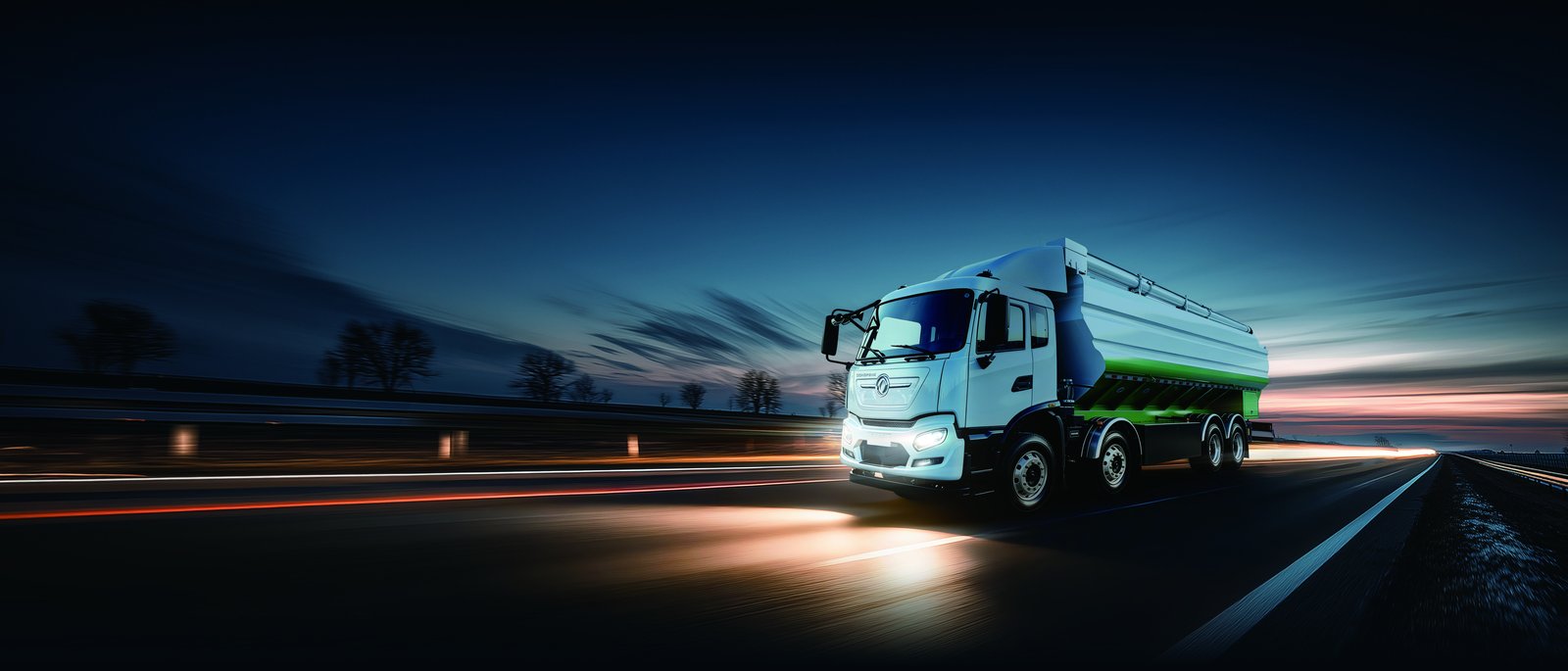
An EV truck is the logical choice for Tashkent urban distribution because the loops are short, the stops are many, and the city is pushing clean freight through its center. The KTH3 electric cargo truck is a 4x2 box hauler with a 262 kWh CATL LFP pack and a LvKong motor up to 282 kW, sized for the 3 to 8 ton payload that grocery, parcel and spare-parts runs actually carry. For a fleet doing 120 to 180 km per day inside the city, the electric truck charges overnight and never visits a fuel station.
Uzbekistan's grid is among the cheapest in the region, which makes the energy cost of an electric box truck almost trivial next to diesel. The KTH3 turns that tariff advantage into a per-drop saving that compounds across a 20-truck fleet, and the quiet operation suits the dense residential districts Tashkent is building on its edges.
The KTH3 chassis takes several bodies, so a fleet can standardize the powertrain and vary the box. The table below maps common Tashkent duties to payload and the body that fits, all on the same 262 kWh pack with a 200 to 300 km real-world range.
| Duty | Payload | Body | Range |
|---|---|---|---|
| Grocery delivery | 4 ton | Box 18 m3 | up to 280 km |
| Parcel last-mile | 3 ton | Curtain 20 m3 | up to 300 km |
| Cold chain | 3.5 ton | Reefer 16 m3 | up to 230 km |
| Spare parts | 5 ton | Box 14 m3 | up to 260 km |
| Water and drinks | 6 ton | Box 12 m3 | up to 240 km |
The reefer duty draws 3 to 5 kW for cooling, which trims range, so fleets size that route to the lower end and keep a charged spare for peak summer. The KTH3's flat chassis and standard PTO-free body mount make upfit simple at any local body builder in Tashkent.
The KTH3 charges on a 120 kW DC unit overnight, filling the 262 kWh pack in about 2.5 hours from empty, though most fleets plug in at 30 percent and need 90 minutes. At the Uzbekistan night tariff near 0.03 USD per kWh, a full charge costs under 8 USD and covers a full day of city drops.
Because the duty is predictable, the fleet rarely needs public charging, which removes queue risk. The only design rule is to size the pack to the worst summer reefer day, and the 262 kWh unit does that with margin for most Tashkent routes.
Drivers like the KTH3 because it has no gearbox, no clutch and no engine noise, which cuts fatigue across a 60-stop day. The low floor box is easy to load, and the regenerative brake holds the truck on the famous Tashkent hills without riding the pedal. City access is also smoother as clean-freight preferences spread, and an electric plate draws less scrutiny at low-emission checkpoints.
The 8-year or 4500-cycle battery warranty covers the pack through the full service life of the chassis, and Uzbekistan's flat terrain is kind to the cells, so capacity fade stays within the contract envelope. Resale value of a warranted electric box truck beats an old diesel in the same class.
| Cost line | Diesel box | KTH3 EV truck |
|---|---|---|
| Energy per day | 22 USD | 8 USD |
| Service per year | 4,200 USD | 1,600 USD |
| Brake wear | High | Low (regen) |
| Noise complaint | Possible | None |
| 5-year saving | - | ~48,000 USD |
Per truck, the KTH3 saves roughly 48,000 USD over five years, and a 20-truck fleet returns near one million USD to margin. For a Tashkent distributor, that is the difference between a thin margin and a comfortable one, and it is why the EV truck is spreading block by block.
The KTH3 electric cargo truck page carries the full Tashkent spec, body options and FOB quote for fleet volumes. Planners can also read the Uzbekistan electric truck market page for import duty, charging grants and delivery windows from Shaanxi Fenghan Trading Co., Ltd.
The KTH3 chassis takes a local box or curtain body with no special adapter, because the powertrain leaves a flat frame and a standard 24V body feed. Tashkent body shops already build for diesel trucks, and the only change is skipping the fuel tank and adding a small 12V converter for the box light. A reefer body wires its compressor to the pack through a rated DC unit, which is cleaner than a diesel reefer motor bolted to the front.
Buyers should spec the body to the route, not the truck: a grocery run wants a 18 m3 box with three shelves, a parcel run wants a 20 m3 curtain with a tail lift, and a drinks run wants a low 12 m3 box for weight. Because the KTH3 carries the same pack on every body, the fleet can mix bodies on one spare chassis and swap them as demand shifts through the week.
Sizing a Tashkent fleet starts from drops per day, not trucks. A typical grocery route is 60 stops and 150 km, which the 262 kWh pack covers with margin. The table below maps common fleet sizes to the depot draw and the solar that offsets it, so a buyer can size both the trucks and the charger in one step.
| Fleet size | Drops per day | Daily draw | Chargers |
|---|---|---|---|
| 5 trucks | 300 | 900 kWh | 1x120 kW |
| 10 trucks | 600 | 1,800 kWh | 2x120 kW |
| 20 trucks | 1,200 | 3,600 kWh | 3x120 kW |
| 30 trucks | 1,800 | 5,400 kWh | 4x120 kW |
A staggered overnight timer keeps the depot under its peak contract, and a 50 kW of carport PV covers the office and slow top-ups. Because the duty is predictable, the fleet rarely needs public charging, which removes queue risk and keeps the per-drop cost steady through the year. That steadiness is what lets a distributor quote a fixed delivery price to the customer.
The KTH3 is easy to drive, but Tashkent's mix of trams, carts and pedestrians rewards a short training on the electric drivetrain. Drivers learn that the truck is near-silent at low speed, so they use the warning tone in tight yards, and that regen holds the vehicle on hills without riding the brake. The daily card adds a tire and light check, and the depot keeps a written high-voltage awareness note even though the pack is sealed and the risk is low.
Because the body is local, the training also covers load securement for the specific box, which keeps the grocery and parcel loads from shifting on the famous district rounds. A half-day session per driver is enough, and the quiet cab means less fatigue across a 60-stop day, which supervisors read as fewer near-misses in the monthly log. That safety gain is part of why the EV truck suits dense city freight.
For Uzbekistan distributors, the case is short: cheap grid, short loops, many stops. The EV truck fits all three, and the KTH3 is the box hauler built to prove it on the streets of Tashkent.
Ready to electrify your fleet? Contact Shaanxi Fenghan Trading — authorized Dongfeng EV truck exporter. WhatsApp: +86 153 1943 1311 | Email: sales@fenghan-trade.com | dongfengevtrucks.com
🌐 Our Network: Fenghan Trade (SAGMOTO/SHACMAN Truck Export) · SAGMOTO cargo truck flatbed box stake