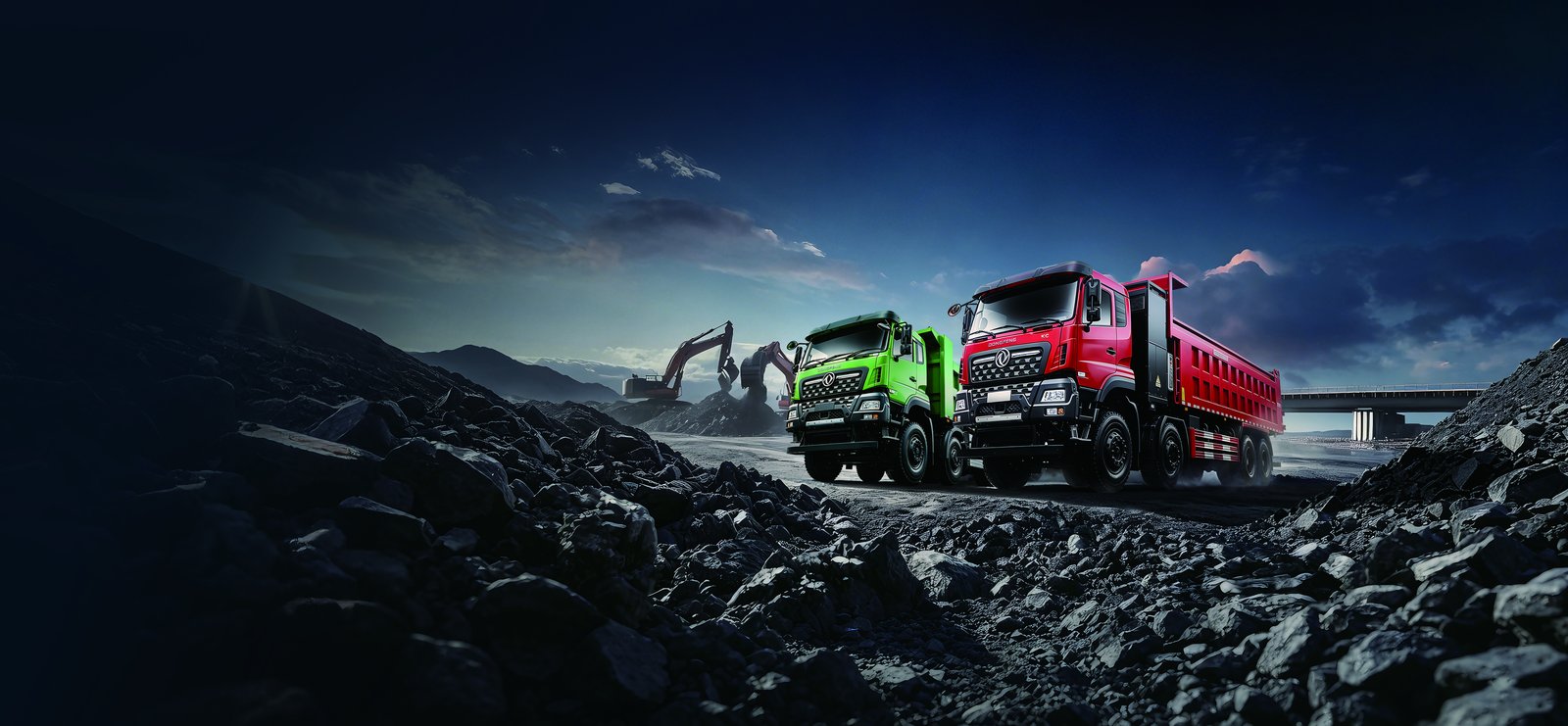
Bangladesh's ready-made garment (RMG) industry ships more than USD 40 billion of apparel annually, and every carton of it moves by truck: from factories in Dhaka, Gazipur, Narayanganj and Savar to container yards and the port at Chattogram — roughly a 250–300 km corridor each way — and back empty or with inbound fabric. It is a fixed-route, high-frequency, return-to-base freight system with thousands of trucks doing identical duty cycles. That uniformity is why the RMG corridor is the most predictable electric truck conversion anywhere in South Asia: model one truck accurately and you have modelled five hundred. The Dongfeng KTH3 — an 8x4 electric cargo truck with CATL 350 kWh LFP, 31 t GVW and 450 kW peak drive — is the unit we specify for this duty. This analysis covers the market, the economics, and the practical path for Bangladeshi freight operators and factory logistics fleets.
Here is the key insight: in dense highway congestion a diesel cargo truck burns 30–38 L/100 km while barely moving. An electric cargo truck in the same traffic draws far less energy per km than its highway-cruise figure because aerodynamic losses collapse at low speed and regenerative braking recaptures each slowdown. Bangladeshi congestion — usually an economic problem — is actually an EV advantage.
| Parameter | KTH3 Specification |
|---|---|
| Configuration | 8x4 rigid electric cargo truck |
| GVW | 31 t |
| Battery | CATL LFP 350 kWh, liquid-cooled |
| Drive | LvKong motor, 282 kW continuous / 450 kW peak |
| Range (loaded corridor duty) | 250–280 km — one full leg per charge |
| Charging | Dual-gun DC, 40–60 min to 100% |
| Body options | Box body ~40–55 m³, curtain-side, container chassis conversion |
| Warranty | 8 years / 4,500 cycles (pack) |
| Indicative FOB | USD 85,000–110,000 |
The operating pattern on the corridor: full charge at the Dhaka-area depot overnight, run the loaded leg to Chattogram through the day, fast-charge at the port-side yard during unloading (1 hour on a 240 kW dual-gun charger covers the return leg), and arrive back at base with reserve. Trucks that follow this rhythm need no battery upgrade and no range anxiety — the 350 kWh pack is sized to the corridor with margin for congestion extremes.
Assumptions: 30 KTH3 units, 120,000 km/year each; Bangladeshi diesel at BDT 105–115/L; industrial electricity at BDT 8–10/kWh; depot charging in Dhaka plus one 240 kW charger at the Chattogram yard:
| Annual cost per truck | Diesel cargo truck | KTH3 |
|---|---|---|
| Fuel / energy | USD 14,000–17,500 | USD 3,600–4,600 |
| Engine & driveline maintenance | USD 4,200–5,500 | USD 1,200–1,600 |
| Brakes & consumables | USD 1,600 | USD 700 |
| Annual saving per truck | — | USD 13,500–17,000 |
| 30-truck annual fleet saving | — | USD 405,000–510,000 |
| 8-year fleet saving | — | USD 3.2–4.0 million |
Bangladesh has additionally reduced or waived registration taxes and duties for electric vehicles under its EV registration framework — confirm current SRO (statutory regulatory order) treatment with your Chattogram or Dhaka clearing agent, as EV categories have received favourable circulars repeatedly since 2021. Where the waiver applies, the landed premium over a diesel 8x4 collapses to 15–25%, and corridor payback lands in the 18–30 month range. This is among the fastest heavy-truck EV paybacks we model anywhere.
Units ship RORO from Chinese ports to Chattogram (18–25 days) or to a lesser extent via Mongla. The CATL 350 kWh pack ships under IMDG as UN 3171 Class 9 dangerous goods with UN 38.3 test summary and transport SOC documentation — Chattogram's DG desks handle vehicle-battery shipments routinely, but your broker must be briefed pre-arrival. We supply the full document set and coordinate pre-shipment inspection where the buyer's bank requires it. Payment structures for Bangladeshi importers typically run irrevocable LC at sight through their banks — standard trade finance, no exotic requirements.
The elegant feature of RMG electrification is that the charging network is two nodes: the factory-side depot and the port-side yard. For a 30-truck fleet we specify three 240 kW dual-gun chargers at the Dhaka depot (overnight base charging) and one 240 kW unit plus a 120 kW spare at Chattogram (turnaround charging during unloading windows). With Bangladeshi industrial tariffs as they are, charging during port dwell costs a fraction of what the same energy costs as diesel. Total infrastructure for both ends: USD 220,000–300,000, and the port-side yard can be shared across several garment shippers — we have structured exactly this shared-charger arrangement in other corridors.
Corridor operations pass through monsoon flooding seasons and 35–38 °C summer heat. The KTH3's liquid-cooled CATL pack manages the thermal load; the IP68 HV architecture handles the wet season within wading limits; and our commissioning includes the post-deep-water inspection protocol (connector integrity, isolation resistance) that takes a technician under an hour. We also recommend the coastal package for trucks yarded near Chattogram — enhanced corrosion protection for chassis fasteners, standard on our Bangladesh shipments.
Beyond the operator's TCO, there is a commercial signal moving through the garment industry: European and North American apparel brands are demanding Scope 3 emissions data from their Bangladeshi suppliers. A factory or freight operator running electric trucks on the export corridor can report genuine, telematics-verified tonne-kilometre emissions reductions — increasingly a tender differentiator against competitors still burning diesel on the same highway. The KTH3's telemetry provides the audit trail automatically. Few investments let a Bangladeshi operator cut operating cost by double digits and strengthen their brand relationships at the same time; this is one of them.
For Bangladeshi operators new to electric trucks, the corridor's predictability makes the pilot unusually clean. The sequence we recommend:
One structural feature of Banglesh's RMG logistics deserves its own paragraph: the industry's geography. Thousands of factories cluster in a handful of industrial zones, and their export freight funnels through a limited set of container yards near Chattogram port. That concentration turns port-side and zone-side charging yards into natural shared infrastructure — a container yard operator with a 240 kW dual-gun charger and a 120 kW spare can serve KTH3 fleets from several garment shippers simultaneously, allocating charging slots during unloading dwell the way it already allocates gate slots. We have structured exactly this shared-charger arrangement in other concentrated corridors, and the Bangladeshi garment belt — with its dense factory clusters and common destination — is arguably the best-shaped market for it anywhere. The charging cost per truck falls as more fleets join; the yard operator earns a new revenue line; and no single shipper carries the infrastructure capital alone.
The Scope 3 pressure arriving in Bangladeshi RMG is not hypothetical. The industry's largest buyers — the European fast-fashion groups and the North American apparel majors — publish supply-chain decarbonisation targets with 2030 horizons, and their supplier scorecards increasingly carry logistics emissions lines. A factory group running electric trucks on the export corridor can answer those scorecards with telematics-verified data: kWh consumed, tonne-km delivered, CO2 avoided against the diesel baseline — numbers the KTH3's fleet telemetry produces automatically. Factory owners who have spent decades perfecting compliance with buyer requirements will recognise this pattern immediately: it begins as a differentiator, becomes an expectation, and ends as a condition of doing business. The corridor fleets converting now are buying years of lead time on that curve — at a cost structure that pays them to do it.
Ready to electrify your fleet? Contact Shaanxi Fenghan Trading — authorized Dongfeng EV truck exporter. WhatsApp: +86 153 1943 1311 | Email: sales@fenghan-trade.com | dongfengevtrucks.com
🌐 Our Network: Fenghan Trade (SAGMOTO/SHACMAN Truck Export) · SAGMOTO cargo truck flatbed box stake