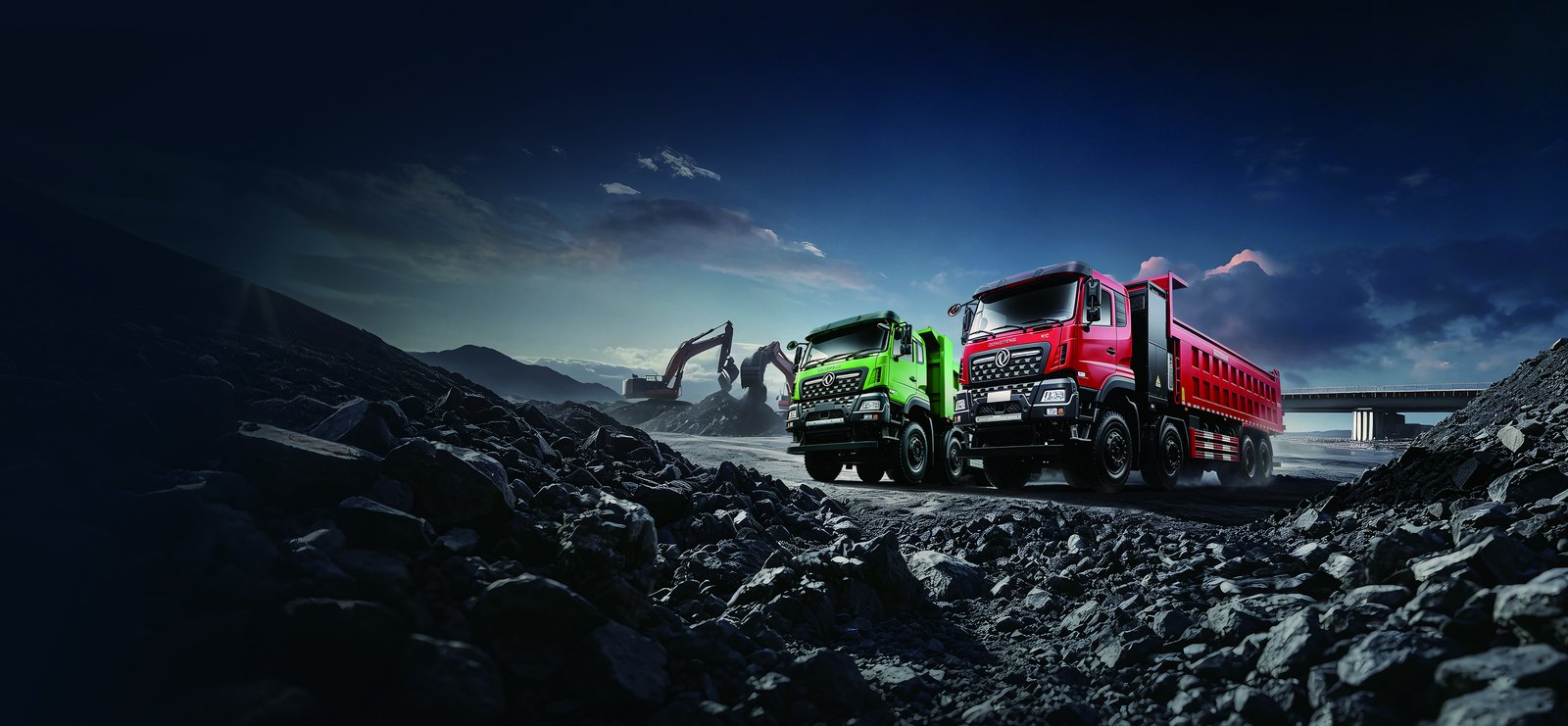
Algeria's freight geography is a study in distance: the coastal strip around Algiers holds the consumption, while the interior cities - Ghardaia, Ouargla, Hassi Messaoud - anchor the energy economy 500-1,000 km south across the Sahara. Diesel logistics across that distance carry real cost, and Algeria's exceptional solar resource - among the best on earth - offers an alternative. The Dongfeng KTH3 electric cargo truck - a 400 kWh electric truck paired with a solar-canopied depot - converts sunlight into freight margin. This guide shows the model.
Interior Algeria freight runs long, flat and hot: Algiers to Ghardaia is about 600 km on the N1, with sustained highway speeds and summer temperatures past 45 C. The full corridor electrifies in segments - the immediate opportunity is the interior distribution work: Ghardaia-region distribution, oilfield supply shuttles between bases, and city logistics in the southern wilayas, all patterns of 150-300 km per day returning to a fixed depot. That is one-charge territory for the KTH3, and the depot sits under some of the world's best solar irradiation at 2,000-2,300 kWh/m2 per year.
Energy consumption on the flat interior highways runs 1.3-1.5 kWh/km loaded at 31-38 t gross, which means a 400 kWh pack covers 260-300 km of loaded summer duty with reserve - a full day's interior distribution on one overnight charge.
| Component | Sizing for a 10-truck KTH3 fleet | Notes |
|---|---|---|
| Solar canopy | 250-350 kWp over the truck parking | Shade value alone justifies the structure |
| Buffer battery | 500-800 kWh stationary LFP | Shifts solar day into truck-charging night |
| Chargers | 2 x 120 kW DC + overnight AC posts | Staggered overnight charging for 10 trucks |
| Grid connection | Retained as backup | Hybrid design, solar-first dispatch |
The design logic: trucks work by day and charge by night, while solar peaks by day - so the buffer battery is the bridge, charging from the canopy through the afternoon and discharging into the fleet overnight. In Algerian interior irradiation, a 300 kWp canopy with 600 kWh of buffer covers 70-85% of a 10-truck fleet's annual energy, with the grid filling the rest.
Sahara summer is the extreme thermal case, and it is where liquid cooling proves itself. The KTH3's pack loop holds cells at 20-35 C while ambient air approaches 50 C; charging speed and motor output stay intact through afternoon heat that derates air-cooled equipment. The canopy's shade measurably helps the parked trucks - cabin heat soak drops, and pre-cooling energy falls. Plan summer range at 260-280 km loaded rather than 300; the honest number builds dispatch confidence.
Algerian diesel is inexpensive by global standards but not free, and the solar comparison is striking: energy from the canopy costs the depreciation of the hardware - effectively $0.03-0.05 per kWh over 20 years - against diesel at $0.50-0.60 per km equivalent. On 80,000 km per year, a solar-fed KTH3 saves $35,000-45,000 per truck annually in energy alone. The solar infrastructure pays back in 4-6 years while the trucks pay back in under three. Algeria's industrial policy direction, including local assembly incentives, is covered on our Algeria electric truck market page.
A solar depot is a construction project wrapped around a truck fleet, and the delivery model treats it as one. Shaanxi Fenghan Trading coordinates with solar EPC contractors experienced in Saharan installations - the canopy structure, buffer battery, charge management and grid interconnection deliver as one engineered package alongside the trucks. The sequencing matters: canopy and buffer commission before the fleet arrives, so trucks charge from day one rather than waiting on the electrical work. The energy model developed at quotation - irradiation data for your site, fleet consumption from your routes, buffer sizing from the overnight window - becomes the EPC's design basis. Algerian content and localization incentives can apply to the solar scope; the package documentation supports your applications.
Delivery runs through Algiers or Oran by ro-ro, 18-25 days from the Chinese port, with the export documentation - certificate of origin, inspection reports, UN38.3 and MSDS - prepared for Algerian customs and the electric vehicle classification your broker confirms at quotation. French-language documentation, manuals and training materials are standard. Commissioning covers charger and solar-system handover with the EPC, driver training on your distribution routes, and technician certification for your workshop team. The two-year fast-moving parts kit arrives with the fleet; high-voltage components ship from regional stock within 72 hours to Algiers. The telematics portal's per-route energy logging validates the solar fraction monthly - the number that drives the canopy expansion decision.
The KTH3 heavy electric cargo truck ships to Algerian ports with French documentation and GCC-equivalent heat specification. Shaanxi Fenghan Trading partners with solar EPC contractors for the depot package, delivering trucks, chargers and PV design as one coordinated project. Send your routes and depot location for an irradiation-and-route energy model.
Ready to electrify your fleet? Contact Shaanxi Fenghan Trading — authorized Dongfeng EV truck exporter. WhatsApp: +86 153 1943 1311 | Email: sales@fenghan-trade.com | dongfengevtrucks.com
🌐 Our Network: Fenghan Trade (SAGMOTO/SHACMAN Truck Export) · SAGMOTO cargo truck flatbed box stake