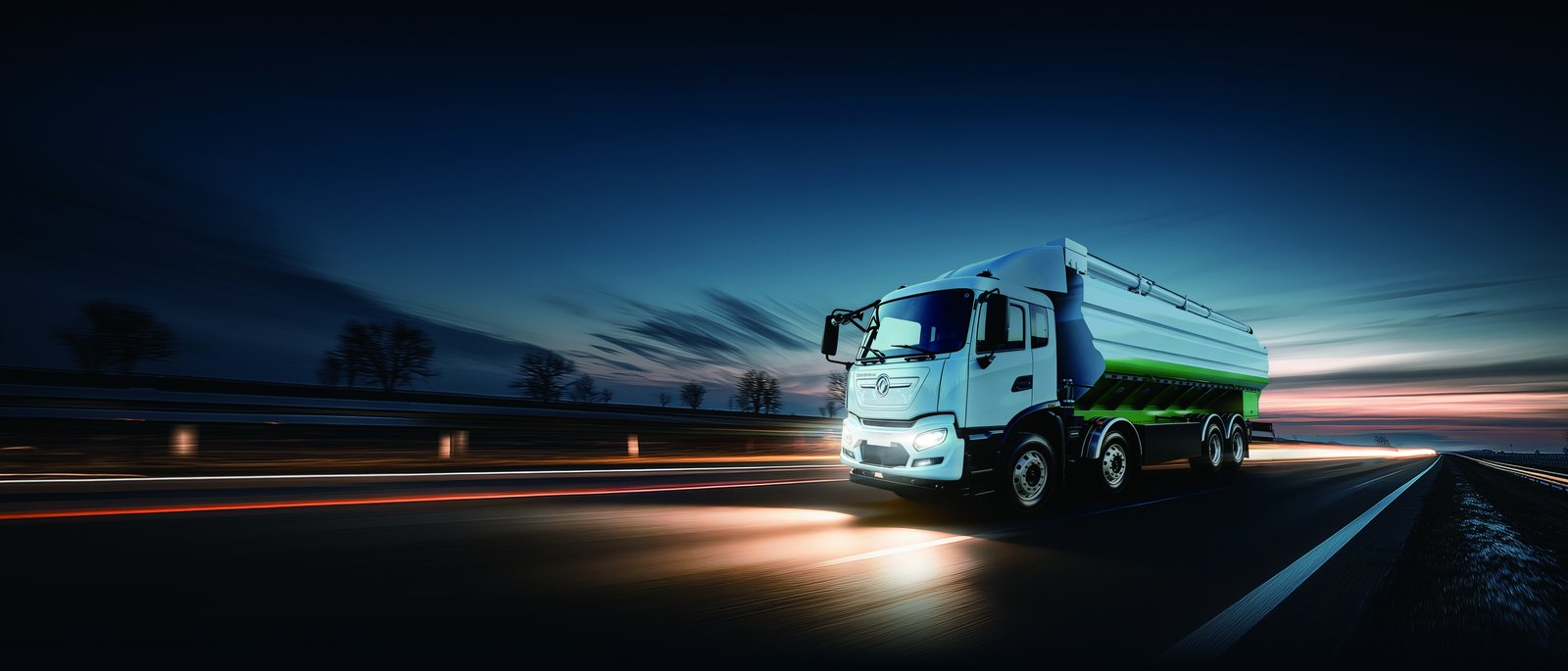
Fast-moving consumer goods is the least glamorous and most demanding freight business: the stock must always be on the shelf, the routes run six days a week whether the trucks are full or half-empty, and the margin per pallet is thin enough that a 5% fuel move is a strategy. FMCG fleets — the distributors, the wholesalers, the in-house arms of the beverage and food majors — run exactly the duty an electric truck was designed for: fixed routes out of a single distribution centre, daily return to base, 100–200 km days, and depot dwell hours long enough to charge anything twice. The Dongfeng KTH1/KTH3-class electric cargo truck is built for this lane. This article covers the FMCG case: the duty profile, why consumer-goods economics reward electrification more than most freight, the machine specification, and a worked fleet model. For the market context, see our Uzbekistan electric truck market guide — Central Asia's growing FMCG distribution networks are one of the strongest KTH-family deployments we serve.
Consumer-goods distribution resolves into three route classes, each a natural electric lane:
All three return to the same distribution centre nightly. The FMCG depot is, without exaggeration, the perfect charging site: single location, industrial power, predictable overnight dwell, and a workforce of drivers who can plug in as part of the end-of-shift routine.
| FMCG structural feature | What it does for the electric case |
|---|---|
| Thin margins, high volume | A 15–25% operating-cost cut flows straight to the bottom line that decides who wins the shelf |
| Fixed routes, known distances | Zero range anxiety — the fleet's worst day is a designed parameter, not a surprise |
| High vehicle utilisation (6 days/week) | More days of savings per year of capital — payback compresses versus occasional-use fleets |
| Brand owners' Scope 3 commitments | Distributors running electric fleets increasingly win the distribution tenders the majors issue |
| Early-morning delivery windows | Silent electric delivery hits the 04:00–06:00 receiving slots without noise complaints |
That last row is under-appreciated: FMCG delivery windows are pre-dawn in most cities, and a diesel rigid reversing at a mall dock at 4:45 a.m. is a complaint generator for the very retail landlord whose business you are serving. The electric fleet is welcome at the exact hours the schedule needs.
The KTH1 and its 8x4 sibling the KTH3 carry CATL LFP energy in the 350 kWh class, a 282 kW-class LvKong drive, and a chassis engineered for the full range of FMCG bodies — box, curtain-side, stake and refrigerated conversions. Key specification points for consumer-goods duty:
A distributor running 15 KTH-class units on mixed primary and city routes — average 130 km/day, 300 operating days, diesel comparator at 26 L/100 km, electricity at USD 0.11/kWh, tropical city duty:
| Annual item (15 trucks) | Diesel fleet | Electric fleet |
|---|---|---|
| Fuel / energy | USD 168,000 | USD 43,000 |
| Maintenance | USD 66,000 | USD 25,000 |
| Charging infrastructure (annualised) | — | USD 16,000 |
| Total annual operating | USD 234,000 | USD 84,000 |
USD 150,000 of annual savings on an incremental capital cost of USD 375,000–450,000 — payback around 30 months, with the curve improving every time diesel moves or the tender scoring turns green. For context, that annual saving per truck (USD 10,000) is worth more than most distributors' entire margin on one truck's annual freight — electrification is not a sustainability line-item, it is a competitive restructure of the P&L.
The quietest force in FMCG electrification is the brand owners. Every global food, beverage and personal-care major has a net-zero pledge with a Scope 3 line, and distribution is inside it. Distributors report the pattern repeating across markets: the annual distribution tender adds an emissions-scoring section; the electric bidder takes the points; the diesel bidder competes on price alone. A 15-truck FMCG fleet running 30,000 km per truck per year saves roughly 0.9 kg CO2 per km — about 400 tonnes avoided annually across the fleet — a line that flows directly into the customer's sustainability report, written by the fleet that delivered it.
FMCG is a fixed-routes, thin-margin, brand-exposed, high-utilisation business — four characteristics that each independently favour electric trucks, arriving together. The distributors who move now are finding the maths easy and the tenders easier.
It is worth noting how consistently this case reproduces across the markets we ship to. The FMCG electrification pattern that begins with a three-truck pilot in Tashkent or Nairobi or Jakarta follows the same curve everywhere: the pilot's data wins the internal capital debate; the distribution tender's emissions section wins the first major customer; the second customer arrives without being asked; and somewhere around truck number twenty, the fleet's recruiters begin advertising silent, air-conditioned electric cabs as a retention tool, and the HR department becomes an unexpected ally of the electrification programme. Consumer-goods distribution is not the most glamorous electric-truck market — it is simply the most repeatable, in more currencies and more time zones than any other duty we serve.
Shelves restock on trucks that run the same roads every day of the year. Of every freight business in the world, it is the one whose future was always going to be electric; the only question each distributor faces is whether their fleet is early or late.
Ready to electrify your fleet? Contact Shaanxi Fenghan Trading — authorized Dongfeng EV truck exporter. WhatsApp: +86 153 1943 1311 | Email: sales@fenghan-trade.com | dongfengevtrucks.com
🌐 Our Network: Fenghan Trade (SAGMOTO/SHACMAN Truck Export) · SAGMOTO cargo truck flatbed box stake