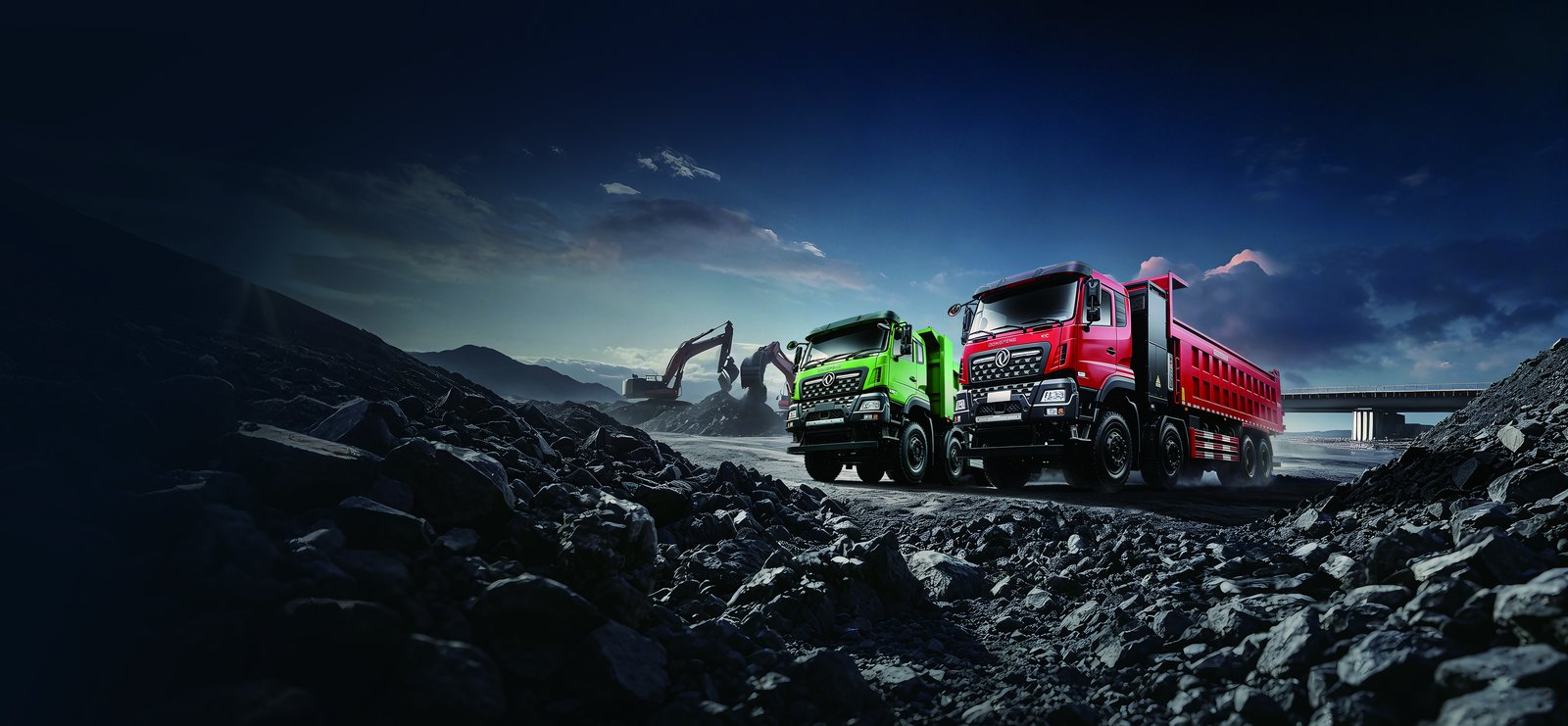
Every coastal construction economy has the same quiet workhorse at its base: the aggregates terminal where barges and small ships discharge sand, gravel and crushed rock, and where a fleet of tippers moves that material from waterline to stockpile, stockpile to batching plant, and terminal to city. From the Mekong Delta's river ports to Lagos's Apapa supply chain to the Caribbean's island import terminals, this is a duty profile that hiding in plain sight is almost perfectly electric: radii of 2–15 km, utilisation of 12–18 hours a day, and a fixed home with three-phase power at the water's edge. This article covers the case for the compact Dongfeng KTA1 electric dump truck on coastal aggregates duty — the cycle, the salt-air engineering, the pairing with electric dust control, and the terminal fleet economics. For the market context of one of the busiest coastal aggregates trades we serve, see our Philippines electric truck market guide.
Coastal terminal haulage is the highest-utilisation truck work in construction:
A terminal tipper easily covers 150–250 km a day without ever leaving sight of the crane — the low speeds mean low kWh/km, and the return legs mean the battery is rarely more than a few hours from a charger. The KTA1's compact footprint matters too: quay aprons, stockpile alleys and plant feed lanes are tight, and a compact electric tipper out-cycles a bigger truck on the short loops where turning time dominates.
The first thing terminal operators ask about electric trucks at the waterline is corrosion — coastal salt fog is brutal on electrics and chassis alike. The engineering answer, honestly stated:
| System | Salt-air treatment | Operator discipline |
|---|---|---|
| Battery enclosure | Sealed IP67-class pack housing; connectors to IP6K9K class | Inspect seals at connector service intervals; no high-pressure salt-water jetting of pack joints |
| Chassis and frame | E-coat and cavity wax marine-grade treatment; sacrificial anodes where specified | Fresh-water wash schedule, especially after storm-surge or spray exposure |
| HV connectors & cabling | Gold-plated or tin-coated contacts, sealed housings | Dielectric-grease at service; connector audit is already in the HV maintenance regime |
| Charging infrastructure | Marine-rated cabinets, sheltered siting | Site the chargers upwind of the stockpile dust and above storm surge |
The honest comparison point: diesel trucks die at the coast too — salt attacks cooling packs, wiring and brake systems with the same appetite, and a terminal diesel leads a harder corrosion life than any highway truck. The electric fleet's difference is that its highest-value component, the CATL LFP pack, is sealed rather than air-breathing, while the diesel's most valuable component inhales the salt air directly. Terminal duty is harsh on both; it is not a new argument against electric, just a maintenance schedule to write down.
A coastal aggregates terminal is also a dust management operation — stockpile wind erosion, conveyor transfer points and truck loading all raise PM, and neighbours plus environmental regulators both notice. The natural fleet pairing:
Terminals that deploy the pair report the second-order benefit that matters most in dense coastal cities: the environmental inspection file. A terminal whose internal fleet is electric and whose dust roads are water-managed walks its next licence renewal; the diesel-and-dry one negotiates.
A worked model for a mid-size tropical coastal terminal running 8 KTA1 units on barge-discharge and stockpile duty (180 km/day each, 16-hour utilisation, 330 days — terminal duty never stops), electricity at USD 0.10/kWh, diesel at USD 1.15/L:
| Annual item (8 trucks) | Diesel fleet | KTA1 electric fleet |
|---|---|---|
| Fuel / energy | USD 335,000–395,000 | USD 48,000–56,000 |
| Maintenance (incl. corrosion items) | USD 95,000 | USD 36,000 |
| Charging infrastructure (annualised) | — | USD 19,000 |
| Total annual operating | USD 440,000 | USD 105,000 |
A USD 335,000 annual advantage on a fleet whose incremental capital cost runs USD 280,000–360,000 — payback inside 13 months, the fastest configuration in the tipper class. At that rate, an 8-truck terminal order clears its own finance inside a single barge season, and the 8-year / 4,500-cycle CATL warranty frame covers four full fleet generations of terminal duty cycles.
The coastal aggregates terminal is the strongest quiet case in construction logistics: the highest utilisation, the shortest loops, the existing grid, and the environmental file that decides licences. The terminal operators who electrify the waterline first are quietly compounding a margin that the city-side diesel fleets will spend the decade trying to understand.
Having covered the economics, it is worth being explicit about the market map, because this duty hides in more places than any other in our portfolio. Every river-delta economy has its sand and gravel barges — the Mekong, the Irrawaddy, the Ganges, the Niger delta — each with a quay-side fleet that runs the waterline loops. Every island construction market imports aggregate by sea and runs the same short cycles from the import quay. Every quarry group with a marine face runs coastal transfer. Add the cement-plant feed loops where clinker arrives by water, and the dredged-material management fleets that ports themselves operate, and the addressable population of terminal tippers in our export markets runs into the tens of thousands of units — nearly all of them on 2026-era diesel economics with 12–16-hour duty cycles. It is the largest invisible fleet in construction logistics, and it converts to electric faster than any of them because the terminal's own power connection is already waiting at the charger's future address.
The terminal operators who see their own operation in this article have the shortest procurement decision in the industry: the numbers above are theirs, not ours.
Ready to electrify your fleet? Contact Shaanxi Fenghan Trading — authorized Dongfeng EV truck exporter. WhatsApp: +86 153 1943 1311 | Email: sales@fenghan-trade.com | dongfengevtrucks.com
🌐 Our Network: Fenghan Trade (SAGMOTO/SHACMAN Truck Export) · heavy duty mining dump truck 6x4 8x4