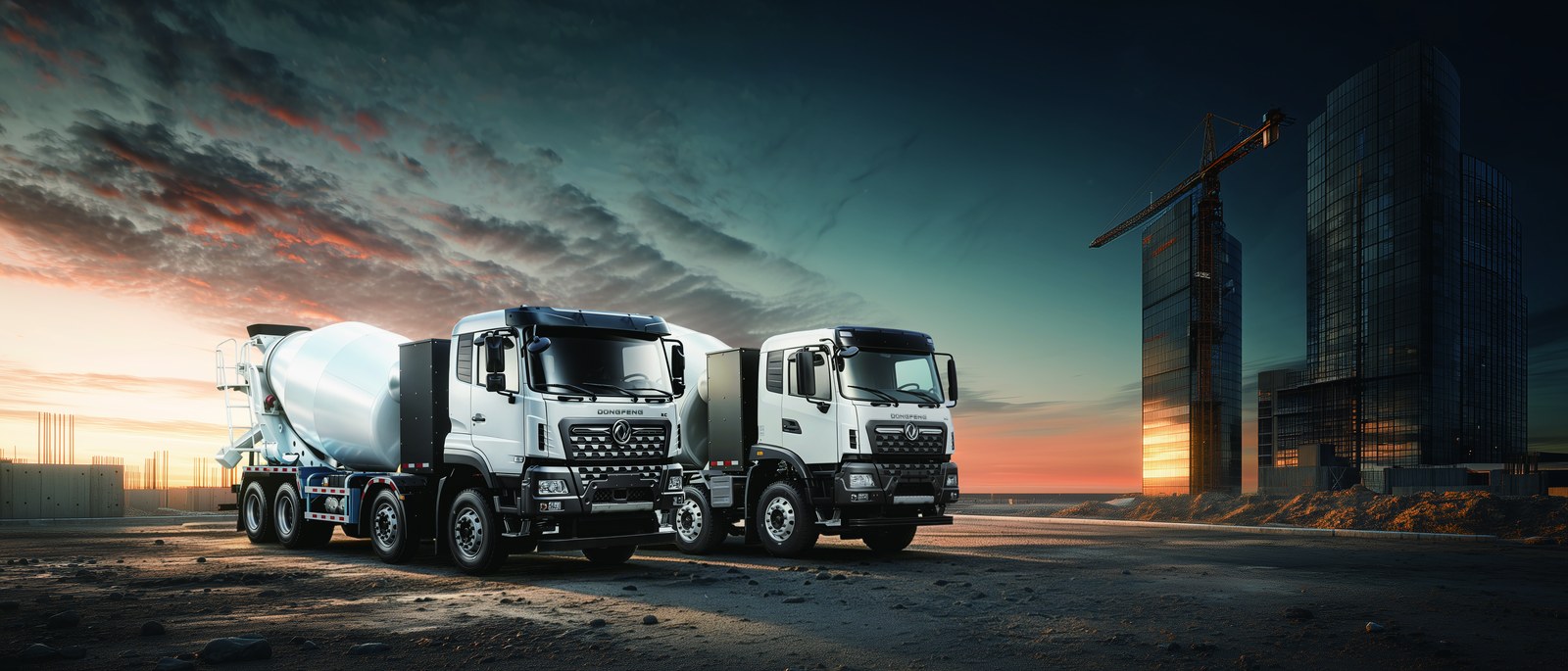
Indonesia is building a capital city from the forest. Nusantara, in East Kalimantan's Sepaku district, is a multi-decade program whose official positioning is explicit: a "forest city" and a showcase of clean construction — with the authorities on record that the city's building phase should model the low-carbon operations it intends to run forever. Construction programs at that scale consume staggering volumes of concrete, and the trucks that deliver it are among the largest line items in a project's emissions inventory. That is where the KT9X electric mixer truck fits: an 8x4 EV mixer with full EU WVTA/GSR2 type approval, 410 kWh of CATL LFP and an electric drum drive, engineered for exactly the kind of flagship low-emission megaproject Nusantara represents. This article details the deployment, in the context of our Indonesia electric truck market guide.
New-city construction has a distinctive logistics shape:
| Attribute | KT9X | Project relevance |
|---|---|---|
| Configuration | 8x4, 45 t GCW class | Matches regional mixer norms and bridge/ramp load limits |
| Battery | CATL LFP 410 kWh, liquid-cooled | Full 6–8 load day with between-load top-ups |
| Drum drive | Electric PTO, independent of traction | Precise agitating speed, zero idle burn, quiet pours near work camps |
| Type approval | EU WVTA incl. GSR2 (EBS/AEBS/ESC) | Independent verification of safety and systems engineering for skeptical project auditors |
| Climate rating | 32–35 °C equatorial duty, sealed HV, IP68 | Kalimantan humidity and rain-season service |
| Charging | CCS2 DC up to 240 kW | Between-load recovery at the plant |
Using Indonesian industrial power around USD 0.07–0.09/kWh and automotive diesel at USD 0.75–0.90/litre, for a 12-unit mixer fleet averaging five 8 m³ loads daily on 25 km loops:
For contractors financing the fleet against a multi-year program, the electric premium (roughly USD 50,000–65,000 per unit landed) is recovered inside the project's second concrete season.
Equatorial Kalimantan is the most demanding moisture environment in our export map: 2,000+ mm of monsoon rain, laterite mud on haul roads, and continuous 90%+ humidity. The KT9X's build for these conditions is specific: fully sealed HV connectors and IP68 battery enclosures, tropicalised cooling circuits with condensation management, and underbody protection specified for unpaved haul-road stone strike. The drum's electric drive is sealed against wash-down — daily chute and drum cleaning with pressure hoses is standard ready-mix discipline, not an exception. And the 8-year / 4,500-cycle CATL warranty is documented against hot-climate cycling profiles, which matters when the fleet's financing runs as long as the battery's promise.
Nusantara is not unique — it is the leading example of a category. Egypt's new administrative capital, the Gulf's new economic zones, Central Asia's new industrial districts: all are programs that combine captive construction logistics, green positioning and newly built electrical infrastructure. For contractors and equipment investors in that category, the KT9X fleet pattern described here — plant-based charging, between-load top-ups, electric drum discipline, maintenance contracts tied to telematics data — transfers directly. Our project desk builds these deployment plans as part of the export package, including the charger siting study, the spare-parts consignment sized to the program's remote location, and operator training delivered on site at handover.
Megaproject procurement is its own discipline, and an electric mixer fleet bought for one differs from a commercial ready-mix purchase in ways that matter to the order. The contract structure typically follows the project's concrete program: volume commitments over years, with availability and pour-window performance clauses. The electric fleet fits these well — availability in plant-anchored duty runs high once charging is engineered into the cycle, and the KT9X's EU-homologated EBS/AEBS/ESC safety systems address the site-safety frameworks that flagship projects increasingly impose on suppliers. But the differences run further. Spares for a remote Kalimantan site carry different logistics math than a city plant: our project packages include a consignment sized to the program's duration and remoteness, with the fast-moving mixer items (drum rollers, wear plates, hydraulic components for the drum drive) stocked on site from day one. Commissioning is a mobilisation event: technicians on site at handover, driver and maintainer training delivered in Bahasa Indonesia, and the first sixty days supported with a resident technical presence — the cost of which is trivial against a program whose daily concrete volume is measured in thousands of cubic metres. Documentation follows the project's audit culture: per-truck energy records, CO₂ calculations and maintenance logs in the formats the program's sustainability reporting requires, delivered as standard outputs of the fleet's telemetry rather than as a later study.
The commercial note for contractors weighing the bid: electric mixer fleets on flagship programs carry a second value stream that diesel fleets cannot price — the emissions story the project tells about itself. On programs whose entire positioning is clean construction, the supplier who arrives with zero-emission concrete logistics is not merely competitive on per-m³ cost; they are the paragraph in the program's own progress report. That is a position worth ordering trucks for.
Ready to mobilise an electric mixer fleet for your project? Contact Shaanxi Fenghan Trading — authorized Dongfeng EV truck exporter. WhatsApp: +86 153 1943 1311 | Email: sales@fenghan-trade.com | dongfengevtrucks.com
🌐 Our Network: Fenghan Trade (SAGMOTO/SHACMAN Truck Export) · SAGMOTO heavy duty diesel trucks