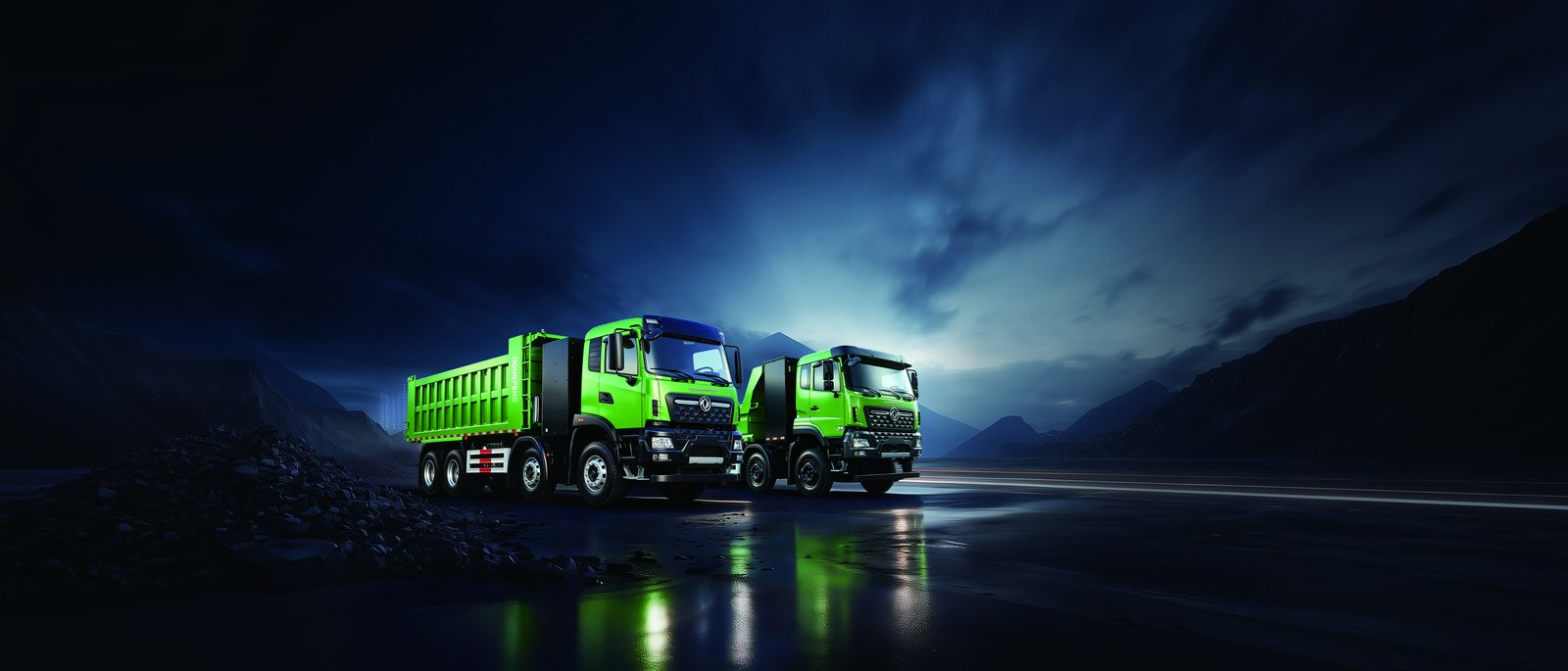
Lagos manages some of the highest population density and heaviest seasonal rainfall in West Africa, and its street-cleaning and flood-response teams need vehicles that can work long hours without adding exhaust to already stressed neighborhoods. A battery-electric EV truck built as a washing and cleaning platform fits that brief. The Dongfeng KT7A electric washing truck carries a 262 kWh CATL LFP pack, a 10 to 12 cubic meter water tank and a multi-jet cleaning system, priced at USD 90,000 to 110,000 FOB China.
Street washing in Lagos runs from early morning through peak traffic, and during the April-to-October rainy season the same truck doubles as a flood-dewatering and silt-removal unit. A diesel washing truck idles its pump engine for hours at a time, raising noise and fumes exactly where people live and trade. The KT7A runs its high-pressure pumps from the traction battery, so the cleaning system works with the cab engine off, cutting both emissions and neighborhood disturbance during night cleaning passes.
| Parameter | KT7A Electric Washing Truck |
|---|---|
| Battery capacity | 262 kWh CATL LFP |
| Chassis | 4x2 heavy washing truck |
| Water tank | 10 to 12 cubic meters |
| Pump power | up to 18 kW high-pressure system |
| Motor power | LvKong 282 kW peak |
| Shift range | 160 to 220 km per charge |
| DC fast charge | 20 to 80 percent in 60 to 90 minutes |
| Battery warranty | 8 years / 4500 cycles |
| FOB China price | USD 90,000 to 110,000 |
The 262 kWh pack powers both the drive wheels and the cleaning system, so a full shift of street washing and flood duty draws from one energy source. At typical pump load of 12 kW for 6 hours plus 90 km of driving, total draw is about 200 kWh, leaving reserve in the pack for extended flood response.
In normal operation the KT7A sweeps major corridors such as Ikorodu Road and the Island link, washing surfaces and clearing drain mouths. During heavy storms it switches to dewatering, pumping standing water from underpasses and clearing silt from clogged channels. The low, steady electric pump output is ideal for controlled washing that does not erode road edges.
A Lagos municipal depot can install a 120 kW DC charger for about USD 32,000 and charge on off-peak tariff at USD 0.12 per kWh. A full 262 kWh charge costs roughly USD 31, against USD 70 to 90 of diesel for an equivalent diesel washing truck shift including pump-engine fuel. Fleets already using the Dongfeng KT7A electric washing truck report the silent pump operation let them extend cleaning into late-evening hours without complaints.
Beyond Lagos, the same chassis serves Abuja, Port Harcourt and Ibadan with street washing, environmental cleanup and emergency dewatering. Because the platform shares parts with other Dongfeng electric trucks in the Nigeria electric truck market, a city fleet standardizes maintenance across washing, cargo and garbage bodies, lowering spare-parts inventory and technician training cost.
A diesel washing truck burns about 30 liters per day of road driving plus 18 liters for the pump engine, totaling 48 liters at USD 1.15, equal to USD 55 daily. The KT7A draws 200 kWh at USD 0.12, equal to USD 24, saving USD 31 per day, plus USD 8,000 annual maintenance per truck. Over a 5-year service life a 4-truck fleet saves about USD 280,000 while delivering quieter, emission-free city cleaning. Contact Shaanxi Fenghan Trading for a municipality quotation and demo schedule.
| Item | Specification |
|---|---|
| Battery | CATL LFP 262 kWh, swap-ready architecture |
| Traction motor | LvKong permanent-magnet motor, 250 kW peak |
| Real-world range | 240 km fully loaded, duty-cycle dependent |
| Charging | DC fast charge 20-80% in 45-90 min; battery swap in 5-6 min where stations exist |
| Battery warranty | 8 years or 4,500 cycles, 70% state-of-health guarantee |
| FOB price guide | $88,000-$112,000 depending on specification and options |
Charging an electric truck is a depot discipline, not a public-network gamble. A 262 kWh pack working a 240 km day typically returns with 25 to 35 percent in reserve, so overnight demand is about 157 kWh per truck. On a 120 kW DC charger the pack climbs from 20 to 80 percent in roughly 79 minutes; on 240 kW that falls to about 39 minutes, which lets two trucks share one charger on staggered shifts.
Size the site transformer for your busiest shift plus 30 percent headroom, keep cable runs under 30 metres to limit voltage drop, and meter each charger separately so energy cost per truck stays visible. In Nigeria, grid connection lead times of three to nine months are common, so apply for the connection the day you sign the truck order, not the day the ship arrives. Shaanxi Fenghan Trading includes a charger layout drawing and load calculation with every EV truck quotation, so your electrician can price the civil works before the truck lands.
A comparable diesel washing truck burns about 0.38 litres per kilometre in mixed duty; at $0.95 per litre that is roughly $0.36 per km. The electric equivalent consumes about 1.15 kWh per km fully loaded; at an industrial tariff of $0.10 per kWh the cost is near $0.12 per km, and overnight or solar-coupled charging can push it below $0.08. Over 70,000 km a year the saving is about $17,000 per truck, before any carbon or low-emission-zone benefit.
The gap widens in stop-start duty, where regenerative braking returns 15 to 25 percent of traction energy instead of burning it as brake dust. In Nigeria, where diesel quality and price both fluctuate, locking in an electricity tariff also removes a major budgeting variable from the fleet P&L.
The KT7A has roughly one moving drivetrain part where a diesel has hundreds: no engine oil, no DPF, no turbocharger, no clutch, no multi-gear transmission service. Scheduled maintenance lands near $0.035 per km against $0.11 per km for a diesel equivalent, a saving of more than $5,000 a year at typical utilisation. Brake pads last two to three times longer because the motor does most of the deceleration.
Uptime matters more than parts cost. Fleet data from Chinese operators running the same e-axle platform shows 96 to 98 percent availability once drivers are trained, versus 92 to 94 percent for diesel trucks of the same age. Keep a small stock of filters, coolant, brake pads and 12V batteries on site; Shaanxi Fenghan Trading quotes a two-year consumables kit with every truck so the first service interval never waits on freight.
Ready to electrify your fleet? Contact Shaanxi Fenghan Trading — authorized Dongfeng EV truck exporter. WhatsApp: +86 153 1943 1311 | Email: sales@fenghan-trade.com | dongfengevtrucks.com
🌐 Our Network: Fenghan Trade (SAGMOTO/SHACMAN Truck Export) · SAGMOTO cargo truck flatbed box stake