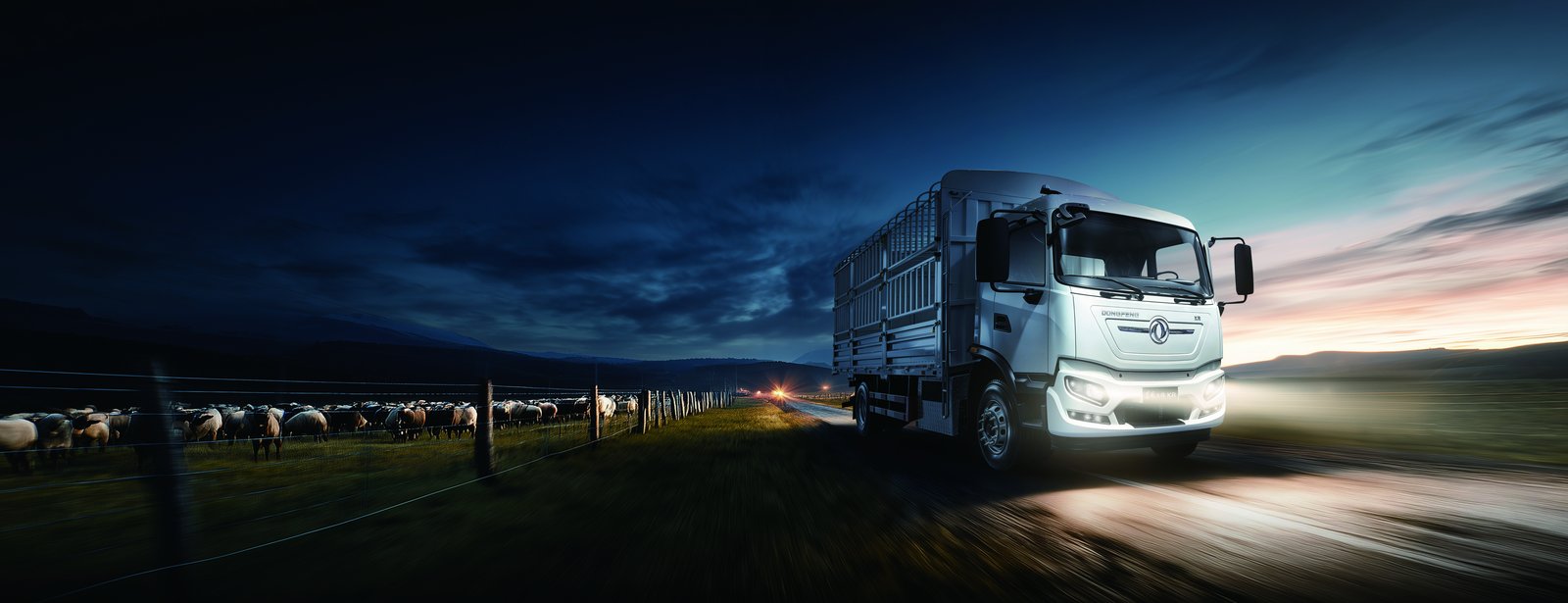
Mexican distributors and fleet owners eyeing the KT5M EV truck need a financing path that matches the way the local market actually buys vehicles. This guide breaks down leasing structures, green credit, insurance, and a monthly payment comparison for the KT5M in Mexico.
The expansion of zero-emission zones in Mexico City and tightening Hoy No Circula rules have pushed distributors toward the KT5M, a 4x2 electric cargo truck with a 262 kWh CATL LFP battery, 240 kW LvKong motor, 250 km range, and an 18 t GVW. Operators locked out of the city center on pollution days gain unrestricted access with an electric truck, which turns a compliance headache into a sales argument for distributors across the Mexican logistics market. The same access benefit repeats in Guadalajara and Monterrey as local schemes spread, so the KT5M is positioned for multi-city demand rather than a single program, and distributors can sell the same truck to couriers, beverage haulers, and last-mile fleets without changing the pitch.
Three structures dominate the Mexican market. A financial lease transfers ownership at the end and suits fleets that want the asset on the books. An operating lease keeps the truck off the balance sheet and bundles maintenance, which appeals to smaller carriers. A guaranteed buyback program, where the exporter commits to a residual value, lowers the monthly number and de-risks the distributor's inventory. Each structure can be paired with a battery capacity guarantee so the residual value holds, which is the detail that makes a finance officer comfortable signing, because the single biggest unknown on an EV is what the pack is worth in three years.
Mexican banks and development lenders now offer green credit lines with rates 1.5-3 points below standard vehicle finance for certified electric commercial vehicles. NADFIN and some state programs add guarantees that cut the distributor's collateral requirement. Combining a green line with the lower per-km energy cost of the KT5M lets a distributor quote a customer a total cost of ownership that beats diesel within 24-30 months. Some states also waive the new-vehicle registration premium for zero-emission trucks, which lowers the first-year carrying cost and improves the leasing math further, especially for carriers running tight margins on high-mileage urban routes where every peso of working capital counts.
Insurers in Mexico are still pricing electric trucks, but the pattern is clear: battery and HV system cover adds 8-15 percent to the premium, while lower fire and theft-of-fluid risk and fewer moving parts can reduce mechanical breakdown cover. The net premium swing is usually small, and some carriers now discount for telematics that proves careful driving and proper charging. Distributors should shop at least three carriers, because the spread between the most and least expensive EV policy is wider than on diesel, and the savings fund a year of charging. A clean telematics record also speeds claim settlement, which matters more than the headline premium when a truck is off the road.
| Option | Down payment | Term | Est. monthly (USD) |
|---|---|---|---|
| Cash FOB | 48,000-62,000 | n/a | n/a |
| Financial lease | 20 percent | 48 months | 1,050-1,350 |
| Operating lease | 10 percent | 36 months | 1,300-1,600 |
| Green line loan | 15 percent | 60 months | 850-1,100 |
These figures assume a 48,000-62,000 USD FOB band and exclude inland freight and VAT; the green line loan shows the lowest monthly because of the longer term and preferential rate. A distributor can present all four rows side by side, which is usually what converts a diesel loyalist into an EV truck order, because the buyer sees the monthly number first and the savings second.
Take a 55,000 USD FOB KT5M on a 60-month green line at 15 percent down. The monthly principal and interest lands near 950 USD, and the energy saving versus diesel on a 250 km daily urban route is about 0.20 USD per km, or roughly 1,200 USD per month at 6,000 km. That saving alone covers the payment and leaves margin, so the truck pays for itself from month one on operating savings. Add the zero-emission zone access that keeps the truck working on restriction days, and the case strengthens further, because a diesel sitting idle on a Hoy No Circula day is not just a missed trip but a broken delivery promise to the customer that costs the contract next year.
Many Mexican carriers are cash-constrained, so the down-payment structure decides whether the deal closes. A 10 percent operating lease keeps cash free for payroll and fuel, while a 20 percent financial lease builds equity faster. Distributors who pre-negotiate a floor plan with the exporter can hold demo units without tying up capital, then assign the unit to a signed customer and transfer the paper. The battery-as-a-service option goes furthest by removing the pack from the financed amount entirely, dropping the monthly to roughly the chassis plus a per-kWh fee, which for a low-mileage courier can beat every other structure on the page.
The biggest fear for a distributor is being stuck with unsold EVs. A guaranteed buyback removes that risk by fixing the residual at, say, 45 percent of FOB after three years, which lets the distributor carry demo units without betting the balance sheet. Pairing buyback with a battery capacity guarantee means the used value holds, so the secondary market stays healthy and the first owner can exit cleanly. The table shows how the guaranteed residual changes the distributor's exposure and why it unlocks more aggressive customer pricing.
| Scenario | No buyback | With buyback |
|---|---|---|
| Residual at 36 months | Unknown | 45 percent FOB |
| Distributor risk | High | Low |
| Customer monthly | Higher | Lower |
To make the offer concrete, consider a Mexican courier running 6,000 km per month. A 55,000 USD FOB KT5M on a 60-month green line costs about 950 USD per month. Diesel for the same work runs roughly 1,900 USD per month at 0.90 USD per liter, while electricity for the KT5M runs about 700 USD, a 1,200 USD monthly saving that covers the payment with 250 USD to spare. Maintenance adds another 150 USD per month in favor of the EV. Over the lease the courier banks roughly 24,000 USD net, and at lease end owns an asset with a transferable battery warranty that still has years of cover. This is the number distributors should put on the proposal cover, because it speaks the customer's language: cash in the bank, not carbon avoided, and it closes deals that a sticker-price comparison would lose.
A winning Mexican offer bundles the KT5M with a home or depot charger, a 48-hour service pledge, and a battery capacity guarantee of 80 percent over 8 years or 4,500 cycles. Distributors who present a side-by-side monthly payment against a diesel, including fuel and maintenance savings of roughly 0.20 USD per km, convert fleet buyers faster than those quoting sticker price alone. The KT5M thus becomes not just an EV truck but a financeable, zone-compliant, lower-risk asset for the Mexican distributor's order book, and the financing package is what lets smaller carriers enter the electric market without a large upfront outlay that their balance sheet cannot absorb.
Ready to electrify your fleet? Contact Shaanxi Fenghan Trading — authorized Dongfeng EV truck exporter. WhatsApp: +86 153 1943 1311 | Email: sales@fenghan-trade.com | dongfengevtrucks.com
🌐 Our Network: Fenghan Trade (SAGMOTO/SHACMAN Truck Export) · SAGMOTO cargo truck flatbed box stake