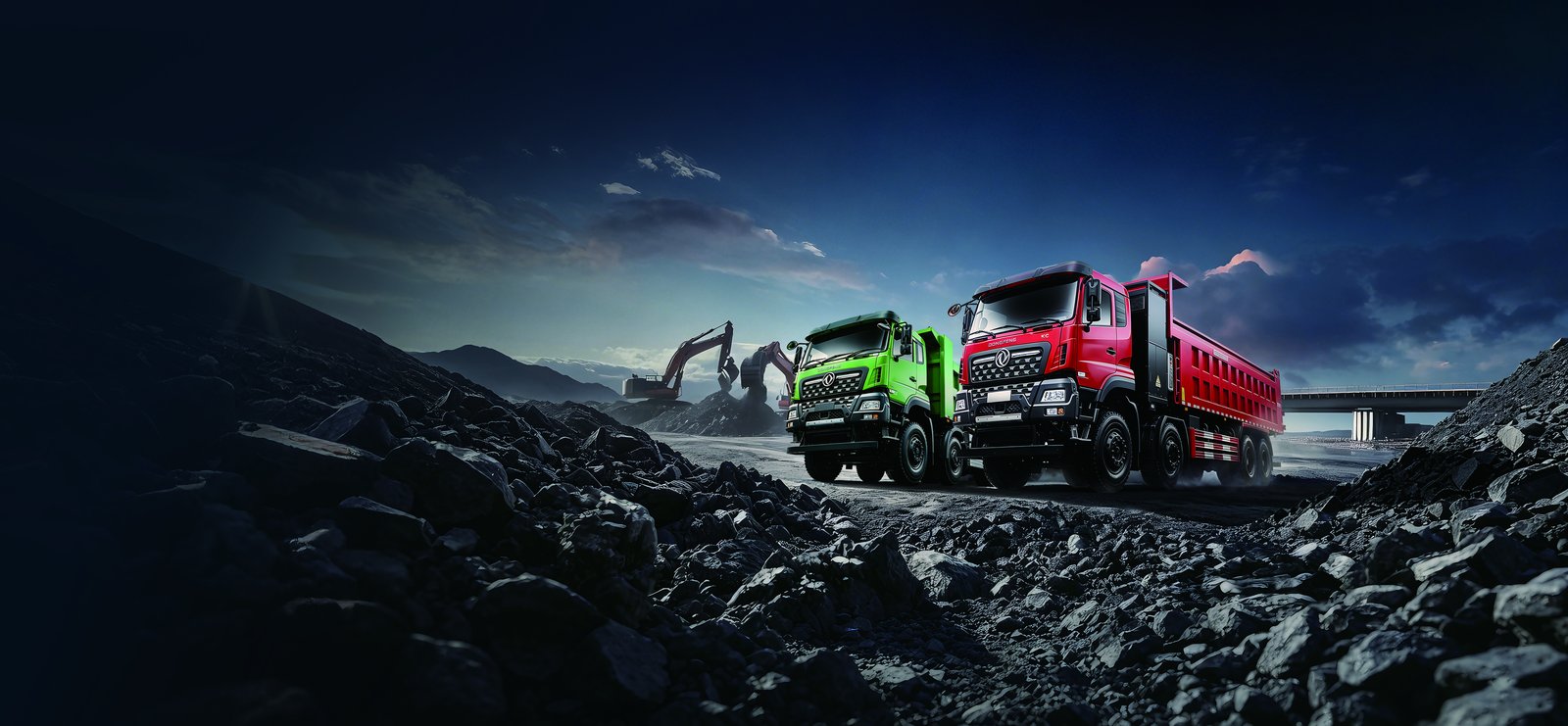
Between the light last-mile delivery truck and the heavy distribution tractor sits the workhorse of city freight: the mid-weight rigid cargo truck that carries a serious payload through streets sized for cars, feeding the supermarkets, pharmacies, hardware stores and regional distribution centres of a thousand cities. It is the least glamorous and most numerous truck class on earth — and until recently the hardest to electrify economically, because its duty sits awkwardly between the cheap small batteries of light vans and the big expensive packs of heavy trucks. The Dongfeng KT5L electric cargo truck closes that gap: a mid-weight EV truck built on the same CATL-LFP-plus-LvKong architecture as the rest of the Dongfeng commercial EV range, priced where the economics finally work. This review examines it the way a fleet buyer would: what it is, what it does well, what it costs to run, and where its honest limits are.
In the Dongfeng EV range the KT5L slots between the KT5J delivery truck (walk-through, last-mile multi-drop) and the KTH-class heavy cargo trucks (regional distribution, heavier payloads). The distinction is duty, not just size: KT5J work is 80–140 stops a day at 18–25 km/h; KTH work is DC-to-DC trunking at highway speeds. The KT5L's work is in between — city and peri-urban distribution with 10–30 drops, payloads in the middle band, daily distances of 120–250 km including highway linking legs between city clusters. Fleets that tried to force the lighter or heavier machine into this duty (small packs running out of electrons, or big packs hauling their own weight) are the natural KT5L buyers.
| Parameter | Dongfeng KT5L Electric Cargo Truck |
|---|---|
| Configuration | 4x2 rigid cargo, box / curtain / refrigerated body options |
| Battery | CATL LFP 262 kWh class, liquid-cooled |
| Drive | LvKong electric drive, 125–185 kW class by variant |
| Real mixed-duty range | 250–320 km (city cycles at the top, highway linking at the bottom of the band) |
| Charging | Dual-gun DC fast charge, 60–80 minutes to full |
| Battery warranty | 8 years / 4,500 cycles |
| Indicative FOB | USD 78,000–98,000 by body and specification |
A mid-weight cargo truck is a rolling body decision, and the KT5L's factory body programme covers the realistic set:
The specification question fleets under-think is body weight: every kilogram of body is a kilogram of payload not carried, and body choice should follow the freight, not the catalogue photo. We configure bodies at the factory against the buyer's actual load profile.
The KT5L drives like the rest of the Dongfeng EV family — single-speed electric drive, strong low-end torque for loaded pulls away from urban stops, and regenerative braking tuned for one-pedal city work. The mixed-duty range band deserves explanation, because it is the number buyers misread most: 250–320 km real range is not a soft number, it is the honest spread between duty extremes. A pure multi-drop city day at 20 km/h average with 100 door openings sits at the top of the band (regen working constantly, speeds low). A day linking cities at 80 km/h with a full load sits at the bottom (aerodynamic drag, minimal regen). Fleets running genuinely mixed days should plan charging against the worst day of the month, not the average.
The 262 kWh pack charges from 10–100% in 60–80 minutes on dual-gun DC, which in dispatch terms means: overnight charge is the primary refuel, and a lunch-hour top-up converts the truck from single-shift to double-shift capable whenever a route demands it.
Modelling typical mid-weight distribution duty: 180 km per truck-day, 290 days a year (52,000 km), diesel comparable at 22–26 L/100 km urban-mixed, depot electricity at USD 0.09–0.13/kWh:
| Annual cost per truck | Diesel comparable | Dongfeng KT5L |
|---|---|---|
| Fuel / energy | USD 11,200–14,300 | USD 3,100–4,700 |
| Engine maintenance, filters, oil | USD 2,600–3,400 | USD 750–1,100 |
| Brake consumables | USD 900 | USD 300–400 |
| Annual saving per truck | — | USD 7,500–10,600 |
| 20-truck annual fleet saving | — | USD 150,000–212,000 |
| 8-year fleet saving (before depot CAPEX) | — | USD 1.2–1.7 million |
At an FOB in the USD 78,000–98,000 band, the KT5L's premium over a comparable diesel truck is the smallest in the Dongfeng EV range relative to its annual saving — the "missing middle" was hard to electrify, not because the economics were bad, but because nobody built the right truck for it. Depots supporting a KT5L fleet need modest charging: 4–6 dual-gun chargers serve 20 trucks on staggered overnight schedules.
A composite drawn from comparable deployments: a grocery distributor serving 60 supermarkets from a peri-urban DC runs mixed daily profiles — 14 trucks on city replenishment loops (150 km, 20 drops) and 6 on inter-town linking runs (220 km, 6 drops). Its fleet age profile was forcing a replacement cycle, and the diesel replacements under review offered nothing but familiar costs. The phased electrification started with eight KT5L box-body units on the city loops, charged overnight at the DC, with the walk-through-friendly box bodies specified for roll-cage handling. The inter-town linking routes stayed diesel in phase one — correctly, because that duty sits at the KT5L's highway-range edge and belongs to the KTH class in phase two. The result after a quarter: the electric units ran 30–35% cheaper per drop, driver feedback concentrated on the quiet cab and one-pedal driving, and the fleet's fuel exposure shrank by the share the electric units covered — permanently.
Mid-weight distribution duty is the hardest driving job in freight — the shift where clutch-and-brake fatigue and stop-start punishment decide driver careers. Fleet operators running the KT5L consistently report a workforce effect that belongs in the business case: the single-speed electric drive and one-pedal regenerative braking remove the mechanical workload that defines the duty, and a quiet, air-conditioned cab turns the worst routes into ordinary ones. The measurable consequences fleets see: lower driver turnover on electric-assigned routes (each retained driver saves the recruiting, induction and accident-window costs of a replacement), better application rates when electric units are named in job postings, and fewer low-speed manoeuvring incidents in the induction period because one-pedal speed control is more forgiving than a clutch at walking pace. None of this shows up in a kWh-per-km table, and all of it shows up in the operating account. For fleets whose binding constraint is people rather than capital — which is most mid-weight distribution fleets by year three — the driver dividend is frequently the tie-breaker that justifies electrifying ahead of the pure-TCO date.
Shaanxi Fenghan Trading is an authorised Dongfeng EV truck exporter. We supply the KT5L with factory-configured bodies, complete battery documentation, factory inspection, RORO and container logistics to every major port pair, and HV spares support. We also help fleet buyers model their own route data against the range band before ordering — because the mid-weight class only pays when the truck and the duty actually match.
Ready to electrify your fleet? Contact Shaanxi Fenghan Trading — authorized Dongfeng EV truck exporter. WhatsApp: +86 153 1943 1311 | Email: sales@fenghan-trade.com | dongfengevtrucks.com
🌐 Our Network: Fenghan Trade (SAGMOTO/SHACMAN Truck Export) · SAGMOTO cargo truck flatbed box stake