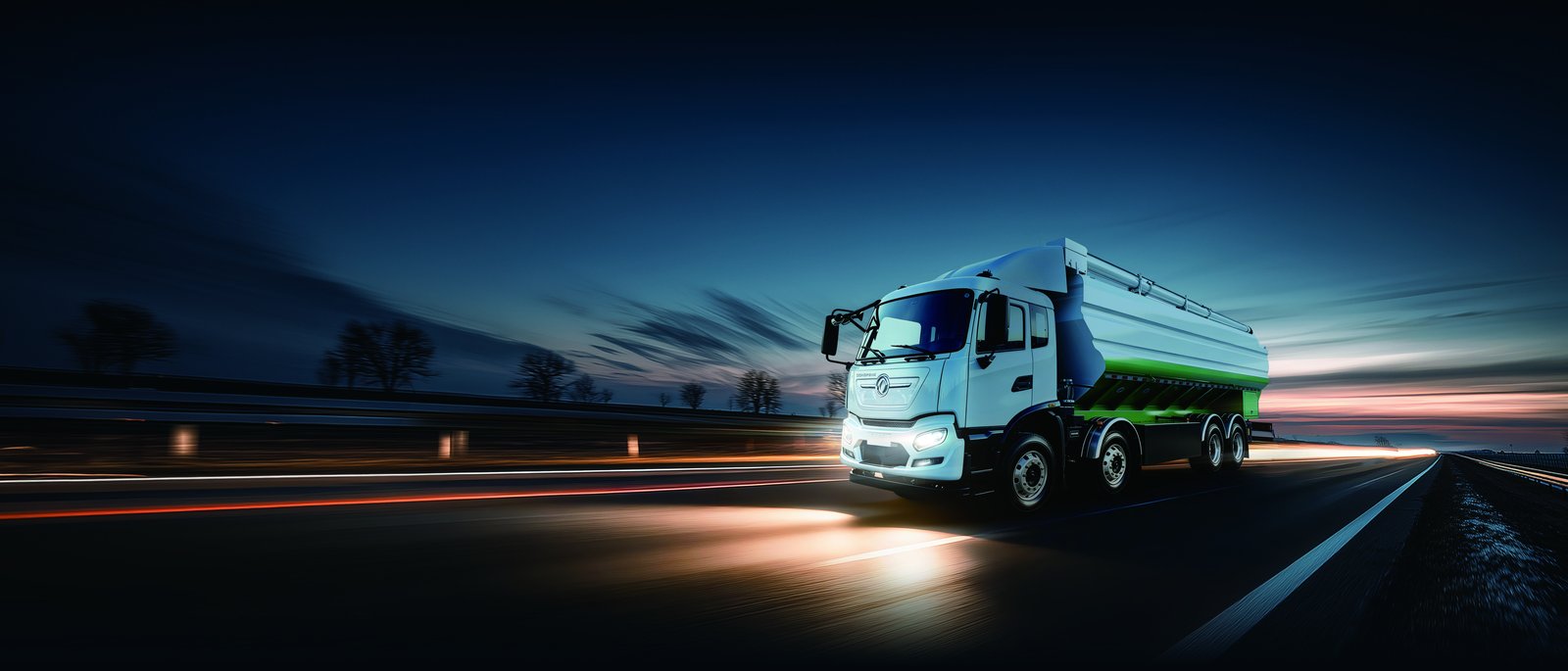
Manila port drayage means short, intense cycles: containers move from the piers to inland depots and back, often under 40 km each way but with long idle and queue time at the gate. That duty is brutal on diesel and ideal for the electric truck, because a smaller battery covers the loop and depot charging between shifts keeps the unit earning. The KT5J electric cargo truck is our entry-point model built for exactly this drayage rhythm.
A typical Manila drayage loop runs 15 to 40 km with heavy stop-start traffic and 30 to 90 minutes of gate queuing per trip. Diesel trucks in this class burn about 0.45 to 0.55 L/km under load, costing $0.40 to $0.72 per kilometer at Philippine diesel prices of $0.90 to $1.30 per liter, and the long idle burns fuel while earning nothing. The KT5J draws about 1.1 to 1.6 kWh/km when loaded, and at Philippine commercial electricity of $0.08 to $0.20 per kWh that drops to $0.09 to $0.32 per kilometer. Because the electric drivetrain draws no power at idle, the gate queue costs almost nothing in energy.
The KT5J carries a 210 kWh CATL LFP pack with an 8-year or 4,500-cycle warranty, and FOB pricing runs from $55,000 to $70,000, the lowest entry price in our export range. For a 40 km loop the 210 kWh pack delivers multiple round trips per charge, and the truck tops up between shifts at the depot.
The KT5J supports dual-port charging, meaning two charge connectors can feed the pack at once to shorten the depot window. With two 180 kW ports the truck accepts up to 360 kW combined, moving from 10 to 80 percent in 45 to 90 minutes. For drayage fleets that run two shifts, this lets one charger serve several trucks across the day without a dedicated stall per unit. The dual-port design also gives redundancy: if one port is in use elsewhere, the truck still charges on the other.
A Manila drayage depot adding the KT5J needs a modest electrical upgrade: a 360 kW dual-port charger plus panel and metering, typically a fraction of the cost of a fuel storage system and its safety compliance. Charging on off-peak industrial tariffs near $0.08 to $0.12 per kWh keeps per-kilometer energy near the low end of the range. Because the truck charges between shifts, no public charging is required, removing a major deployment risk.
The 35 to 40 percent maintenance saving is especially valuable in the corrosive coastal port environment, where fewer moving parts and no exhaust system reduce the points of failure. Brake wear also drops thanks to regen, which matters on the congested routes to and from the piers.
| Cost element | Diesel drayage truck | KT5J EV truck |
|---|---|---|
| Energy per km | $0.40 - $0.72 | $0.09 - $0.32 |
| Idle energy cost | high, burns fuel | near zero |
| Maintenance per km | $0.18 - $0.25 | $0.11 - $0.16 |
| FOB price | $45,000 - $65,000 | $55,000 - $70,000 |
| 8-year energy and service | $480,000 - $660,000 | $200,000 - $310,000 |
The table shows the KT5J's saving is driven by idle-free energy and lower maintenance. Over an 8-year, 900,000 kilometer drayage life the electric truck typically saves $200,000 to $350,000 per unit versus diesel, with payback often inside three years given the high cycle count in Manila.
Philippine port authorities are moving toward lower-emission yard and drayage equipment, and a zero-tailpipe truck eases gate access and community pressure around Manila. The KT5J's small pack keeps cost down while covering the short loop, making it the rational first EV truck for a fleet testing electrification.
For planners comparing national options, our Philippines electric truck market page tracks port incentives and charging grants. The KT5J electric cargo truck is our recommended entry model for 210 kWh drayage and city delivery.
The 210 kWh CATL LFP pack on the KT5J carries the standard 8-year or 4,500-cycle warranty, which covers the full commercial life of a drayage truck running multiple daily cycles. Dongfeng's LvKong motor shares service intervals with the wider EV cargo range, so a single training program qualifies your mechanics across body types. We ship a spare-parts kit with each order, including contactor, compressor, and regen brake components, sized for a 12 to 18 month runway at the port depot.
Driver training is quick because the single-speed drivetrain removes gear shifting in Manila traffic; most diesel drivers are confident on the drayage loop within a day. We provide a depot charging plan that sequences trucks through the dual-port 360 kW charger between shifts so container output never waits on energy. For fleets scaling from two to twenty units, the identical pack and motor keep inventory and training cost flat as the depot grows.
Safety and community benefits matter around Manila port. The zero-tailpipe KT5J removes diesel exhaust and NOx from the congested gate area, and the quiet electric drivetrain cuts noise in dense residential approaches to the piers. Combined with the idle-free energy draw during long gate queues, the truck lowers both cost and the footprint of your drayage operation.
Range planning for drayage is simple. The KT5J's liquid-cooled pack holds capacity through the hot coastal climate, and the 8-year warranty protects against thermal wear. Operators report that the steady electric torque in stop-start traffic improves schedule reliability versus a diesel unit, a small but cumulative gain across the high cycle count that defines Manila port work.
For fleets testing electrification for the first time, the KT5J is the lowest-risk entry because its small pack keeps FOB price close to diesel while the energy and maintenance saving does the rest. Start with two units against two diesel trucks, measure the real per-kilometer cost for 90 days, then scale the order once the saving matches the model within 10 percent.
For Philippine fleets moving first, the KT5J de-risks the switch because its small pack keeps capital low while the dual-port charger handles shift turnover. Spec the 210 kWh pack, install the depot charger, and the truck typically pays back inside three years while easing Manila port gate access through lower emissions.
We export the KT5J as a complete FOB unit with container chassis or box body and right-hand drive for the Philippines. Lead time from confirmed order to FOB loading is 45 to 70 days. We supply the dual-port charger specification and a TCO model built on your diesel baseline and local tariff so you can confirm the saving before ordering.
Request a written FOB quote with your target body and charging setup. We return a line-item price and a suggested depot layout for your Manila or regional yard.
Every Dongfeng electric truck we ship is covered by an 8-year or 4,500-cycle battery warranty on the CATL LFP pack, plus 3 years on the LvKong motor and controller. Shaanxi Fenghan Trading keeps a rotating stock of high-wear parts — brake pads, filters, suspension bushings and charging connectors — in Xi'an for 72-hour dispatch by air freight. Buyers receive an English service manual, wiring diagrams and video-based technician training for their local workshop team, and our engineers answer diagnostic questions on WhatsApp within one working day. For fleet orders of five units or more we include a free on-site commissioning visit to set up chargers and train drivers.
Ready to electrify your fleet? Contact Shaanxi Fenghan Trading — authorized Dongfeng EV truck exporter. WhatsApp: +86 153 1943 1311 | Email: sales@fenghan-trade.com | dongfengevtrucks.com
🌐 Our Network: Fenghan Trade (SAGMOTO/SHACMAN Truck Export) · SAGMOTO cargo truck flatbed box stake