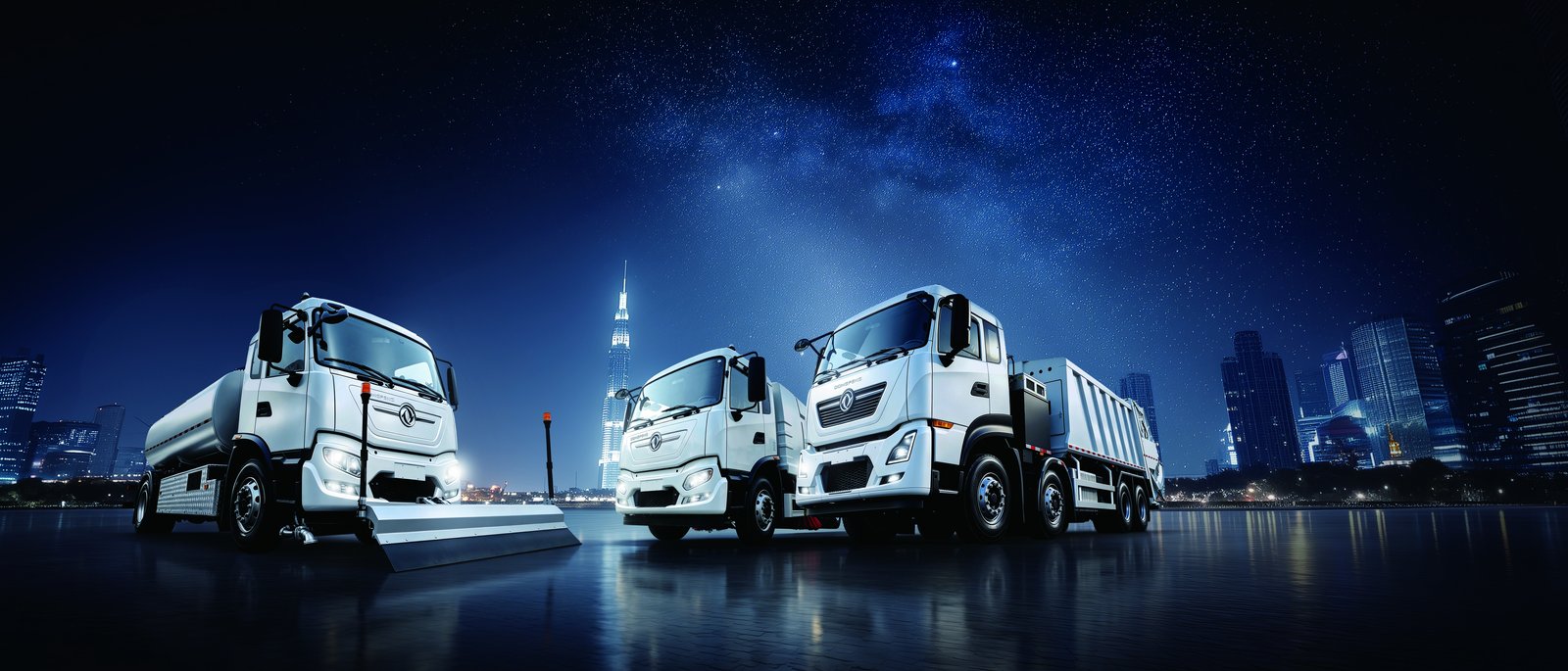
Santo Domingo runs one of the Caribbean's largest sanitation operations: a metropolitan population of over 3 million across the Distrito Nacional and the Santo Domingo province municipalities, collection contracts let to private operators, and a fleet problem — aging diesel compactors, fuel costs that swing with imported diesel pricing, and a tourism economy in which the cleanliness of the Malecón and the colonial zone is economic infrastructure. We wrote the Dominican import guide last season; this piece is the sanitation follow-up — how a Dominican operator or municipality builds and wins with an electric truck fleet around the KT3E electric garbage truck and the KT1D electric sweeper truck. Country context — duties, DR-Cafta logistics and receiving — is in the Dominican Republic market guide.
The metro's collection duty splits into four route families:
The first three families are the electrification beachhead, and the tourism routes are where the political and reputational value of electric sanitation is highest — a city that wants cruise-ship visitors photographing a clean, quiet Malecón has a direct interest in a silent pre-dawn sweeper.
| Parameter | KT3E garbage truck | KT1D sweeper |
|---|---|---|
| Battery (CATL LFP) | ~200 kWh class | ~200–232 kWh class |
| GVW | 18 t | 18 t |
| Body | Compactor, electric PTO | Sweep/suction system |
| Shift | Day collection rounds | Pre-dawn tourism and arterial sweeping |
| Indicative FOB | USD 65,000–85,000 | USD 70,000–90,000 |
Both run the same platform, share a charging depot, and cover complementary shifts — the sweeper charges through the day after its pre-dawn shift, the compactor charges overnight — which halves the charging infrastructure a single-shift fleet would need per truck.
The Dominican grid is among the strongest in the Caribbean — substantial gas-fired and renewable generation, and distribution reliability in the Santo Domingo metro that operators in most of our markets would envy. Industrial tariffs run near USD 0.14–0.17/kWh against diesel at market import pricing:
Dominican sanitation procurement — municipal contracts and the concession arrangements around the metro — scores operators on cost per tonne, fleet adequacy and increasingly on environmental criteria tied to national decarbonisation commitments and the tourism economy's sustainability programmes. The electric bid wins on structure:
The Dominican Republic's financing ecosystem is unusually rich for sanitation electrification: multilateral urban-development lending with green components, the national development bank's fleet programmes, and private leasing structures that exist precisely because vehicle imports are the country's logistics norm. The three structures that fit: a straight purchase with the EV duty advantage reducing the CAPEX premium; an operating lease that puts the charging infrastructure and vehicles in one monthly payment matched to the contract's cash flow; and the concession model in which the operator amortises the fleet across a multi-year service contract. Our financing piece covers the structures in general; the Dominican twist is that tourism-linked environmental programmes can co-fund the pre-dawn sweeper fleet specifically — the cleanest vehicle-for-money match in the sector.
A 20-truck mixed fleet needs two 120 kW chargers at the depot for daytime sweeper charging, two more for overnight collection charging, and a 50–80 kWp solar array to shave the daytime load — roughly USD 170,000–220,000 all-in. Receiving runs through Caucedo's modern container and RoRo terminals, 20–26 days from China, with LHD as national standard and the conformity documentation our Dominican package carries. Spanish-language manuals, crew training and a spares kit at the operator's depot complete the delivery.
Santo Domingo's sanitation economics are decided by fuel imports and maintenance hours — two lines an electric fleet cuts in half. The operator or municipality that bids electric on the next contract cycle will not just win the tender; it will own the cost structure the next ten tenders are measured against.
Ready to electrify your fleet? Contact Shaanxi Fenghan Trading — authorized Dongfeng EV truck exporter. WhatsApp: +86 153 1943 1311 | Email: sales@fenghan-trade.com | dongfengevtrucks.com
🌐 Our Network: Fenghan Trade (SAGMOTO/SHACMAN Truck Export) · SAGMOTO heavy duty diesel trucks