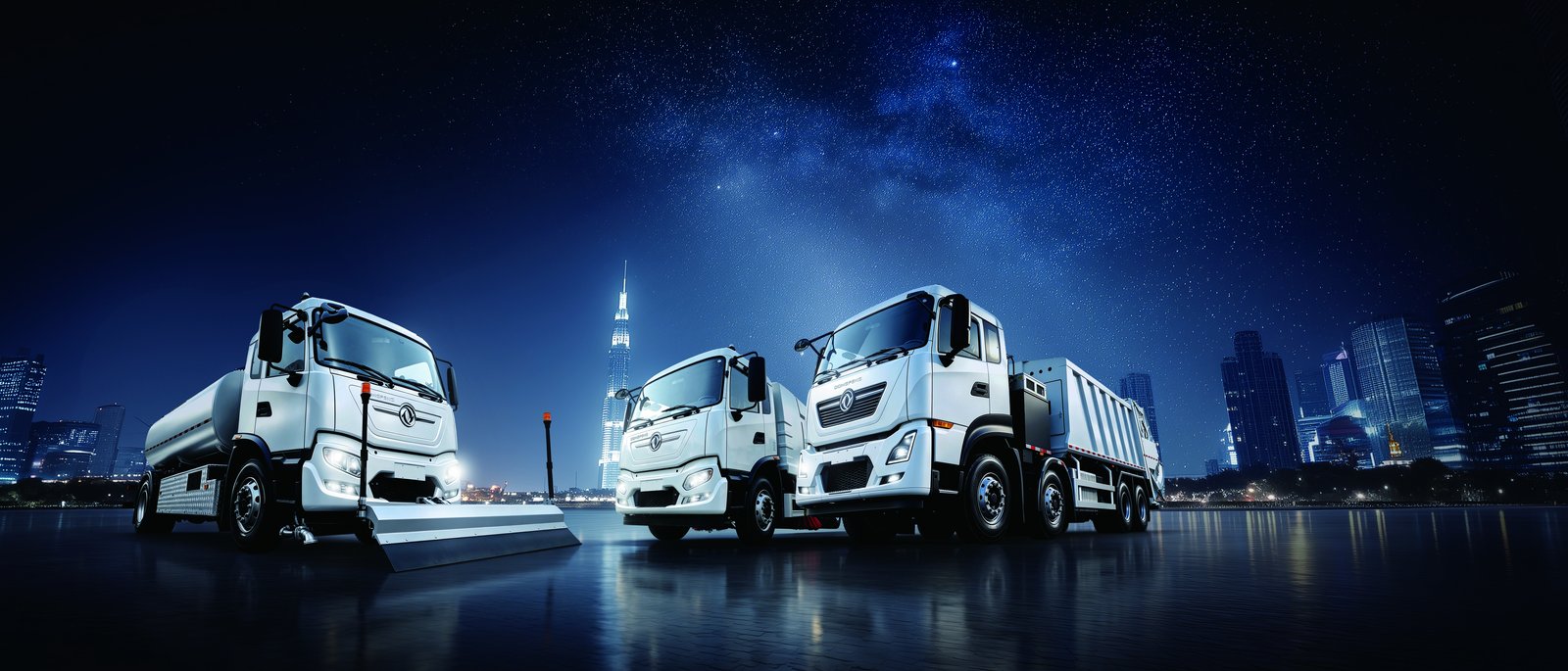
Lagos generates over 10,000 tonnes of municipal solid waste a day, and the trucks that move it run some of the worst duty cycles in trucking: 15-hour shifts of stop-start collection through gridlock, sweeper routes along roads that flood in the rainy season, and a maintenance environment where a diesel compactor's clutch and brake bills can exceed its fuel bill. We have covered Lagos's distribution fleets and the Abidjan sanitation case; this piece is the Lagos electric truck sanitation strategy — the KT1D electric sweeper truck for street-sweeping routes, paired with the KT3E electric garbage truck for collection duty. Nigeria import context is in the Nigeria market guide.
Sanitation duty concentrates every condition that punishes diesel and rewards electric:
| Parameter | KT1D electric sweeper | KT3E electric garbage truck |
|---|---|---|
| Battery (CATL LFP) | ~200–232 kWh class | ~200 kWh class |
| GVW | 18 t | 18 t |
| Body | Sweeping system, suction, hopper | Compactor body, electric PTO |
| Lagos duty | Night sweeping: highways, bridges, markets | Day collection: residential and commercial rounds |
| Shift range need | 60–100 km | 100–160 km |
| Indicative FOB | USD 70,000–90,000 | USD 65,000–85,000 |
The pairing shares one platform — one spares inventory, one technician certification, one charging depot — while covering the two shifts that between them define municipal sanitation.
Lagos sanitation depots face the same grid reliability question as every Nigerian fleet, and the sanitation case answers it well: the duty is night-weight, and the charging window is long. A KT1D returning from the 22:00–06:00 sweeping shift parks at 06:00 and has until 22:00 — sixteen hours — to recover 60–100 km of sweeping energy. That is a slow, gentle, cheap charge on a modest connection, with solar covering the daytime portion. Our Lagos depot design for a mixed sanitation fleet:
Even with a third of energy from the genset in a bad month, blended cost per kilometre runs 40–50% below diesel at Lagos pump prices.
Modelling a KT3E on a Lagos collection round — 130 km/day, 6 tonnes collected per round, 26 days/month, blended energy at USD 0.16/kWh:
Lagos specifies the full tropical package: IP68 HV systems for flood-season wading (sweepers work the wet roads others avoid), sealed electronics for the humid coastal air, e-coated chassis against the salt-laden environment, and sweeping-system components in corrosion-resistant specification. The maintenance regime — detailed in our preventive schedule piece — adds a post-flood inspection routine during the May–October wet season. These are standard items on our Nigeria-specified sanitation units, not options.
Lagos sanitation procurement runs through LAWMA's private-sector participant structure and municipal contracts across the LGAs, plus donor-financed programmes (the World Bank's urban operations and their successors) where emissions criteria increasingly score. Our tender-support piece covers the RFP mechanics; the sanitation-specific points are the per-tonne cost presentation (where electric wins most clearly), the night-shift noise advantage (a compliance asset, not just a comfort), and the air-quality story that donor-financed tenders now reward. An operator arriving with a costed electric fleet plan changes the scoring in its own favour.
Units ship RoRo to Lagos's Tin Can and Apapa terminals 28–32 days from China, with SONCAP conformity handled in China before loading and RHD as Nigerian standard. A Lagos-specific note from our delivery experience: depot siting inside the PSP operator's existing yard network beats a new greenfield depot — sanitation trucks already park somewhere, and retrofitting chargers into a working yard is faster than building a new one.
Lagos's waste challenge grows with the city; the economics of hauling it on imported diesel grow worse every year. The KT1D and KT3E flip the equation: the fleet that cleans the megacity running on its own grid, at half the operating cost, with a silence the residents will be the first to thank.
Ready to electrify your fleet? Contact Shaanxi Fenghan Trading — authorized Dongfeng EV truck exporter. WhatsApp: +86 153 1943 1311 | Email: sales@fenghan-trade.com | dongfengevtrucks.com
🌐 Our Network: Fenghan Trade (SAGMOTO/SHACMAN Truck Export) · SAGMOTO heavy duty diesel trucks