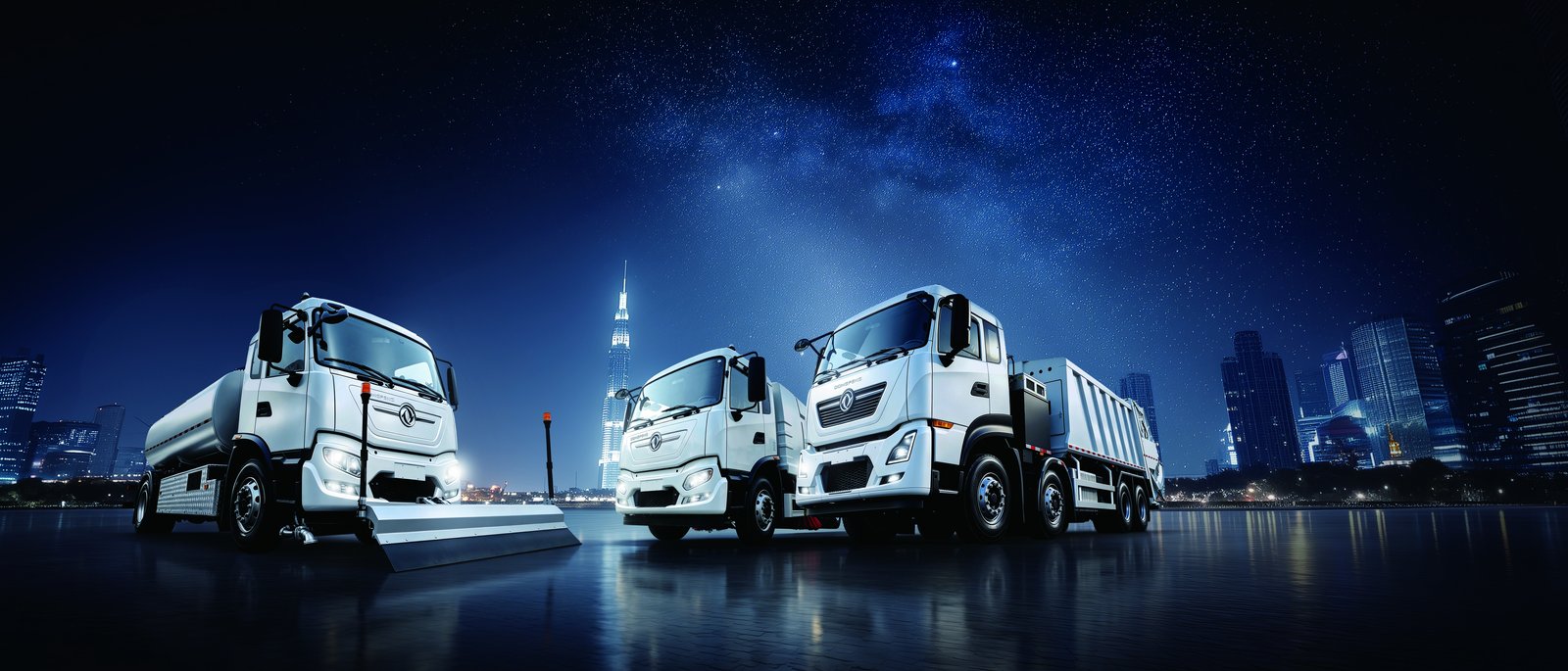
Sanitation procurement has quietly become the most competitive electric truck market in the developing world. City waste and street-cleaning contracts — whether let as concessions, PPPs or direct service contracts — are increasingly written with sustainability scoring sections, fuel-escalation clauses and lifecycle-cost evaluation, and every one of those three instruments structurally favours a bidder who shows up electric. We have now supported tenders on four continents where the difference between winning and losing a seven-year concession came down to how well the bidder's fleet plan was engineered into the scoring model. This article is the playbook: how tender evaluation actually weights fleet choices, how to structure an electric bid around the KT1D electric compactor and the KT3E electric sweeper, what documentation wins technical evaluation, and where honest limits lie. For a live example of a market where these tenders are being re-fought on electric economics, see our Nigeria electric truck market guide — Lagos and several state capitals are re-tendering sanitation concessions on lifecycle-cost criteria right now.
Read any modern waste-concession RFP and the evaluation is roughly some weighting of the following:
| Evaluation section | Typical weight | What an electric fleet does |
|---|---|---|
| Price / tariff per tonne or route | 40–60% | Lower operating cost lets you price under diesel bids at equal margin |
| Technical fleet plan | 20–30% | Availability, route coverage, maintenance capability — electric simplicity scores well if documented |
| Environmental / ESG | 5–15% | Full marks territory: zero tailpipe, quantified CO2, quiet night operation |
| Experience & compliance | 10–20% | Neutral — but reference deployments from comparable cities help |
| Risk / fuel escalation treatment | Often decisive in ties | Electric bids can offer fixed-escalation pricing a diesel operator cannot |
The single most under-used lever is the last row. Diesel bidders must either price in fuel-escalation risk (raising their tariff) or accept it (raising their default risk — which evaluators also score). An electric bidder's energy line is 60–75% cheaper and far less volatile: electricity tariffs move annually in single digits in most of our markets, diesel has swung 40% in months. Offering a capped or fixed escalation clause in your price is a genuine competitive weapon a diesel competitor cannot copy.
The KT1D/KT3E pairing exists because tenders almost always combine waste collection with street cleaning. Build the bid on the two complementary duty profiles:
A typical 20-vehicle package for a mid-size city: 14 KT1D compactors, 6 KT3E sweepers, 10 shared 60 kW chargers at two depots, one spare-parts consignment and a two-week operator training programme. Present it as one integrated system — the evaluators' technical score rewards systems thinking, and the shared charging infrastructure is what makes the unit economics work.
Weak bids lose on documentation, not trucks. The file that scores:
Be honest about the capital line. The KT1D's FOB of roughly USD 88,000–108,000 against a diesel compactor's USD 55,000–70,000 means a 20-unit fleet carries USD 500,000–700,000 of extra capital plus charging. Three pricing strategies handle it:
Where electric loses: tenders under three years' duration (capital recovery is too thin), tenders evaluated purely on lowest upfront capital (rare in sanitation now), and cities with no depot power solution — in which case a solar-buffered charging design can rescue the bid at modest cost.
Sanitation concessions are typically won by SPVs financing the fleet against the contracted revenue. The electric fleet's financing profile is different — more capital, less opex — which means the lender's covenants need the warranty file (battery risk bounded), the charging design (asset utility demonstrated) and the fuel-saving model (margin cushion evidenced). Development-bank climate lines increasingly apply: electric sanitation fleets in emerging markets qualify under urban-mitigation windows, and the difference between commercial and climate-line pricing on a USD 3 million fleet is worth more than the entire tender's marketing budget.
Sanitation electrification is no longer an experiment — it is the current winning strategy in cities from Accra to Ulaanbaatar. The operators who internalise the tender mathematics first are running the table while diesel bidders argue about fuel clauses. When you are ready to build an electric bid, we supply the route models, warranty files and reference deployments that make the technical section score itself.
Winning the tender is half the strategy; the operational file you build after it is what wins the next one. Concession operators who treat the contract's early months as evidence-gathering — documenting fleet availability, route energy, complaint statistics against the diesel-era baseline, and the clean audit trail the electric telemetry produces — arrive at renewal with a file that makes the re-award almost procedural. The operators who win and then simply operate, without instrumenting the story, spend the next bid re-arguing the technology from scratch. Our strongest municipal customers run this discipline deliberately: a quarterly one-page metrics pack — tonnes collected, kilometres swept, kWh consumed, CO2 avoided, availability percentage — circulated to the authority's contract manager before anyone asks for it. It is the cheapest marketing in the waste industry, and it compounds across every renewal cycle in the operator's portfolio.
Tenders are won with scoring and renewed with trust. The electric fleet happens to generate the evidence for both, as a by-product of simply running well.
Ready to electrify your fleet? Contact Shaanxi Fenghan Trading — authorized Dongfeng EV truck exporter. WhatsApp: +86 153 1943 1311 | Email: sales@fenghan-trade.com | dongfengevtrucks.com
🌐 Our Network: Fenghan Trade (SAGMOTO/SHACMAN Truck Export) · heavy duty trucks export China